Training with dumbbells at home doesn’t have to mean rushed reps and random circuits. By focusing on tempo strength work – especially slow, controlled lowering phases – you can turn a simple pair of dumbbells into a powerful tool for muscle growth, better joint control and improved movement quality. This 40-minute dumbbell workout is built around tempo, not just load, so you can get strong, safely, in even the smallest home gym.
Why tempo training transforms home dumbbell workouts
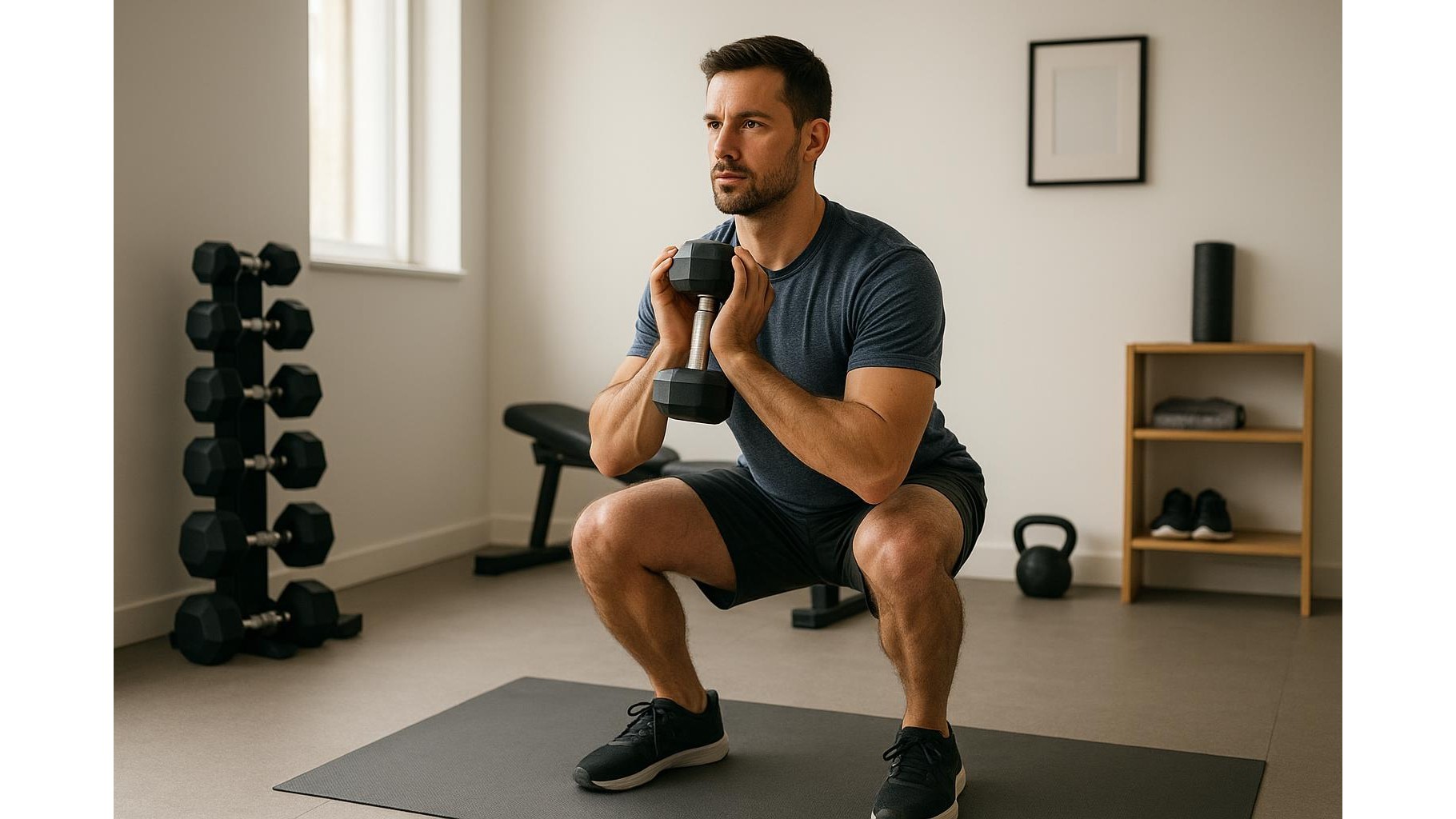
Tempo strength training means deliberately controlling the speed of each part of the rep: the lowering (eccentric), the pause, and the lifting (concentric). For example, a goblet squat with a 3–1–1 tempo takes three seconds down, one second in the bottom, and one second up. Slowing the eccentric phase increases time under tension, which is a key driver of hypertrophy, and forces your stabilising muscles and joints to stay engaged. That’s ideal when training in a home gym with limited load: you can make light-to-moderate dumbbells feel heavy and still progress. Tempo also builds awareness of your form, helping you groove safe patterns instead of rushing through sloppy reps.
The 40-minute full-body tempo dumbbell routine
This 40-minute workout uses just one or two pairs of dumbbells and minimal space. You’ll work in blocks, pairing two exercises back-to-back with controlled tempos and short rests. Structure your session as follows:
- Block 1 (Lower body): Goblet Squat (3–1–1) + Romanian Deadlift (3–1–1)
- Block 2 (Push): Tempo Dumbbell Bench or Floor Press (3–1–1) + Overhead Press (2–1–1)
- Block 3 (Pull & Core): Bent-over Row (2–1–2) + Tempo Dead Bug or Weighted Hollow Hold
Perform 3 sets of 8–10 reps per movement, resting 45–60 seconds between exercises and 60–90 seconds between blocks. If you finish early, you can repeat your weakest block. The goal is controlled, high-quality repetitions, not racing the clock.
How to choose the right dumbbells and load
Because tempo amplifies difficulty, you don’t need massive weight. Choose dumbbells that let you complete all prescribed reps with clean form, but leave 1–2 reps “in the tank” on each set. For most people training at home, that means a light-to-moderate pair for upper body and a slightly heavier pair for lower body work. Prioritise comfort and grip: knurled or rubber-coated handles reduce slipping during slow eccentrics, and flat heads or hex designs won’t roll between sets. If you only have one pair, adjust reps slightly (e.g., 10–12 on upper body, 8–10 on lower body) and focus even more on perfect tempo. Over time, progress by adding a little weight, a rep or two, or an extra second to the eccentric phase.
Form cues for safe, joint-friendly tempo strength
Slow reps expose technique flaws, which is exactly why they’re valuable. For lower-body movements like the goblet squat and Romanian deadlift, think “ribs down, core tight” and keep the dumbbell close to your body to protect your lower back. In presses and rows, maintain shoulders slightly back and down, avoiding shrugged, unstable positions as the muscles fatigue. Move through a controlled range of motion that’s pain-free for your joints rather than chasing depth at all costs. If you can’t maintain the prescribed tempo without compensating – for example, bouncing out of the bottom of a squat or hyperextending your lower back on overhead presses – reduce the load or shorten the range slightly until you regain control. Tempo work should make your joints feel more stable, not beaten up.
Progression, recovery, and fitting tempo work into your week
To build muscle and strength at home, perform this 40-minute tempo dumbbell session 2–3 times per week on non-consecutive days. Aim to improve one variable each week: add 1–2 reps, slow the eccentric by one second, or slightly increase load while preserving tempo. Combine this routine with 2–3 low-impact cardio sessions (walking, cycling, or intervals) for overall conditioning. Because tempo work generates high muscular tension, respect recovery: sleep, hydration and a small protein-rich snack after training all help. If you feel excessively sore, scale back one set per block or shave a second off the eccentric for a week. Consistency with controlled reps will do more for your physique and joint health than occasional all-out efforts.
Tempo strength training turns a basic home dumbbell setup into a highly effective muscle-building system. By slowing down your reps, focusing on long eccentrics, and respecting joint-friendly ranges of motion, you can create a challenging full-body workout in just 40 minutes without a crowded gym or complex machines. Commit to this structure for a few weeks, track your tempo, reps and how your joints feel, and you’ll notice stronger lifts, better control and more muscle – all built in the comfort of your home gym.