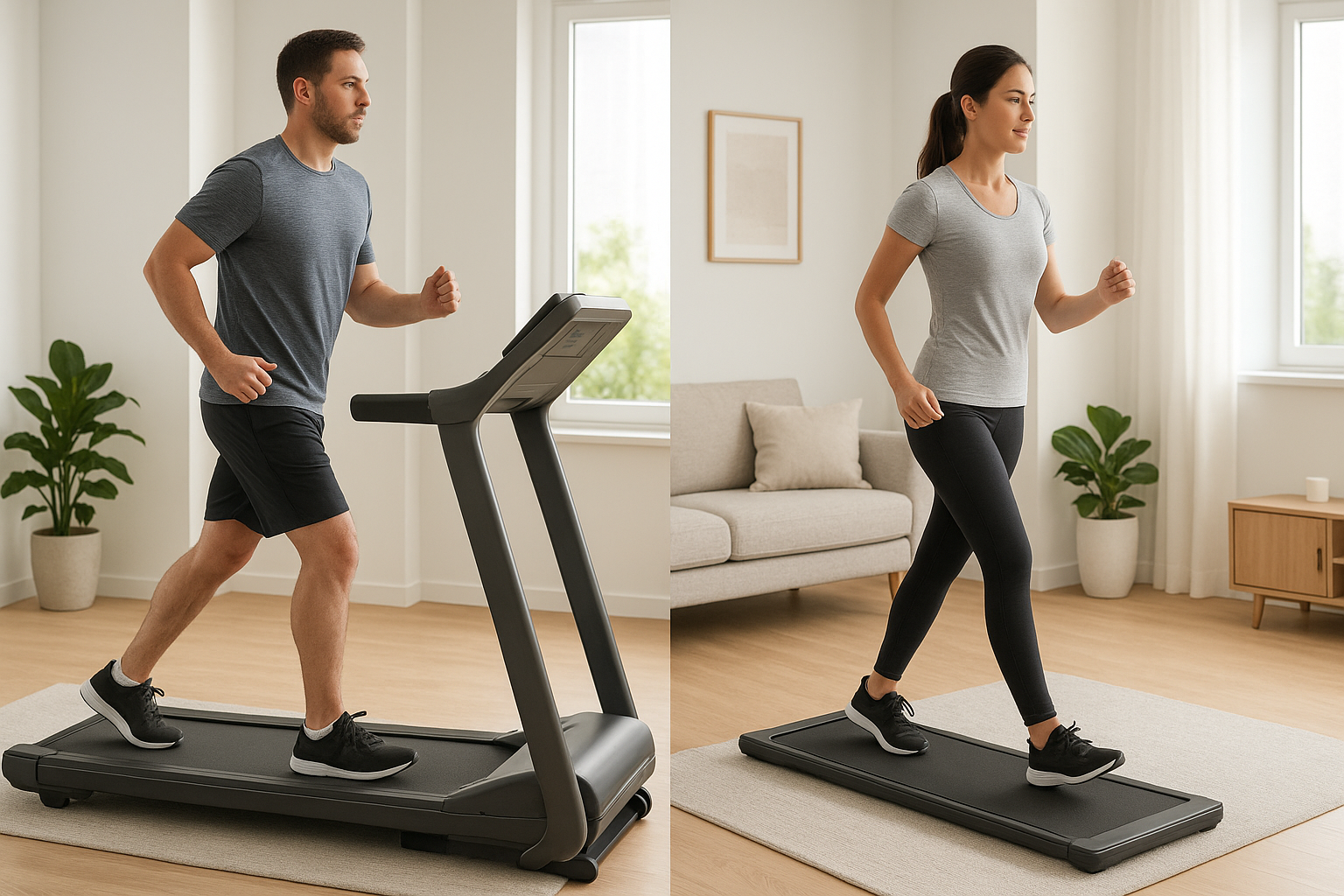
Choosing between an incline treadmill and a flat walking pad can make a big difference in your home fat loss routine. Both options allow you to walk indoors, track your progress and stay consistent, but they feel and perform very differently in terms of calorie burn, joint impact, space, noise and cost. In this guide we compare these two popular home cardio machines so you can match the right tool to your goals, lifestyle and training space.
Calorie burn and fat loss potential
When your main goal is fat loss, total calorie expenditure over the week matters more than the specific machine. However, an incline treadmill generally offers higher calorie burn per minute than a flat walking pad. Walking at a brisk pace on an incline recruits more of the glutes and hamstrings, drives your heart rate up, and can simulate hiking. This extra effort helps you reach a meaningful training stimulus even with shorter sessions. A flat walking pad still supports fat loss, especially for longer, low‑intensity walks and accumulating more daily steps, but if you want the most intense burn in the least time, the incline treadmill usually wins.
Impact on joints and comfort
For users with knee, hip or lower back issues, impact and comfort are critical. Many incline treadmills include cushioned decks and shock absorption, which reduce joint stress compared with outdoor concrete running. However, the steeper the incline and the higher the speed, the more demand you place on your muscles and joints. A flat walking pad keeps your gait natural and low impact at modest speeds, making it a gentle, sustainable option for everyday use and active recovery. If you are new to exercise, significantly overweight, or returning from injury, starting with a flat walking pad and slowly progressing speed and duration can be more joint‑friendly, while stronger, more conditioned users can take advantage of incline work.
Space, storage and portability at home
Home gym space is often the deciding factor. Incline treadmills tend to be bulkier, taller and heavier because of the motor and incline mechanism. Even foldable models still require dedicated floor space and ceiling height, limiting them in small flats or shared living rooms. In contrast, flat walking pads are typically slim and lightweight, often designed to slide under a sofa or bed when not in use. Many can be moved around by one person and tucked away after each session. If you live in a studio apartment, work out in your bedroom, or need to keep your space multipurpose, the compact footprint and easy storage of a walking pad make it a highly practical solution.
Noise levels and home environment
If you share walls, work from home, or train early in the morning, noise matters. Incline treadmills, especially when used at higher speeds, can be noticeably louder due to a more powerful motor and the impact of running or fast walking. This can be an issue in apartments with thin floors or for households with sleeping children. Flat walking pads usually operate at lower speeds and with smaller motors, which keeps sound levels comparatively low. Combined with walking rather than running, they tend to be friendlier for neighbours and cohabitants. In both cases, a good rubber mat under the machine helps absorb vibration, but if quiet operation is a top priority, the walking pad has the edge.
Budget, features and training style
From a cost perspective, incline treadmills are typically more expensive due to stronger motors, sturdier frames and added features like preset incline programs, heart‑rate integration and larger consoles. They cater to users who want more structured cardio workouts and the option to jog or run as well as walk. Flat walking pads are usually more budget‑friendly and minimalist, focusing on straightforward step accumulation and light cardio. They pair well with under‑desk use, casual TV walking and hitting daily step goals. When deciding, look at your training style: if you value intense, time‑efficient sessions and performance progression, investing in an incline treadmill makes sense; if you simply want to move more without overcomplicating things, a basic walking pad will often be enough.
In summary, both incline treadmills and flat walking pads can be effective tools for home fat loss, but they suit different needs. The incline treadmill excels in higher calorie burn and workout variety, while the walking pad shines for low‑impact movement, quiet operation and tight spaces. Consider your joints, available space, budget and preferred training intensity, then choose the machine that you are most likely to use consistently. The best option is the one that fits smoothly into your daily routine and keeps you moving week after week.