Home vibration plates promise big gains in cardio fitness, strength and recovery with minimal time and effort. They are compact, relatively affordable compared with larger machines, and heavily marketed for fat loss and toning. But how do they actually work, what does the evidence say, and how should you realistically use them in a home gym alongside traditional cardio and strength training?
How vibration plates work: the basics
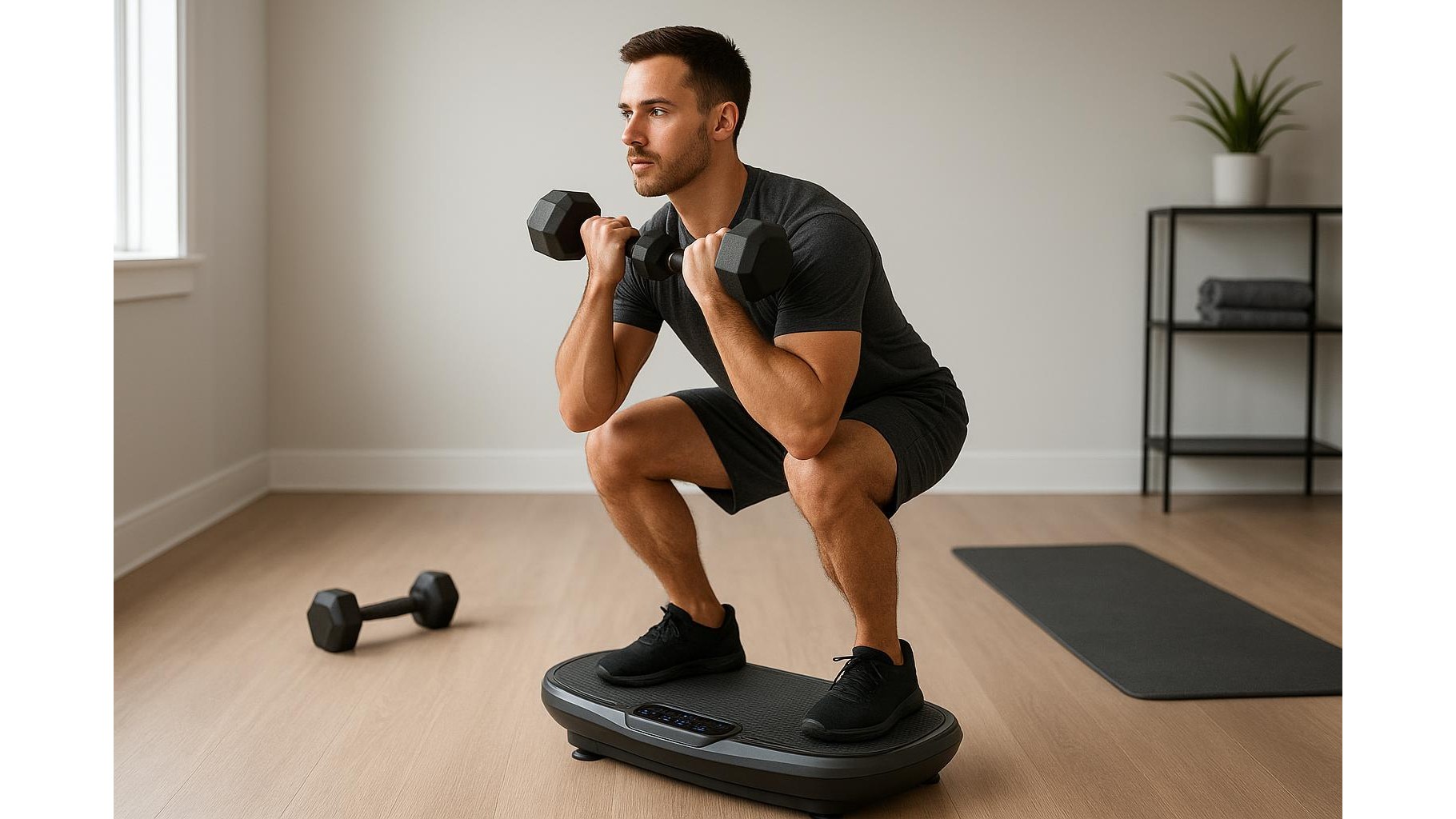
A vibration plate is a platform that produces rapid, controlled oscillations. When you stand, squat, or do exercises on it, these vibrations create small, repeated perturbations through your body. Your muscles respond with constant reflex contractions to stabilise joints and maintain posture. This is often called whole body vibration (WBV). Depending on the model, the platform can move up and down, tilt side to side, or use multi‑directional movement. Intensity is adjusted by frequency (vibrations per second), amplitude (how far the plate moves) and your stance or chosen exercise. The goal is to add an extra neuromuscular challenge on top of bodyweight or light resistance work.
What the science says about strength, muscle and bone
Evidence suggests vibration training can support modest improvements in strength, especially in beginners, older adults and deconditioned users. Research in whole body vibration shows small gains in lower‑body power and muscle activation when WBV is added to basic moves like squats, lunges and calf raises. There is also promising data for maintaining or slightly increasing bone mineral density in populations at risk of bone loss. However, WBV does not match the hypertrophy and strength outcomes of progressive barbell or dumbbell training with appropriate load and volume. Think of a home vibration plate as a useful accessory for joint‑friendly loading and activation, not a replacement for heavy compound lifts if your goal is maximum strength and muscle.
Cardio and fat loss: what can you really expect?
Vibration plates are sometimes sold as a shortcut to cardio fitness and fat loss. In reality, WBV alone produces relatively modest calorie expenditure. Standing or doing light moves on a plate does increase heart rate, but it does not compare to structured interval training, brisk walking, running or cycling in terms of total energy burn. Where vibration plates can help is as a complement: short, high‑frequency bouts can add variety, help maintain activity levels on low‑motivation days, and provide a low‑impact option if high‑intensity cardio is not feasible. The best results for body composition still come from combining a sensible nutrition strategy with regular cardio workouts and resistance training, using the plate as a small extra, not the main tool.
Who are home vibration plates best suited for?
Home vibration platforms tend to suit three types of users particularly well. First, beginners and people returning to training who need joint‑friendly, low‑impact ways to reintroduce movement; basic squats, bridges and planks on a plate can feel more engaging than static bodyweight work. Second, older adults or those concerned with balance and fall prevention, where supervised WBV may support neuromuscular control. Third, busy home gym users who want a compact device for warm‑ups, muscle activation and recovery sessions. They are less ideal as a sole training method for athletes or lifters pursuing maximal strength and performance, where structured loading, progressive overload and sport‑specific conditioning are more effective.
How to integrate vibration plates into a home gym routine
To get real value from a vibration plate, integrate it deliberately into your home workout plan rather than using it randomly. Before lifting, you can perform 5–10 minutes of dynamic moves (air squats, hip hinges, calf raises, push‑up holds) on the plate to enhance muscle activation and joint readiness. During strength sessions, occasional sets on the plate can add variety, but your primary overload should still come from traditional free‑weight or machine exercises. On recovery days, low‑intensity stances, gentle stretches and isometric holds on the plate may support circulation and perceived mobility. Aim for short, focused bouts (e.g. 10–20 minutes) rather than long, passive sessions, and always respect contraindications such as pregnancy, pacemakers or acute injuries by seeking medical advice.
Setting expectations: can vibration plates really help progress?
Used intelligently, home vibration plates can support your cardio and strength progress by boosting activation, adding low‑impact variety and helping maintain consistency. They are particularly helpful for beginners, older users and anyone building a small home gym who values compact, versatile tools. However, they are not magic: they will not replace structured cardio training, progressive resistance work or a well‑managed diet. View your vibration plate as one accessory within a broader plan centred on movement you can sustain long term. With that mindset, it can be a worthwhile addition rather than another over‑hyped gadget.