Compact stairmills and vertical climbers promise intense, stair-like cardio workouts in a very small footprint, making them attractive for home gyms. But not every climb-focused machine is equal: stride feel, noise, resistance and console features can make the difference between a dust-gathering gadget and a workhorse you actually use. Below, we use examples like the FitinOne Stair Stepper for Home Gym, the RYGEO Stair Stepper Folding Vertical Climber and the more advanced MERACH Upgraded Stair Stepper Exercise Machine to highlight what you should really check before buying.
Footprint, storage and ceiling height
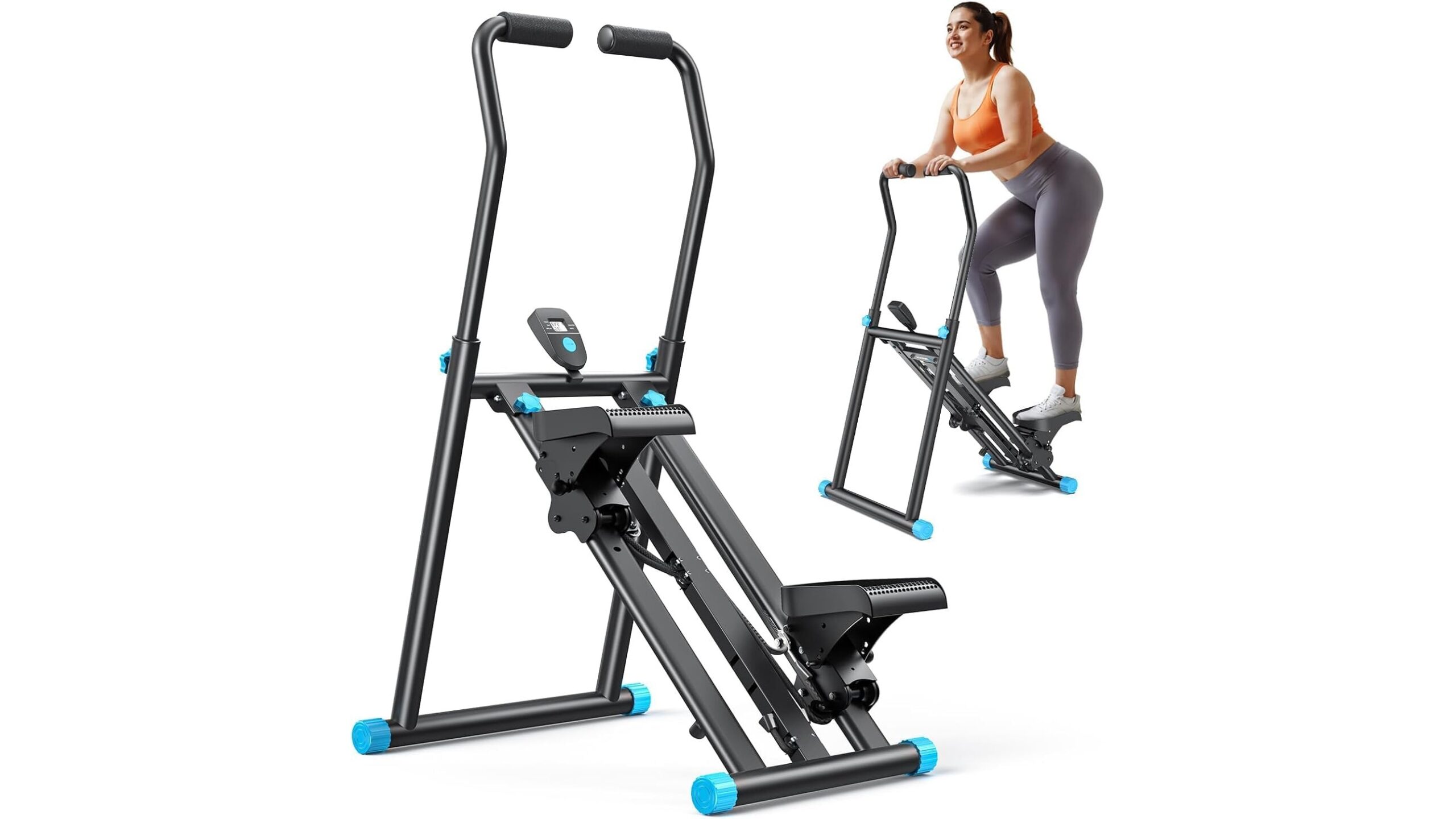
For most people building a home gym in small spaces, the first priority is how much room a stairmill or climber actually takes when in use and when stored. Compact climbers like the FitinOne Stair Stepper for Home Gym are designed to fold flat in seconds, sliding under a bed or into a closet, which is ideal for studio flats or multipurpose rooms. The RYGEO Stair Stepper Folding Vertical Climber folds down to roughly 5 x 19 x 48 inches, so you can tuck it behind a door. The MERACH Upgraded Stair Stepper Exercise Machine also offers a foldable, space-saving structure but stands taller, so you must account for ceiling height: your head will rise with every step. As a rule, measure your body height plus the expected step rise and compare it to the room height to avoid brushing the ceiling during workouts.
Noise level and home-friendly operation
Noise is a critical factor if you live in an apartment or train early in the morning. Many compact stair steppers use body weight and springs for resistance, which can be relatively quiet but not totally silent. Owner feedback on the RYGEO Stair Stepper Folding Vertical Climber is mixed: some users report it as “very stable” and “no noise“, while others notice the springs becoming “quite noisy” under load. The MERACH Upgraded Stair Stepper Exercise Machine is praised for a smooth motion but can develop squeaks at the hinge and footplates if not tightened and lubricated. Look for solid frames, smooth hinges and non-scraping pedal travel, and be ready to do basic maintenance like tightening bolts. If you live above neighbours, consider placing your climber on a rubber gym mat to reduce vibration transfer through the floor.
Resistance, stride feel and training effect
The biggest performance difference between climb-focused machines is the resistance system and how the stride actually feels. The FitinOne Stair Stepper for Home Gym uses primarily body weight resistance with a 45° incline that closely mimics stair climbing, but some users find resistance too light if they are already fit. The RYGEO Stair Stepper Folding Vertical Climber adds adjustable springs between the pedals, giving you the option to run with one or two springs for higher resistance, though this can introduce extra mechanical noise. The MERACH Upgraded Stair Stepper Exercise Machine offers 3-level resistance adjustment and an extended step range, engineered to engage glutes and legs while staying relatively knee-friendly. User reviews highlight a serious calf and glute burn even at lower resistance, which is ideal for short, intense cardio sessions but demanding for beginners. If your primary goal is low-impact cardio rather than pure muscle burn, prioritise a smooth, moderate stride length you can maintain for 15–20 minutes.
Consoles, tracking and usability features
Entry-level compact climbers tend to have basic or no consoles, while better models provide at least simple LCD monitoring. The FitinOne Stair Stepper for Home Gym integrates an LCD screen that tracks steps, time, calories and speed, giving you tangible metrics for progressive overload and goal setting. The MERACH Upgraded Stair Stepper Exercise Machine also features real-time tracking for time, steps and calories, which helps structure intervals and monitor progress. Although the RYGEO Stair Stepper Folding Vertical Climber focuses more on mechanical adjustability and includes a phone holder on the handlebar, it’s still wise to check the product images to confirm what kind of display, if any, is included. For long-term motivation, prioritise machines with at least basic tracking and a secure device holder, so you can follow workouts or entertainment while you climb.
Who benefits most from compact stairmills?
Climb-focused cardio machines are not for everyone, but they are excellent for specific users. The MERACH Upgraded Stair Stepper Exercise Machine supports up to 150 kg (330 lbs) and offers a challenging full-body workout, making it suitable for intermediate to advanced trainees wanting high-intensity, time-efficient sessions. Models like the FitinOne Stair Stepper for Home Gym and the RYGEO Stair Stepper Folding Vertical Climber are good entry points for beginners looking to target glutes, thighs and calves without dedicating a lot of space to a treadmill or bike. However, if you struggle with balance, severe knee pain or prefer long, steady-state cardio, you might find the upright posture and shorter step length demanding. In that case, choose a model with sturdy handlebars, adjustable heights and a gentle resistance setting so you can build capacity safely.
In summary, when choosing a compact stairmill or vertical climber for your home gym, go beyond the marketing claims and focus on footprint and storage, noise levels, resistance options, console features and your own fitness needs. Lightweight, foldable machines like the FitinOne Stair Stepper for Home Gym and RYGEO Stair Stepper Folding Vertical Climber are ideal for beginners and small spaces, while the MERACH Upgraded Stair Stepper Exercise Machine provides more structured resistance and load capacity for committed users. Match the machine to your training style, measure your available space carefully and prioritise a smooth, comfortable stride you can stick with over the long term.