
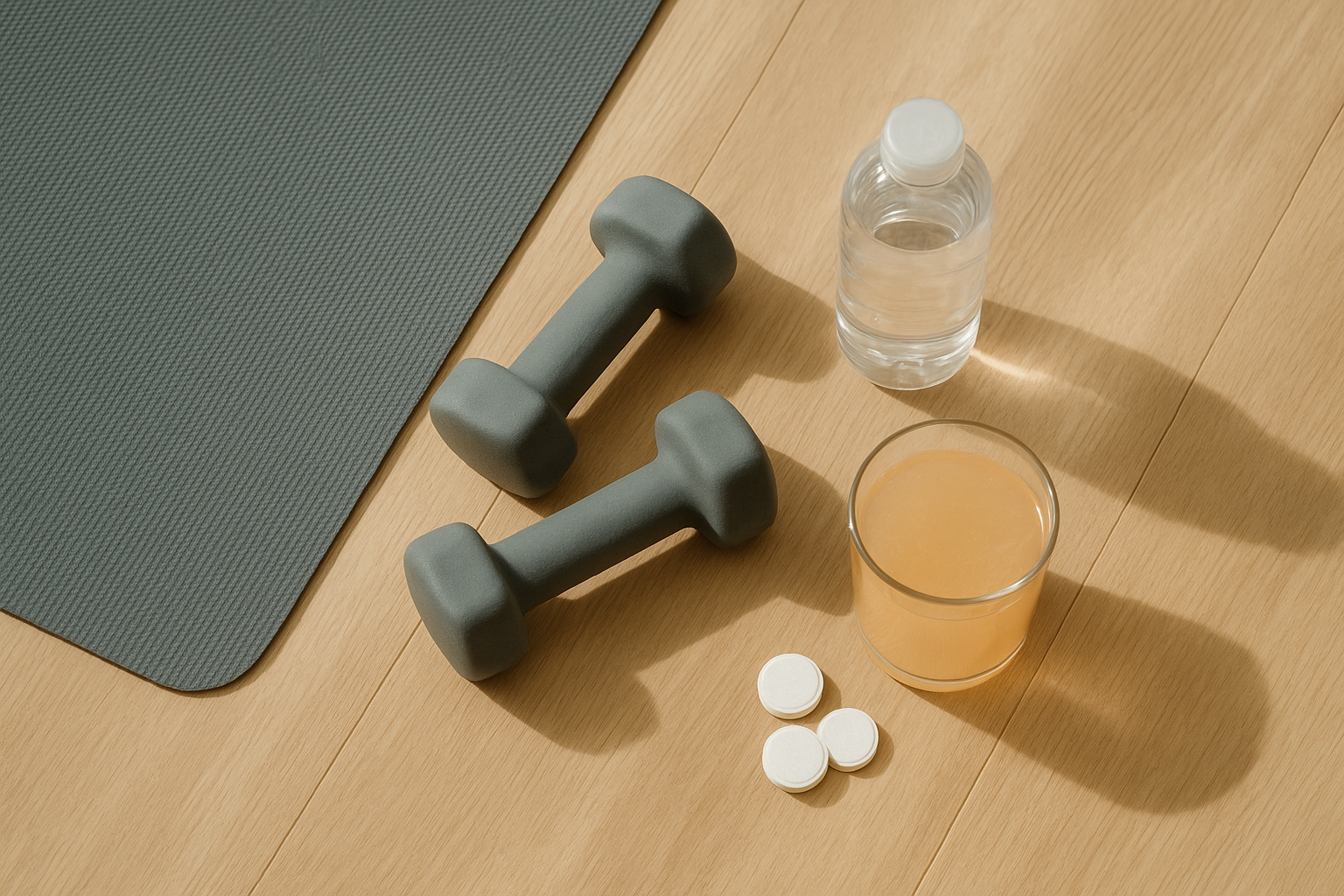
Staying properly hydrated is one of the easiest ways to upgrade your home workouts, yet many people are unsure when they genuinely need electrolytes and when plain water is perfectly adequate. With so many colourful powders, tablets and sports drinks on the market, it is tempting to assume that every training session needs a special drink. This article offers an evidence-based guide to using electrolytes at home: how sweat loss works, when to supplement, how to dose, and the most common mistakes people make with these products.
What electrolytes actually do in your body
Electrolytes are minerals that carry an electric charge in your body, mainly sodium, potassium, magnesium and calcium. They help regulate fluid balance, nerve signalling and muscle contraction. When you sweat during a workout, you mainly lose water and sodium, with smaller amounts of other minerals. If you lose too much fluid and sodium without replacing them, you may experience cramps, dizziness, headaches and a drop in performance. For most people doing light or moderate home training of less than an hour, water and a balanced diet easily cover these needs. Electrolytes become more relevant when sweat losses are high, such as in hot environments, longer sessions or back‑to‑back workouts.
When water is enough for your home workouts
For many home gym sessions—short strength training, yoga, Pilates, easy cycling or casual treadmill walks—plain water is usually all you need. If your workout is under 60 minutes, indoors at a comfortable temperature, and you start well hydrated, research shows there is no requirement for extra electrolyte products. You can simply sip water before, during and after training and rely on regular meals to restore minerals. Adding an electrolyte drink in these scenarios often just adds unnecessary sodium and sometimes sugar. Reserve specialised drinks for situations where you are sweating heavily or training at higher intensity, rather than treating them as a default for every workout.
Signs you might benefit from electrolytes
There are clear situations where using an electrolyte drink or tablet can be helpful. If you train at high intensity for more than 60–90 minutes, especially in a hot or humid room, your sweat losses can be substantial. Signs you may benefit from extra electrolytes include very salty sweat marks on clothing, frequent muscle cramps, headaches after workouts, or feeling wiped out despite drinking water. People who do back‑to‑back sessions, such as a long indoor cycling workout followed by strength work, also have less time to rehydrate with normal food and drink. In these cases, adding a measured dose of sodium and other minerals to your fluid can support performance and recovery.
How to dose electrolytes at home
For serious home training blocks, aim to replace both fluids and sodium in a structured way. As a rough guideline, many sports nutrition sources suggest that a typical athlete may lose between 400–1,000 mg of sodium per litre of sweat, though individual losses vary widely. A practical approach is to weigh yourself before and after a hard session; each kilogram lost equals roughly one litre of fluid. Try to drink enough during and after to get back close to your starting weight over several hours. Choose low‑sugar electrolyte products or lightly flavoured tablets that provide a known amount of sodium per serving, and avoid taking multiple servings back‑to‑back without need. Spreading your intake and pairing it with a balanced post‑workout meal will support hydration without overloading on salt.
Common mistakes with electrolyte drinks and tablets
Many people use electrolyte powders or sports drinks as everyday beverages, even when sitting at a desk or doing light activity, which can lead to unnecessary sodium and calorie intake. Another mistake is assuming that all symptoms—like fatigue or headaches—are caused by low electrolytes, when they might be due to poor sleep, under‑fueling or simply not drinking enough plain water. On the other hand, some home athletes wait until they feel very thirsty or dizzy to start drinking, which is too late. The goal is to match your drink to your session: water for short, easy workouts; an electrolyte drink for longer, sweatier training. Always read labels carefully, noting how much sodium and sugar you get per serving, and adjust based on your own sweat rate, climate and health conditions.
In summary, you do not need a special drink for every home workout. For short or moderate sessions in a cool environment, water plus a normal diet is more than sufficient. Electrolyte supplements become helpful tools when you train hard for longer durations, sweat heavily or do multiple sessions in a day. By understanding how sweat loss works, watching for signs of dehydration and dosing your electrolytes sensibly, you can support performance and recovery without wasting money or over‑complicating your routine. Use electrolyte products strategically, not automatically, and let the intensity and duration of your training dictate when you really need more than just water.









