If you want a low-impact, full body home workout that supports your joints and posture, a wall pilates inspired routine is a smart choice. Using nothing more than a clear section of wall and a comfortable mat, you can train core, glutes, upper body and mobility in just 30 minutes. The wall gives you feedback on your alignment, helps with balance and makes each move more beginner-friendly, while still offering ways to progress as you get stronger.
Set up your wall pilates space at home
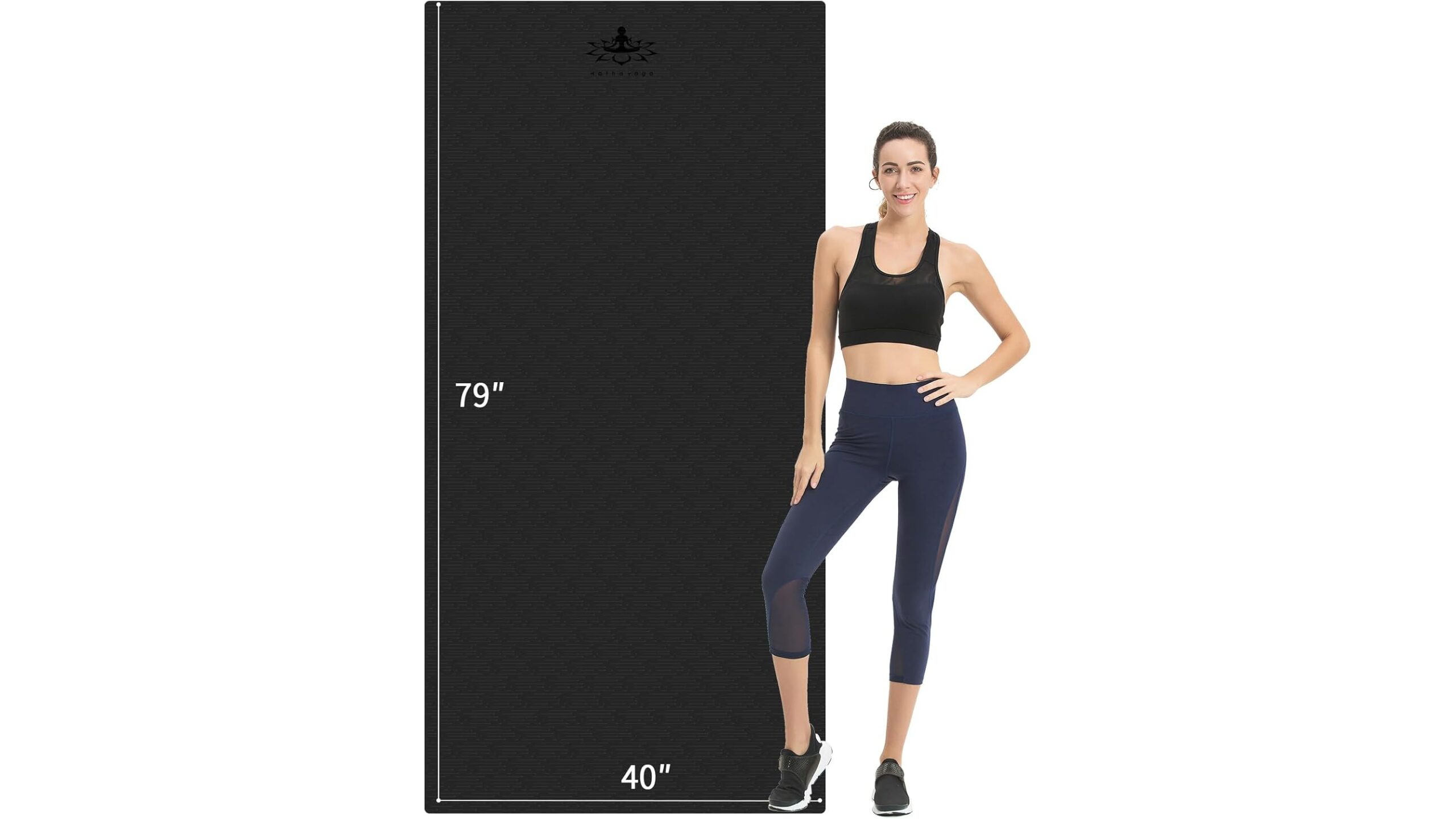
Before you start, clear enough space so you can lie down with your feet on the wall and extend your arms overhead without hitting furniture. A supportive, non-slip mat will make a big difference to comfort and stability. The Hatha Yoga Extra Long TPE Yoga Mat is an excellent option for wall pilates: it is extra-long (79″ x 40″) and wider than standard, so you can perform wall-supported bridges, leg slides and arm reaches without falling off the edges. At 1/2″ thick, it cushions knees, spine and hips on hard floors, while the textured, non-slip surface on both sides keeps the mat in place when you push into the wall. Made from SGS-certified TPE, it is designed to be resilient and tear-resistant for regular home workouts, and the generous size also suits taller users or people who like more freedom of movement.
Warm up: breathing, posture and wall alignment
Begin with 5 minutes of gentle activation to connect with your posture and breath. Stand with your back to the wall, heels a few inches away. Let your sacrum, mid-back and the back of your head touch the wall, softening your ribs and letting the shoulders relax. This wall alignment position helps you feel a neutral spine. Inhale through your nose, expanding your ribcage sideways into the wall; exhale slowly through the mouth, as if fogging a mirror, feeling your deep core muscles gently engage. Slide your arms up and down the wall in a “snow angel” motion to mobilise shoulders and upper back, then add slow heel raises, using the wall for balance. The goal here is to wake up postural muscles and build awareness, not to chase fatigue.
Main block 1: core and glutes with wall support
Next, focus on the powerhouse: core and glutes. Lie on your back on the mat with your hips about a foot from the wall, feet flat on the wall, knees bent at roughly 90 degrees. Press gently into the wall as you exhale and curl your tailbone to lift into a wall bridge, feeling glutes and hamstrings switch on. Inhale at the top, then slowly roll down one vertebra at a time. Repeat for 10–12 reps. Progress by walking your feet higher up the wall or by lifting one heel at a time. Follow with wall dead bugs: hips and knees at 90 degrees, shins parallel to the wall, arms reaching to the ceiling. Exhale as you slide one heel down the wall and the opposite arm overhead, keeping your lower back gently heavy on the mat. Alternate sides for 8–10 slow reps per leg, prioritising control over range of motion.
Main block 2: upper body strength and posture
The wall is a powerful tool for teaching shoulder and upper-back mechanics. Stand facing the wall at arm’s length. Place your palms on the wall at chest height and perform incline wall push-ups, keeping ribs tucked and body in a straight line from head to heels. Beginners can stand closer to the wall for less load; to progress, walk your feet back further. Aim for 8–12 controlled reps. Then turn sideways for wall-supported rows: loop a light resistance band (or towel) around your hands, elbows grazing the wall behind you as you pull back and squeeze your shoulder blades. If you have a small pilates ball such as the Official Club Kit Original Soft 9 Inch Pilates Ball, you can also place it between your upper back and the wall for gentle scapular mobility drills, rolling slightly up and down to massage tight areas while practising shoulder blade control.
Main block 3: lower body strength, balance and mobility
For the lower body, use the wall to safely explore single-leg and hip mobility work. Start with wall sit variations: back against the wall, feet hip-width and slightly forward. Slide down until your thighs are at a comfortable angle (not necessarily parallel), pressing through mid-foot and heel. Hold for 20–30 seconds, breathing steadily and keeping knees tracking over toes. As you adapt, lower a little deeper or extend one leg for a few seconds at a time. Then train hip mobility with standing leg slides: face the wall, hands lightly resting on it, and slide one foot up the wall to a gentle front kick position, focusing on length through the back of the leg. Repeat to the side for hip abduction, using the wall as a guide to keep your pelvis level.
Cool down: wall-assisted stretches and relaxation
Finish with 5 minutes of wall-assisted stretching to restore length and calm your nervous system. Lie on your back with your legs up the wall in an easy “L” shape, adjusting your distance so your hamstrings feel a light, comfortable stretch. Breathe slowly, letting your lower back and shoulders sink into your mat. From here, you can open into a gentle straddle by sliding your heels apart on the wall, stopping before any pulling sensation in the inner thighs becomes intense. Roll onto your side and come to sitting with your back against the wall for a final minute of mindful breathing, feeling your spine supported and tall. Notice the difference in your posture and how your body feels compared with the start of the session.
This 30-minute wall pilates inspired home workout offers a joint-friendly, equipment-light way to build strength, improve posture and enhance mobility in any room. With just a supportive mat like the Hatha Yoga Extra Long TPE Yoga Mat and, optionally, a small pilates ball such as the Official Club Kit Original Soft 9 Inch Pilates Ball, you can tailor each exercise to your current strength and flexibility. Repeat this routine two to three times per week, focus on controlled breathing and alignment, and gradually add reps or more challenging variations as your confidence grows.