
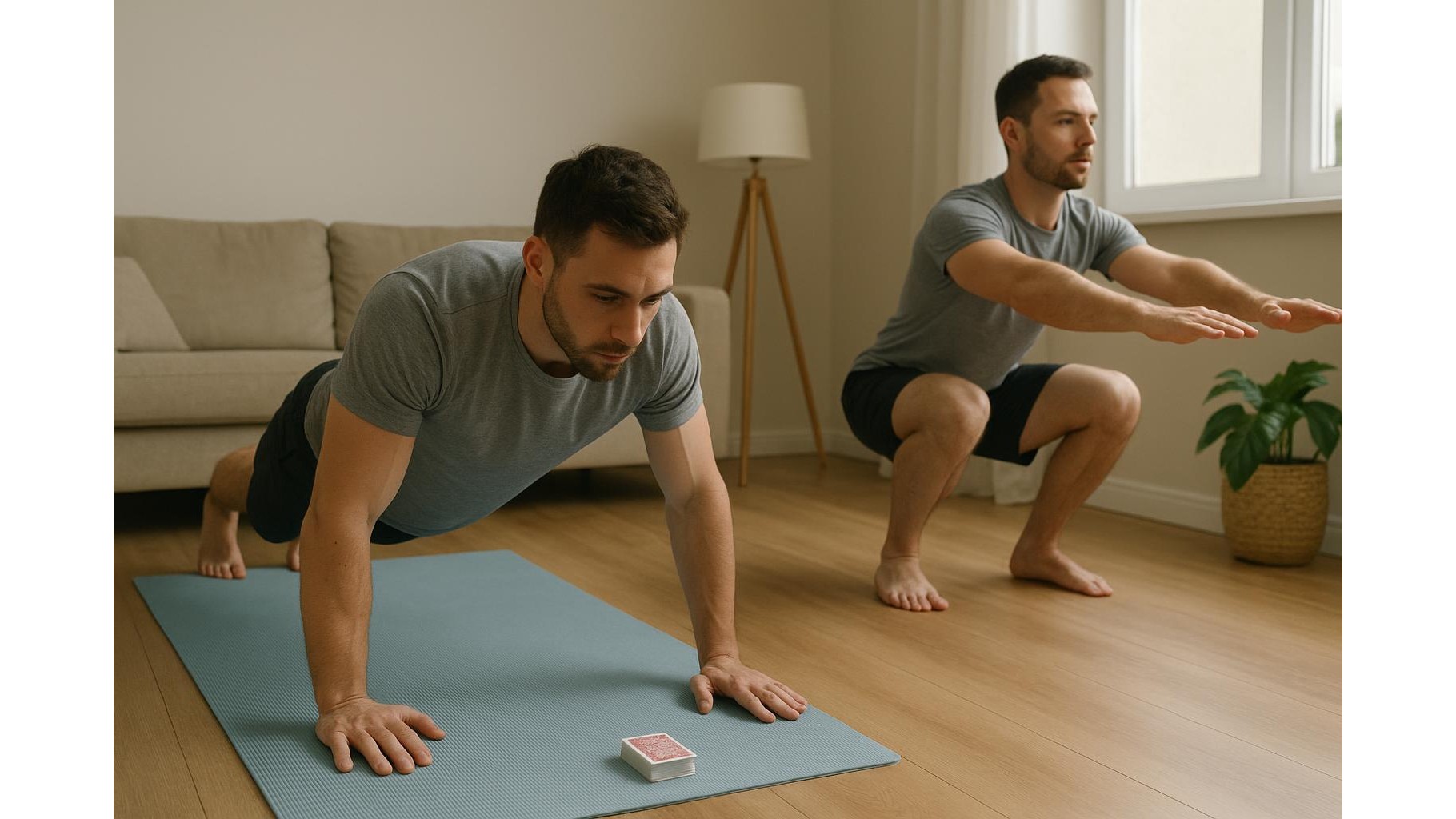
The classic deck of cards is more than a rainy-day pastime: it can be a compact, endlessly variable engine for a challenging home workout. By pairing each suit with a movement and using card values as reps or time, you get a gamified full body routine that feels less like a chore and more like a game. All you need is your bodyweight, a mat, and a standard deck.
How the deck-of-cards workout works
At its core, a deck-of-cards workout is simple. You assign each suit a specific exercise, shuffle the deck, then flip one card at a time. The suit tells you which movement to perform, and the value tells you how many reps or seconds. For example, if hearts are push-ups and you draw the 7 of hearts, you do 7 push-ups. Face cards can be set to a fixed value (e.g., 10 reps) and aces can be your “boss cards” with a higher rep count or a special move. You can run the entire deck for a brutal challenge or just use half for a shorter session.
Assigning suits for a full body routine
To make the workout truly full body, assign suits to cover different movement patterns. A sample setup:
- Hearts – Push-ups (horizontal push)
- Spades – Bodyweight squats or reverse lunges (lower body)
- Diamonds – Glute bridges or hip thrusts (posterior chain)
- Clubs – Dead bugs or plank variations (core)
Keep a mat handy to protect your wrists, knees, and spine during floor work. If you draw the same suit many times in a row, embrace the fatigue but stay strict with technique—quality reps matter more than racing through the deck.
Scaling difficulty for beginners to advanced
This scalable home workout is easy to adjust. Beginners can reduce volume by removing some cards (e.g., only 20–30 cards), capping reps per card (max 10), or turning face cards and aces into shorter time-based holds (10–20 seconds). They can also use simpler variations like incline push-ups or supported squats. Advanced movers can use the full 52-card deck, treat face cards as 12 reps, aces as 15–20 reps, and upgrade movements to decline push-ups, jump squats, single-leg hip thrusts, or long plank holds. You can also add EMOM (every minute on the minute) structure by drawing one card each minute.
Keeping it fun, varied, and motivating
The gamified nature of this card-based workout makes it surprisingly engaging. Shuffle often so you never know what’s coming next, and set small “mini-goals” like clearing 10 cards without pausing. To add variety, occasionally reassign the suits to new exercises or theme the deck (e.g., “lower-body day” with three leg suits and one core suit). Use a timer to challenge your completion time but never at the expense of form. If you train with a partner, alternate card draws or compete to finish your half of the deck first while still maintaining good technique.
Safety, form, and recovery tips
Because card draws can cluster exercises, fatigue can sneak up on you. Prioritize controlled reps, especially for shoulders, knees, and lower back. Insert short rest breaks every 10–15 cards or whenever your form begins to break down. Warm up for 5–8 minutes with dynamic moves like arm circles, leg swings, and light squats before you touch the deck, and cool down with gentle stretching afterward. Rotate exercises every few weeks to avoid overuse and keep progress moving, and track how many cards you clear to see your endurance improve over time.
The deck-of-cards home workout turns a simple pack of cards into a compact, versatile full body training system. With smart suit assignments, clear scaling options, and an emphasis on form, you get structure without boredom and intensity without equipment. Shuffle the deck, hit the mat, and let the next card decide your next move.









