Building strength at home does not require a full commercial gym. With just a suspension trainer and a pair of dumbbells, you can run a balanced upper–lower split four days per week, hitting every major muscle group in under 45 minutes per session. This plan is designed for intermediate home athletes who want structure, clear regressions and progressions, and minimal but effective equipment.
Essential home gym tools for an upper–lower split
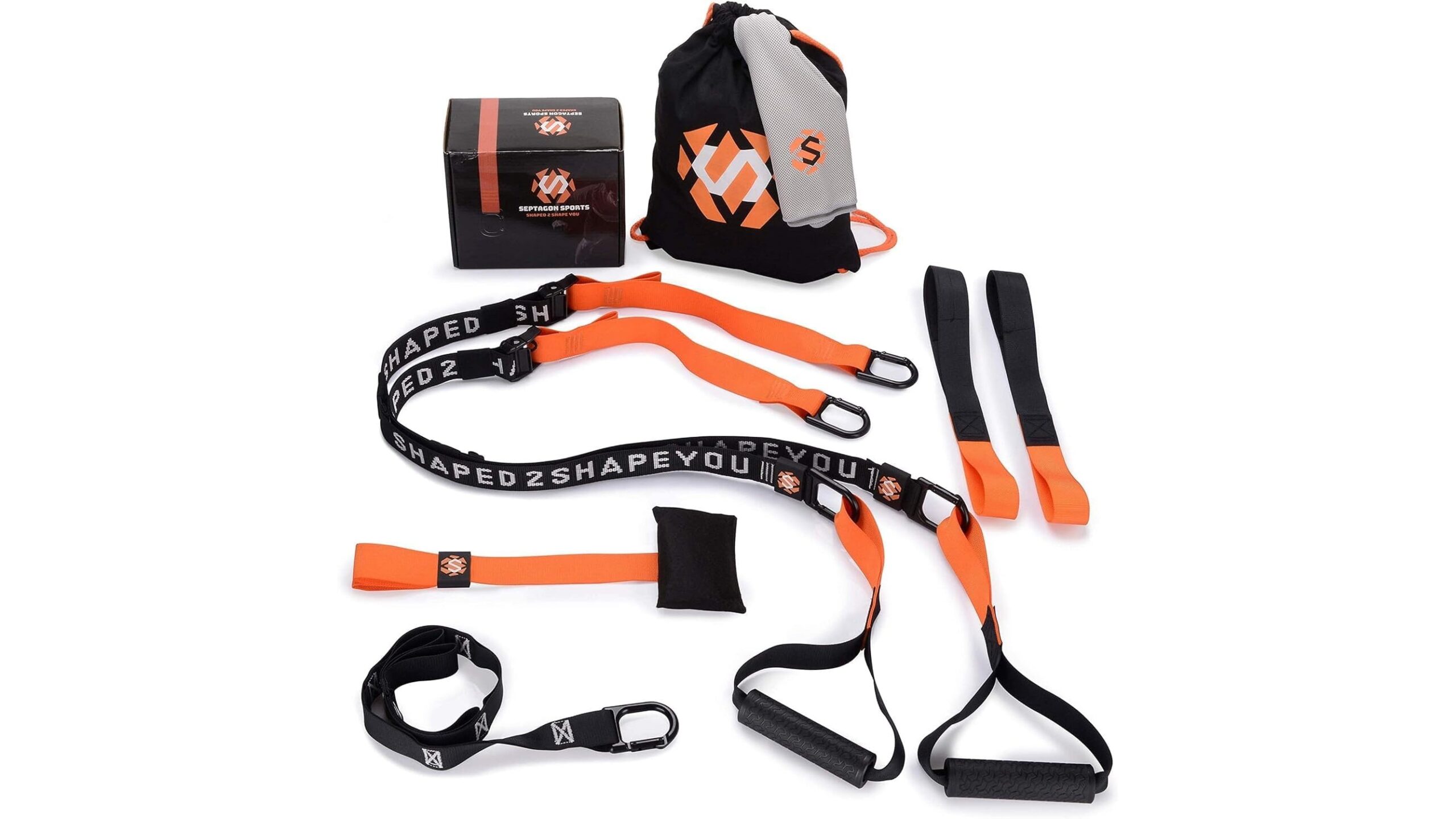
A high‑quality suspension system vastly expands what you can do in a small space. The Premium Sling Trainer Set Suspension Trainer with Towel, Backpack Bag and Training Book is a robust choice for home gym users. It features four‑fold stitched straps, solid rubber handles, padded foot cradles and both a door anchor and attachment loop, so you can train in a doorway or off a beam. The rotating handles improve comfort during rows, presses and core work, while the quick‑adjust mechanism lets you change strap length in seconds between exercises. Packed in a compact backpack with a training towel and exercise guide, it is easy to store or travel with, making it ideal for a minimalist yet capable home gym setup.
Warm-up structure for upper and lower sessions
Each 45‑minute session starts with a focused 10‑minute warm-up. Begin with 2–3 minutes of light cardio (marching in place, jump rope, or brisk step‑ups) to raise your heart rate. Follow with dynamic mobility:
- Arm circles, band pull‑aparts or light suspension Y‑raises for shoulder prep
- Bodyweight squats and reverse lunges for hip and knee mobility
- Cat–cow and hip hinges for spinal and hamstring readiness
Finish with 1–2 easy sets of your first main exercise (for example, suspension rows on upper days or goblet squats on lower days) at about 50–60% effort. This primes the specific movement pattern and reduces injury risk while keeping you fresh for the main work.
Upper-body days: push, pull and core
On upper days, aim for three main supersets plus accessory core work. A sample structure:
- Superset 1: Suspension rows (3×8–12) with dumbbell floor or bench press (3×8–12). Regress rows by stepping closer to vertical; progress by walking feet forward. Increase dumbbell load or tempo for progression.
- Superset 2: Suspension push‑ups (3×8–12) with suspension face pulls or rear‑delt rows (3×12–15) to balance pushing and pulling volume.
- Superset 3: Dumbbell overhead press (3×8–10) paired with suspension biceps curls or triceps extensions (3×10–15), adjusting strap angle to scale difficulty.
- Core finisher: 2–3 rounds of suspension body saws or fallouts and dead bugs, 20–30 seconds each.
Rest 45–75 seconds between sets. Focus on controlled tempo and full range of motion rather than chasing maximal load.
Lower-body days: squats, hinges and unilateral strength
Lower days combine dumbbell strength work with suspension assistance for balance and stability. Structure them similarly with 3–4 key moves:
- Goblet squats with a single dumbbell (4×8–12). Use the suspension trainer lightly for support if mobility or balance is an issue; remove support and increase load to progress.
- Dumbbell Romanian deadlifts (3×8–10) for hamstrings and glutes, keeping a flat back and pushing hips back.
- Suspension reverse lunges (3×8–10 per leg) holding the straps for balance. Progress to rear‑foot‑elevated split squats using the foot cradles for a serious unilateral challenge.
- Glute bridges or hip thrusts with dumbbell load (3×10–15), followed by suspension hamstring curls for posterior chain endurance.
Adjust volume to stay within 45 minutes, and use the suspension trainer to regress movements if technique starts to break down.
Progressions, regressions and weekly schedule
A simple four-day upper–lower split might follow an Upper A / Lower A / Upper B / Lower B pattern across the week, alternating grip angles, foot positions and rep ranges for variety. For example, Upper B can emphasise incline pressing with feet elevated in suspension push‑ups and neutral‑grip rows, while Lower B focuses more on unilateral work and tempo squats. Progress weekly by adding 1–2 reps per set, slightly increasing dumbbell weight, or stepping further under the anchor point to make suspension moves harder. If you struggle to complete sets with good form, regress by shortening ranges of motion, using the straps for added support, or slightly reducing total volume.
By combining a durable suspension trainer such as the Premium Sling Trainer Set Suspension Trainer with Towel, Backpack Bag and Training Book with a pair of dumbbells, you can run an efficient, progressive upper–lower split entirely at home. Structured warm-ups, clear exercise pairings and built‑in progressions help intermediate athletes build strength, muscle and stability without crowding the living room with gear.