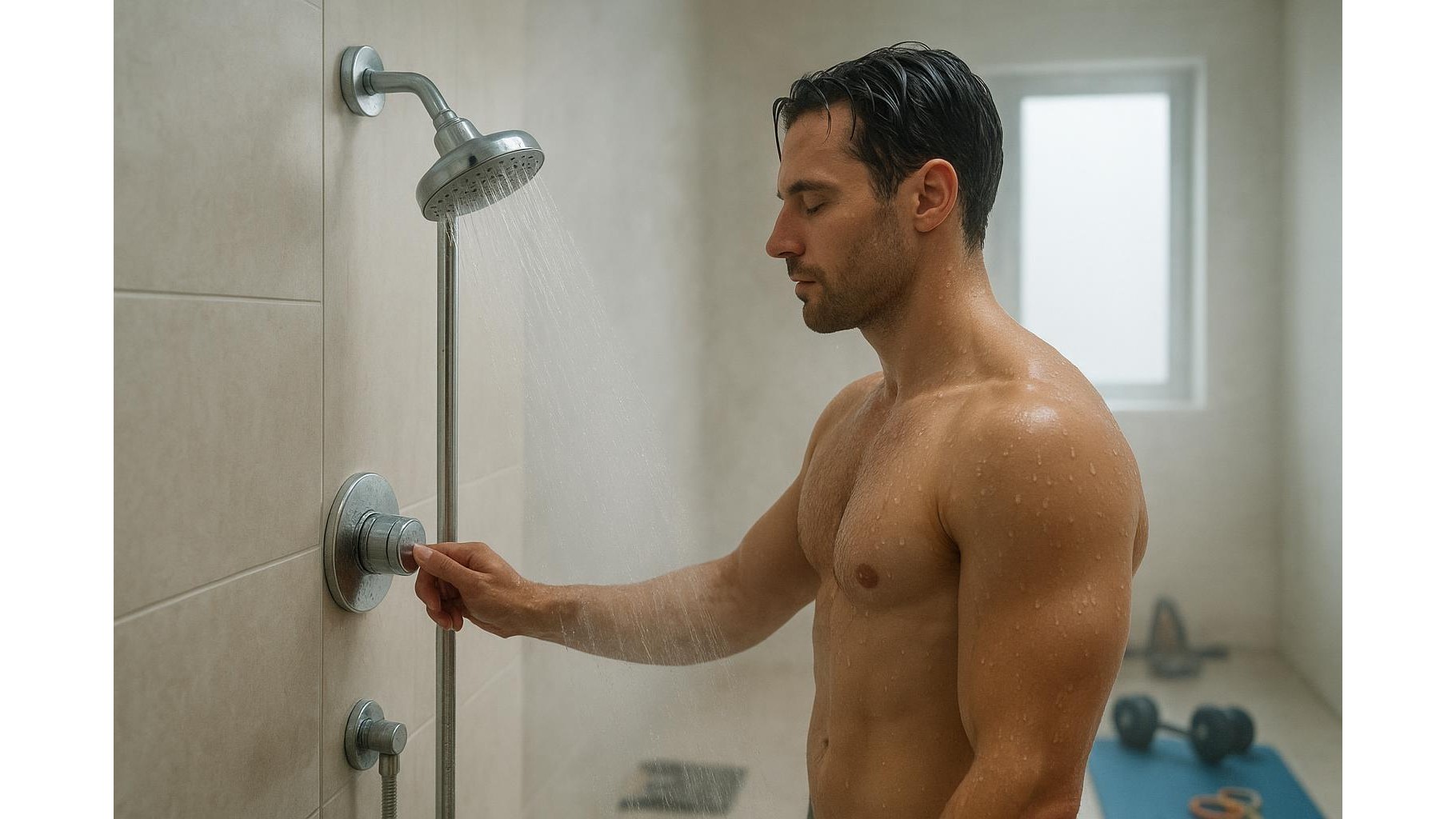
Using a cold shower after home workouts is one of the simplest ways to feel fresher, reduce the perception of soreness and cool down when you do not have access to an ice bath or spa. But not every protocol is equally effective, and some can even blunt your training adaptations if misused. This guide looks at what science actually says about cold water exposure and offers clear, practical cold shower protocols you can apply after strength, cardio and mixed sessions in your home gym.
How cold showers influence muscle recovery
Research on cold water immersion shows that exposing your body to cool or cold water after exercise can reduce inflammation markers, lower skin and muscle temperature, and decrease the perception of muscle soreness. Cold showers are a lighter version of this: water from a typical home shower in the UK ranges from about 10–15°C at its coldest, which is enough to trigger vasoconstriction (narrowing of blood vessels) and activate your sympathetic nervous system. This can make your legs feel lighter and your mind more alert. However, very long or extremely cold exposures right after heavy strength work may slightly reduce hypertrophy and strength gains over time, so your protocol should match your main goal: maximal performance and adaptation, or faster short‑term recovery.
Best cold shower protocol after strength training
For heavy strength training at home (squats, deadlifts, presses with a rack or adjustable dumbbells), the priority is long‑term muscle and strength gains. In this case, avoid very aggressive cooling immediately after your last set. Instead, finish your session, perform 5–10 minutes of light cool‑down (walking, easy cycling on a home bike, mobility), then take a cool, not freezing, shower. Aim for 20–25°C water for 3–5 minutes, focusing the stream on your legs, hips and upper back rather than staying under full cold on your whole body. This provides a gentle reduction in skin temperature and heart rate without fully shutting down the inflammatory signalling you need for adaptation. If your main goal is muscle growth, reserve very cold, longer showers for non‑lifting days.
Cold shower routine after cardio and conditioning
After cardio sessions such as treadmill intervals, indoor cycling or bodyweight conditioning circuits, the risk of blunting strength adaptations is smaller, and the main problem is often overheating and lingering fatigue. Here, a more assertive cold shower protocol can help. Cool down for 5 minutes at very low intensity, then switch your shower water to the coldest level you can tolerate. Alternate 45–60 seconds of cold water on the torso and legs with 30–45 seconds of slightly warmer water for a total of 5–7 minutes. This contrast‑style shower increases circulation and may speed subjective recovery, so you feel ready for daily life again. Breathe slowly through your nose, keeping your exhales longer than your inhales to avoid excessive sympathetic overactivation.
Using cold showers on mixed training days
Many home gym athletes combine strength and cardio in the same session. For example, you might lift first and then finish with kettlebell swings, rowing or skipping rope. On these days, treat your cold water exposure as a compromise: protect your strength work while still getting cooling benefits. After your lifting and conditioning, perform a 5–10 minute easy walk, then take a lukewarm shower for 2–3 minutes to start bringing temperature down. Finish with 2–3 rounds of 30–45 seconds of cold water on the legs and arms only, keeping the torso and neck mostly out of the direct stream. This way you gain some reduction in soreness and body heat without a long, full‑body ice‑bath effect that might interfere with muscle adaptation.
Cold showers, sleep and late‑evening workouts
If you train in the evening in your home gym, your post‑workout shower strongly affects sleep quality. Intense exercise raises your core temperature, which can delay the onset of sleep. A brief, cool shower helps transition your body into a better thermal zone for rest. Opt for 2–4 minutes of moderately cool water (not the coldest you can tolerate) around 60–90 minutes before bedtime, focusing on the torso and thighs. Very cold showers right before sleep can feel stimulating and increase alertness, so save the most intense protocols for earlier in the day. Combine your cool shower with a dark, quiet bedroom and a light post‑workout meal rich in protein and complex carbs to support overnight recovery and muscle repair.
Ultimately, cold showers after home workouts are a flexible tool, not a magic fix. Match the intensity and duration of cold exposure to your training goals: gentler and shorter after heavy strength work, more assertive after hard cardio, and balanced on mixed days. Use cool showers at night to support better sleep, and avoid turning every session into a test of willpower under freezing water. By tuning your protocol, you can get the psychological and physical recovery benefits of cold water without sacrificing your long‑term progress.