Training in a bright home gym with big windows or a balcony feels amazing, but all that light can accelerate fabric damage and, in some cases, let more UV reach your skin than you expect. Choosing UV-resistant workout clothes helps protect both you and your gear. Here is how to pick tops, leggings and shorts that offer real UV protection, plus a couple of concrete product ideas you can buy online.
Why UV protection matters in a bright home gym
If your squat rack, bike or mat is set up by a south-facing window, you are exposed to indirect UV rays every time you train. Over time, this can contribute to skin ageing, sun spots and, in high doses, increased skin cancer risk. It also fades colours and weakens fibres, especially on cheaper synthetics. While standard leggings and tees might feel similar, only garments designed with UPF-rated fabrics are tested to block a defined percentage of UV. Think of UPF (Ultraviolet Protection Factor) as SPF for clothing: UPF 50+ means the fabric allows just 1/50 of UV radiation to pass through. For home athletes who log hours near glass, building a small rotation of UV-protective tops, leggings and shorts is a smart, long-term move.
Key labels and certifications to look for
When you shop, scan product pages and tags for explicit UPF ratings, ideally UPF 40–50+. Phrases like “sun protective” or “UV blocking” without a number are vague marketing; a clear label such as “UPF 50+” indicates laboratory-tested performance. Many performance brands follow standards such as EN 13758 (Europe) or label “UV Standard 801”, both reassuring signs. Also look for notes about permanent UV protection versus chemical finishes that wash out. If the listing doesn’t mention UPF at all, assume normal coverage only, even if the fabric feels thick. Darker colours, tighter weaves and double-knit constructions generally enhance protection, but a proper UPF label is still the gold standard for your sun-facing home gym sessions.
Best fabrics and construction for UV-resistant tops
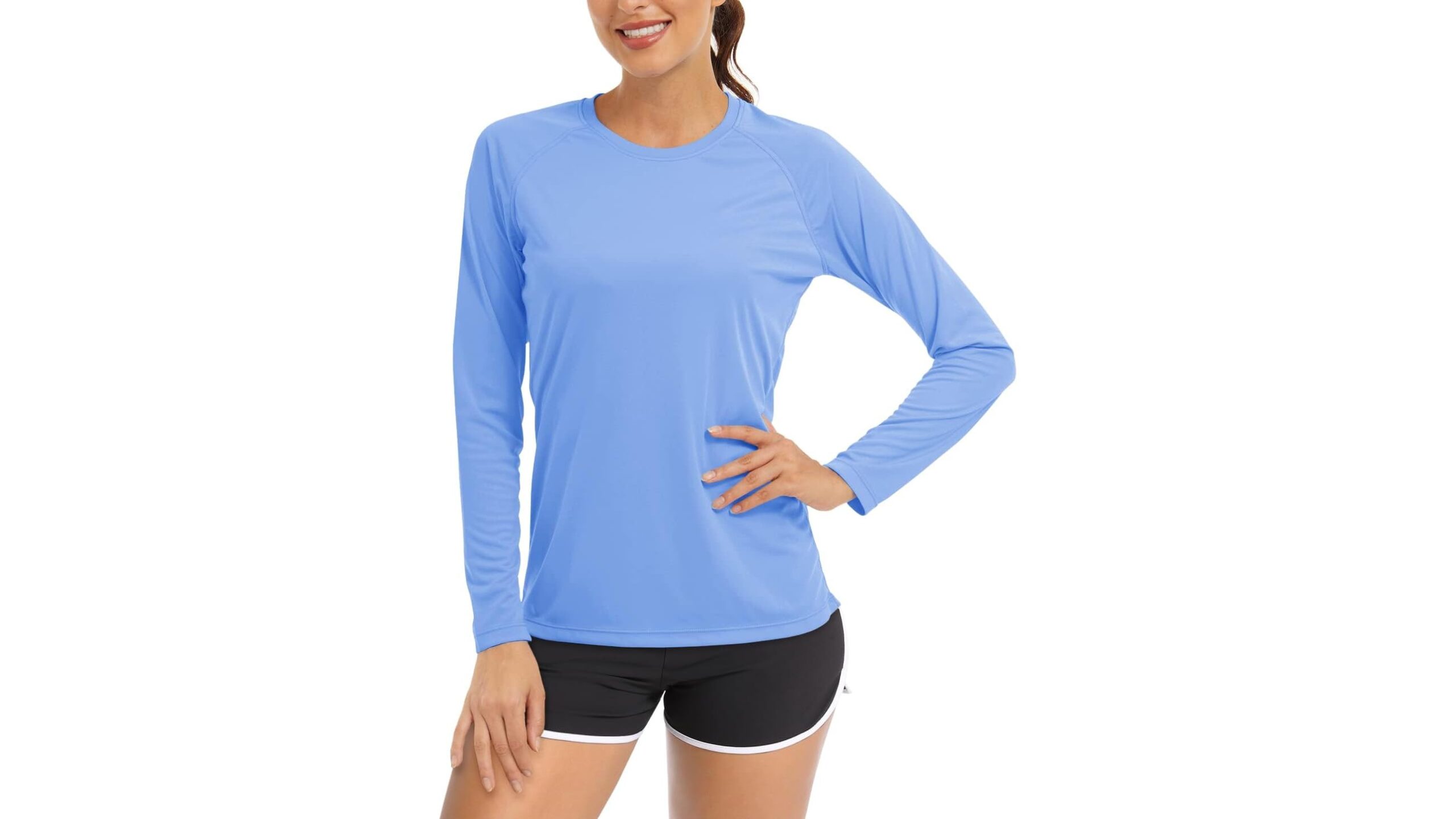
For upper-body protection, long sleeves in technical fabrics are ideal. A strong example is the TACVASEN Womens Long Sleeve Tops UV Sun Protection Shirt UPF 50+ Outdoor Performance T-Shirt, which is explicitly marketed as a UPF 50+ shirt. Lightweight synthetic knits like polyester and nylon can be engineered to block UV while staying breathable and quick-drying, perfect if your home gym runs hot in the afternoon. Look for features like long sleeves, a crew or mock neck to guard the chest and neck, and a fit that is close but not restrictive to maintain airflow. Flatlock seams and soft-touch fabrics help reduce chafing during rowing, kettlebell swings or push-ups. In bright rooms, a top like this lets you skip layering while still keeping shoulders and arms protected.
Choosing leggings and shorts for leg protection
Legs often get overlooked, especially during indoor workouts, but if you position your treadmill or bike by a big window, your thighs and knees can get plenty of indirect sun. Not all leggings advertise UPF, so look for high-density, non-see-through knits and darker colours when UPF data is missing. For days when you prefer shorts, models with more coverage and technical fabrics are best. The baleaf Women’s Cycling Shorts High Waisted 3″/5″/8″ Running Shorts Gym Yoga Short with Pockets offer multiple inseam options (3″, 5″ and 8″), so you can choose how much of your quads you want covered while still staying cool. Their snug, high-waisted design stays put during squats and indoor cycling, and the thicker, compressive fabric provides better natural UV blocking than flimsy, ultra-thin shorts.
Care tips to maintain UV protection over time
Even the best UV-protective workout clothes can lose performance if you treat them harshly. Wash in cold water with mild detergent, and avoid fabric softeners, bleach and harsh stain removers, all of which can break down fibres or strip UV finishes. Skip the tumble dryer where possible: line-dry your tops, leggings and shorts away from direct, strong sunlight to reduce fibre degradation and colour fade. Avoid over-stretching garments when putting them on, because extreme stretching can open up the weave and reduce UV blocking. Finally, rotate several pieces in your home gym wardrobe so you are not wearing and washing the same UV shirt every single session; this extends both comfort and protection.
Building a compact, intentional collection of UV-resistant workout clothes makes sense for any bright home gym. Prioritise pieces with clear UPF 40–50+ labels, smart coverage (long sleeves, longer shorts or thicker leggings) and durable, breathable fabrics. Add a dedicated UV top, a pair of high-coverage shorts like the baleaf model, and at least one darker, squat-proof legging into your rotation. With the right gear and some careful laundering, you can enjoy all the mood-boosting daylight your home gym offers while keeping your skin and your kit better protected for the long term.