Building full body strength at home does not require a rack of dumbbells or a huge dedicated gym. With just a stable chair and a loaded backpack, you can create an effective, structured routine that targets every major muscle group, fits into a small living room, and scales for both beginners and intermediates. This minimalist approach is ideal if you want to stay consistent, avoid clutter, and get strong using only everyday objects you already own.
Why a Chair and Backpack Are Enough for Strength
A solid, non‑folding chair gives you an elevated surface for push‑ups, dips, step‑ups and hip thrusts, letting you adjust angles and difficulty without extra equipment. A sturdy backpack loaded with books or water bottles acts as a flexible weight for squats, lunges, rows and carries. The key benefit is progressive overload: you can gradually add load to the backpack as you get stronger. Combined, these two items allow you to work the upper body, lower body and core in multiple movement patterns—push, pull, squat, hinge and carry—mirroring what you would do with traditional gym equipment.
Lower Body Strength: Squats, Lunges and Hip Thrusts
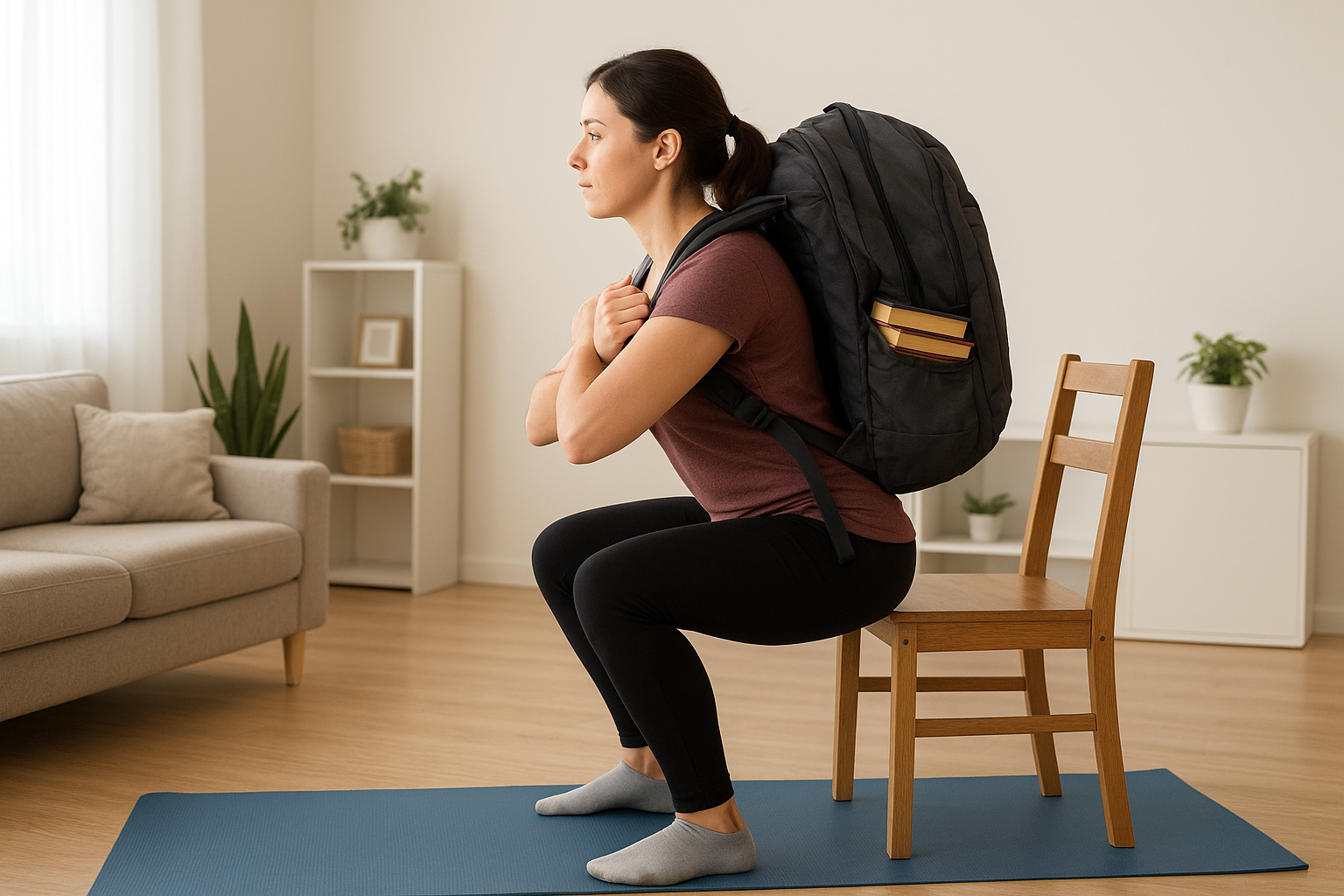
For the lower body, start with chair squats: stand in front of the chair, tap your hips to the seat, then stand back up, keeping your chest tall and knees tracking over your toes. Beginners can use the seat as a guide to learn depth and balance; intermediates can wear a loaded backpack hugged to the chest to increase resistance. Next, perform reverse lunges holding the chair lightly for balance if needed. Add the backpack once bodyweight feels easy. Finish with hip thrusts: lie with your upper back on the chair edge, feet flat, and drive your hips up while squeezing your glutes; place the backpack across your hips for extra load. Aim for 3 sets of 8–15 reps per movement, adjusting reps to match your current level.
Upper Body Push: Chair Push-Ups and Dips
To build pressing strength, use the chair to scale push‑ups. Beginners can place their hands on the seat for incline push‑ups, which reduces the load on the upper body while still challenging the chest, shoulders and triceps. As you progress, move your hands to the floor and place your feet up on the chair for decline push‑ups, increasing difficulty. For the triceps and front shoulders, perform chair dips: hands on the seat, fingers forward, feet on the floor and hips close to the chair as you bend your elbows and push back up. Intermediates can extend their legs or rest their heels on a second stable surface to increase the lever arm. Focus on controlled tempo and keeping your shoulders down rather than chasing high rep counts.
Upper Body Pull: Backpack Rows and Reverse Flies
Pulling movements are crucial for balanced upper body strength and posture. Load your backpack with books or bottles, grab it by the straps and perform bent‑over rows: hinge at the hips with a flat back, pull the backpack toward your lower ribs, then lower under control. This targets your lats, mid‑back and biceps. For rear‑shoulder and upper‑back work, hold the backpack with both hands and perform reverse flies, opening your arms slightly out to the sides while keeping a soft bend in the elbows. Beginners can start with lighter loads and higher reps (12–15), while intermediates use heavier loading in the 8–10 rep range. Rest 60–90 seconds between sets to maintain good technique.
Core and Conditioning: Carries, Planks and Circuits
To tie the session together, use your backpack as a tool for core stability and light conditioning. First, try loaded carries: wear the backpack and walk slowly around your room, standing tall and bracing your midsection—this challenges your core, hips and upper back. Follow with planks, either with your forearms on the floor and feet on the chair for extra intensity, or hands on the chair for a beginner‑friendly incline. To finish, combine movements into a circuit—for example: 10 chair squats with backpack, 8 incline push‑ups, 10 backpack rows and a 20‑second plank, repeated for 3–4 rounds. This structure improves muscular endurance and elevates your heart rate without high‑impact jumping.
By using a simple chair and a backpack, you can create a compact full body strength workout at home that is safe, scalable and genuinely effective. Focus on quality repetitions, gradual increases in backpack load and consistent weekly practice. Whether you are a beginner learning basic patterns or an intermediate trainee maintaining strength in a small space, this minimalist setup offers enough variety to keep you progressing without investing in bulky gym equipment.