
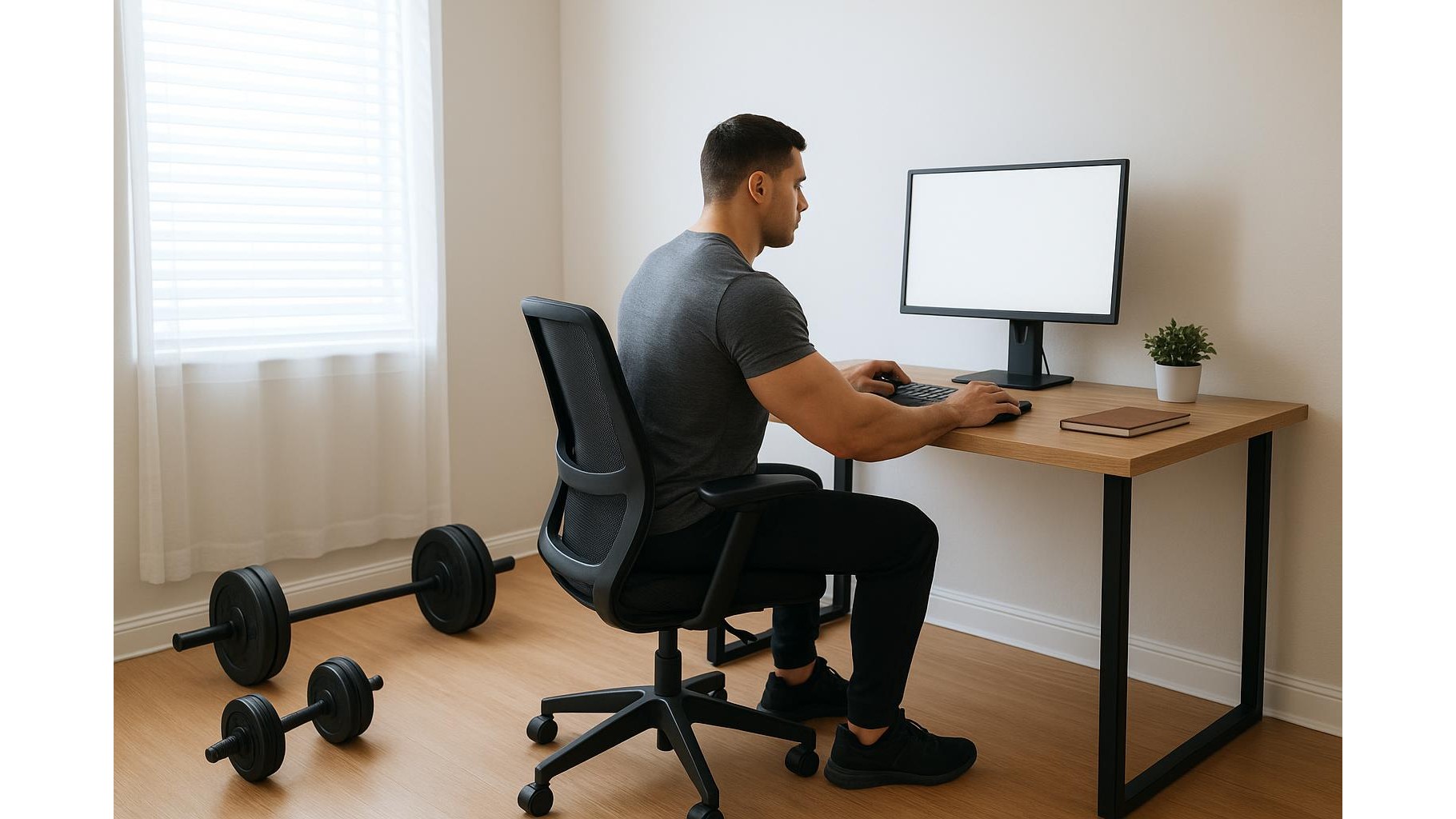
When you lift hard but work all day at a desk, your home office ergonomics can make or break your recovery. Slumped shoulders, a rounded lower back and a craned neck all add extra stress to the same tissues you hammer in the gym. With a few smart adjustments and low‑cost tools, you can turn your work setup into a quiet ally for shoulder health, spine stability and pain‑free home training.
Dial in your chair for lifter‑friendly posture
Your chair is the base of your entire workstation. For lifters, the goal is a neutral spine that lets your lower back recover between squats and deadlifts. Adjust seat height so your hips are level with or slightly above your knees, which reduces shear on the lumbar spine. Aim for both feet flat on the floor, knees at roughly 90 degrees, and a small gap between the chair edge and the back of your knees. Use the backrest to support a natural curve in your lower back instead of perching on the edge of the seat in a constant pseudo‑”sit‑up”. If your current chair lacks built‑in lumbar support, a simple lumbar roll or small cushion behind the lower back can significantly reduce postural fatigue and help your spinal erectors relax away from heavy pulling days.
Set your desk and keyboard to protect shoulders and elbows
Lifters often accumulate hidden fatigue in the shoulders and elbows, especially if they bench, press and pull multiple times per week. Your desk height should allow you to keep your shoulders relaxed, not shrugged toward your ears. When typing, elbows should sit about 90 degrees, close to your torso, with forearms roughly parallel to the floor. If your desk is too high, raise your chair and add a footrest; if it is too low, consider inexpensive risers. Pull the keyboard and mouse close so you are not reaching forward all day, which can overload the anterior shoulder and biceps tendon. A compact keyboard can also reduce how far your arm drifts out to the side to use the mouse, keeping the shoulder in a stronger, more centrated position.
Position your screen to save your neck and upper back
Hours of looking down at a laptop or up at a poorly placed monitor can undo your upper back work between sessions of rows and face pulls. Aim to have the top of your screen at or just below eye level, with the centre of the screen straight ahead so you do not rotate your neck. The monitor should sit about an arm’s length away, allowing you to read comfortably without craning forward into a “turtle neck” posture. If you primarily use a laptop, place it on a stand or stack of sturdy books and add an external keyboard and mouse. Keeping your head stacked over your ribcage reduces chronic strain on the traps and deep neck flexors, freeing up capacity for quality work on overhead pressing days.
Add movement breaks and micro‑mobility for better recovery
Even a perfect ergonomic setup cannot compensate for staying frozen in one position for eight hours. Build short, regular movement breaks into your day to restore circulation and reduce stiffness. Every 30–45 minutes, stand up, walk for a minute, perform a few gentle hip hinges, and open the chest with band pull‑aparts or doorway pec stretches. These micro‑sessions do not replace your warm‑up but keep your shoulders, hips and lower back from locking up. You can also use a simple checklist on your desk: breathe into your belly, relax your jaw, drop your shoulders away from your ears, and plant both feet on the floor. Over time, these habits support better joint health, more stable technique under the bar and fewer nagging aches that derail your training blocks.
Use simple tools to upgrade comfort without a full refit
Improving home office ergonomics for lifters does not require an expensive makeover. A basic footrest keeps your feet supported and can ease tension in the hamstrings and lower back, especially if you raise your chair for better desk alignment. A small lumbar cushion or rolled towel can transform an unsupportive chair, encouraging a natural S‑curve in the spine. Laptop stands, external keyboards and mice are low‑cost upgrades that let you place the screen and input devices where your body wants them, not where the laptop dictates. Combine these tools with consistent daily habits, and your desk stops being a source of cumulative fatigue and becomes another variable you control to support long‑term strength progress.
Bringing a lifter’s mindset to home office ergonomics means treating your desk like any other piece of equipment: it should help, not hinder, performance. By aligning chair, desk and screen to your body, adding a few simple accessories and committing to regular movement breaks, you reduce unnecessary stress on the shoulders, hips and lower back. The payoff is fewer distractions from aches and stiffness, more reliable recovery between workouts, and a home environment that fully supports your goals in the gym.









