Looking for a 30-minute animal flow inspired home workout you can do in a small space, with no equipment and plenty of fun? This follow-along routine uses crawling, rolling and controlled transitions to build strength, mobility and coordination. All you need is a bit of clear floor, some body awareness and a willingness to move like an animal again.
Why animal flow is perfect for small-space home workouts
Animal flow combines elements of yoga, breakdancing and bodyweight training into fluid, ground-based movement. Because you stay mostly low to the floor and move on hands and feet, it’s ideal for small apartments and home gyms. You can turn a yoga mat–sized area into a full-body training zone. The constant weight shifting trains core stability, shoulder strength and hip mobility, while the playful nature of the movements keeps your brain engaged. Unlike classic reps-and-sets routines, sessions feel like a moving meditation, where transitions matter as much as the poses.
Warm-up and joint prep (5 minutes)
Start with a gentle warm-up to protect your joints and prepare for floor work, especially on hard surfaces. Spend 60–90 seconds each on wrist circles and palm rocks (hands on the floor, gently shifting weight forward and back) to get the wrists ready for crawling. Follow with cat-cow in quadruped, focusing on smooth spinal flexion and extension. Add hip circles from all fours, then a slow world’s greatest stretch variation: step one foot outside your hand, open the chest with a gentle twist, then switch sides. Finish with a few controlled bear crawl steps forward and backward to connect breath and movement before the main flow.
Core animal positions: beast, crab and ape
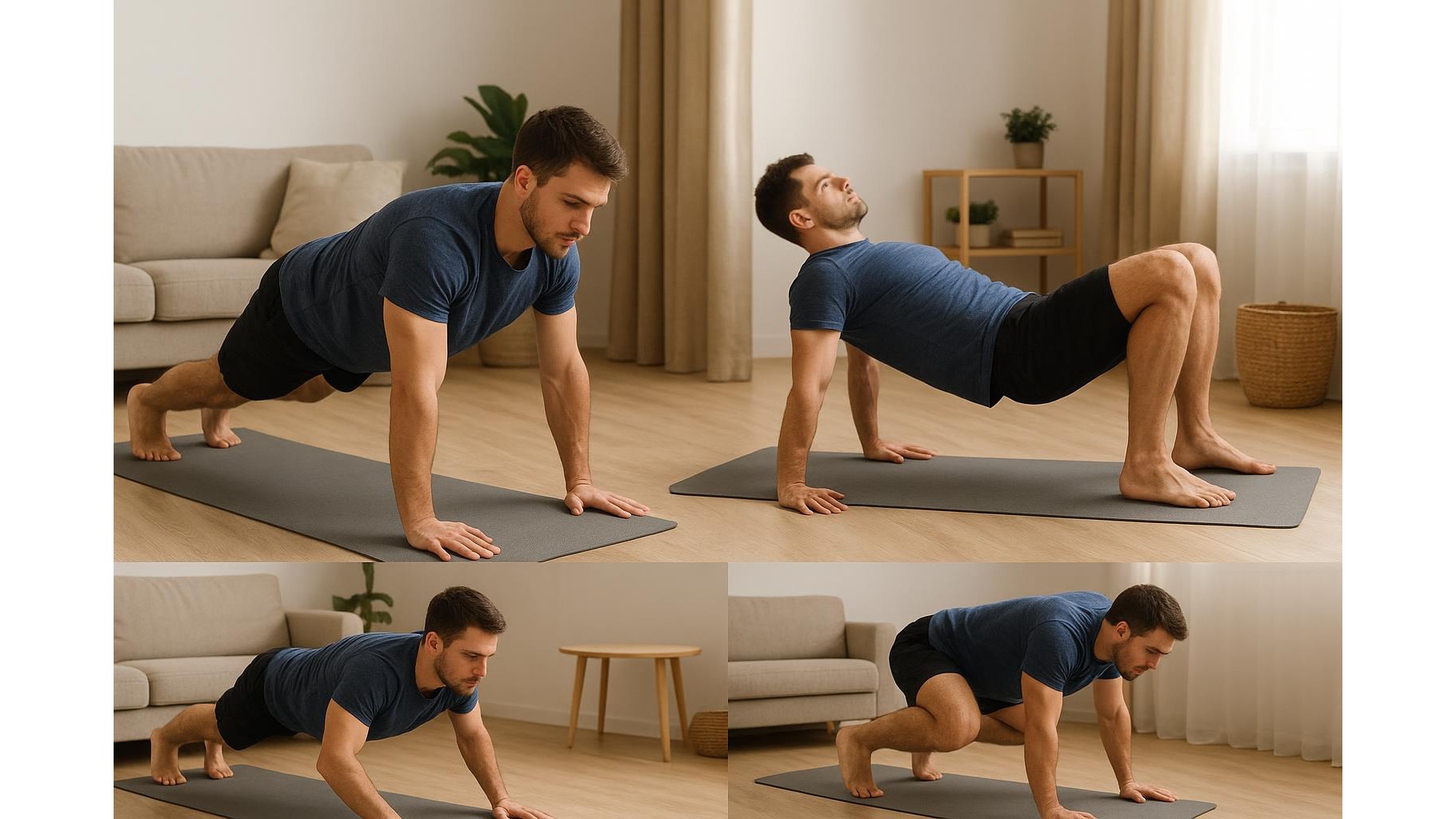
The foundation of this animal flow home workout are three key positions that build strength and coordination. In beast (quadruped hover), hands are under shoulders, knees under hips, knees slightly off the floor: hold for 20–30 seconds, then rest. In crab, you sit with hands behind you, fingers pointing slightly out, lifting the hips to activate shoulders and posterior chain. The ape position is a deep squat with hands on the floor, encouraging hip mobility and ankle range. Beginners can keep knees on the ground in beast, lower hips closer to the floor in crab, or hold onto a chair for balance in ape. Rotate through these three shapes for 2–3 rounds, 30 seconds on, 15 seconds off.
Flowing transitions: crawls, rolls and switches
Once you own the shapes, it’s time to connect them into a continuous flow. From beast, move into a slow bear crawl forward and backward for 30 seconds, keeping hips low and steps controlled. Transition into a crab walk, moving laterally across your mat, then roll gently onto one side to reset your spine before returning to ape. Add underswitches (threading one leg under your body to flip between beast and crab) and side kicks as you gain confidence. Aim for 3–4 sets of 60–90 second flows, focusing on smooth, quiet foot and hand placement rather than speed. This builds full-body strength, rotational control and cardio without any equipment.
Beginner-friendly progressions and safety on hard floors
If you’re new to ground-based training, keep everything slow and controlled. Reduce the load by elevating your hands on a sturdy coffee table or step for beast and bear crawl. Shorten the range of motion in transitions and skip jumps or explosive movements at first. On hard floors, wear lightweight trainers or socks with grip, and consider using a thick mat, folded towel or rug under your hands, knees and hips to avoid pressure points. Take extra time for wrist care: frequent micro-breaks, gentle shakes and stretching the forearms. Stop if you feel sharp pain, especially in wrists, shoulders or lower back; the goal is fluid movement, not grinding through discomfort.
30-minute structure and how to keep it fun
Structure your 30-minute animal flow workout like this: 5 minutes warm-up and joint prep; 10 minutes drilling core positions (beast, crab, ape) with simple holds and small movements; 10 minutes of flowing sequences, 60–90 seconds on, 30–45 seconds rest; 5 minutes of cooldown with gentle hip openers, child’s pose and relaxed breathing. To keep sessions engaging, change the order of movements weekly, try moving to music with a steady beat and treat it like learning a new skill, not just burning calories. Over time you’ll notice better mobility, stronger shoulders and core, and a more confident relationship with the floor—all achieved in a tiny space, with nothing but your body.