Slam balls are one of the most satisfying tools you can add to a home gym: they build explosive power, torch calories and double as a brutal conditioning tool for busy people. But repeated drops on tiles, laminate or a flat upstairs can quickly turn your favourite finisher into a nightmare for your flooring and your neighbours. This guide explains how to choose the right slam ball weight, shell and filling, what floor protection you actually need, and how to use slams safely for strength, fat loss and stress relief at home.
How heavy should your slam ball be?
Getting the right weight is the first step to safe home power training. For most beginners, a 6–9 kg (about 14–20 lb) ball is ideal for high‑rep conditioning work, overhead slams and learning proper mechanics without losing control. Stronger or more athletic users often do best starting around 10–12 kg for power‑focused sets of 5–10 reps. Only move to 15–20 kg when you can slam explosively without your form breaking down or the ball wobbling out of your hands. If several people will share the same home gym, consider buying two complementary sizes, for example a lighter ball for conditioning and a heavier one for pure power work.
Shell and filling: what really makes a ball durable?
A good slam ball needs to survive years of hard drops without splitting or turning into a lumpy mess. Look for a thick, textured rubber shell that feels grippy even with sweaty hands. A slightly soft, dead‑bounce design is best for home use, because it absorbs impact instead of springing back towards your face or ricocheting into furniture. High‑quality balls usually use sand or iron sand fillings that stay evenly distributed; very cheap models often develop soft spots and bulges. Check product photos and descriptions for details like reinforced seams and anti‑burst construction, and read reviews for mentions of leaks or the ball going egg‑shaped after a few weeks of slams.
Protecting tiles, wood and joints from heavy slams
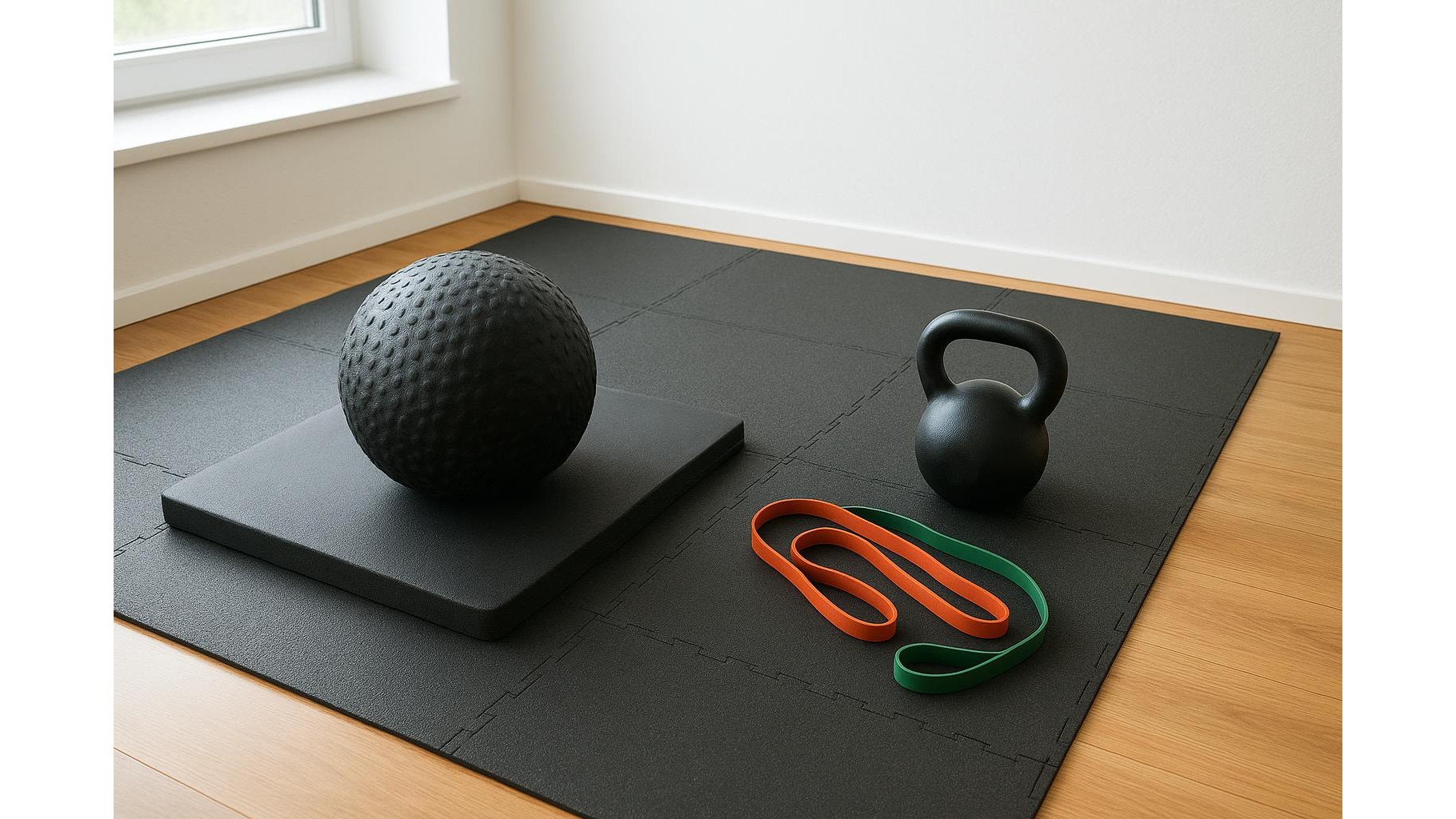
Power work is only useful if you are not destroying your floor – or your ankles. On hard surfaces like tiles, concrete or laminate, always combine a dead‑bounce slam ball with some kind of impact‑absorbing layer. A simple solution is a thick rubber gym mat or interlocking tiles placed where the ball lands. You can even double up: a standard mat plus a cut‑down piece of stable horse stall mat or dense foam where the ball hits. Avoid slamming directly on timber boards or hollow floors, which amplify vibration and noise through the whole house. For upstairs flats, move slams to the most solid corner of the room and keep reps shorter to reduce continuous thudding and stress on the building structure.
Noise control: keep your neighbours on your side
Even with protection, slam balls are not silent. To reduce noise and vibration, choose a ball with a soft, slightly squishy shell and avoid glossy, rock‑hard options that bounce and bang like a basketball. Work on a double‑layered mat and keep the landing zone away from shared walls. You can also change the style of your training: use more chest passes to the floor and rotational throws into a padded wall rather than pure vertical overhead slams, or perform half‑slams where you accelerate the ball hard but guide it down for a softer impact. Short, intense intervals of 10–20 seconds are easier to tolerate for neighbours than 5–10 minutes of continuous pounding.
Programming slam balls for strength, fat loss and stress relief
Once you have the right ball and floor setup, smart programming keeps your joints – and your floor – happy. For power and strength, focus on low‑rep sets of 5–8 slams with full recovery, emphasising maximal speed and perfect form. For fat loss and conditioning, mix slams into circuits: for example, 30 seconds of slams, 30 seconds of push‑ups and 30 seconds of goblet squats for 10–15 minutes. For stress relief, keep technique tight but allow yourself to vent: set a timer for 2–3 minutes and alternate 5 controlled overhead slams with 5 deep breaths. Always warm up your shoulders and hips first and finish before fatigue turns your slams into floppy half‑bends that load your lower back and make the ball land unpredictably.
Choosing the right slam ball for home training is about more than grabbing the heaviest ball on sale. Pick an appropriate weight, a durable dead‑bounce shell with quality filling, and pair it with sensible floor protection and noise‑reduction strategies. Then programme your slams with intent rather than mindless repetition. Done correctly, slam balls can become one of the most effective – and surprisingly joint‑friendly – tools in your home gym, building power, conditioning and resilience without cracking tiles or your relationship with the people living below you.