Building a home gym makes it easier to lift more often, but it also means you are fully responsible for your own safety. A well-chosen compact weightlifting belt can help you brace more effectively on heavy squats, deadlifts and overhead presses without taking up much space or feeling bulky. This guide walks you through how to choose the right belt for home use, from sizing and stiffness to closure systems and how to match a belt to your main lifts.
Why a compact weightlifting belt matters in a home gym
In a home setup you often have limited storage, train alone and move between exercises quickly. A compact weightlifting belt solves several problems at once: it offers a firm surface to brace your core against, it is easy to put on and remove between sets, and it fits neatly on a rack hook or inside a drawer. Instead of a huge, overly stiff belt designed for competition only, a compact model in the 4-inch range balances support and comfort so you can wear it for multiple movements in the same session. This is especially useful for lifters who alternate deadlifts, and pressing in a tight training window.
How to size and fit a weightlifting belt for home training
Correct sizing is the most important factor in choosing a belt. Always measure your waist at the level where the belt will sit—usually around the navel, not your jeans size. A compact weightlifting belt should let you breathe and brace: you want to be able to slide a hand between your torso and the belt when exhaled, then push your abs out firmly into the belt as you take air in. For home workouts, it is smart to pick a belt with some adjustability so you can tighten it for heavy singles and loosen it for higher-rep sets. Many lifters keep one hole tighter for deadlifts and one looser for squats, which is easy to do with a well-fitted compact belt.
Choosing stiffness, thickness and materials for different lifts
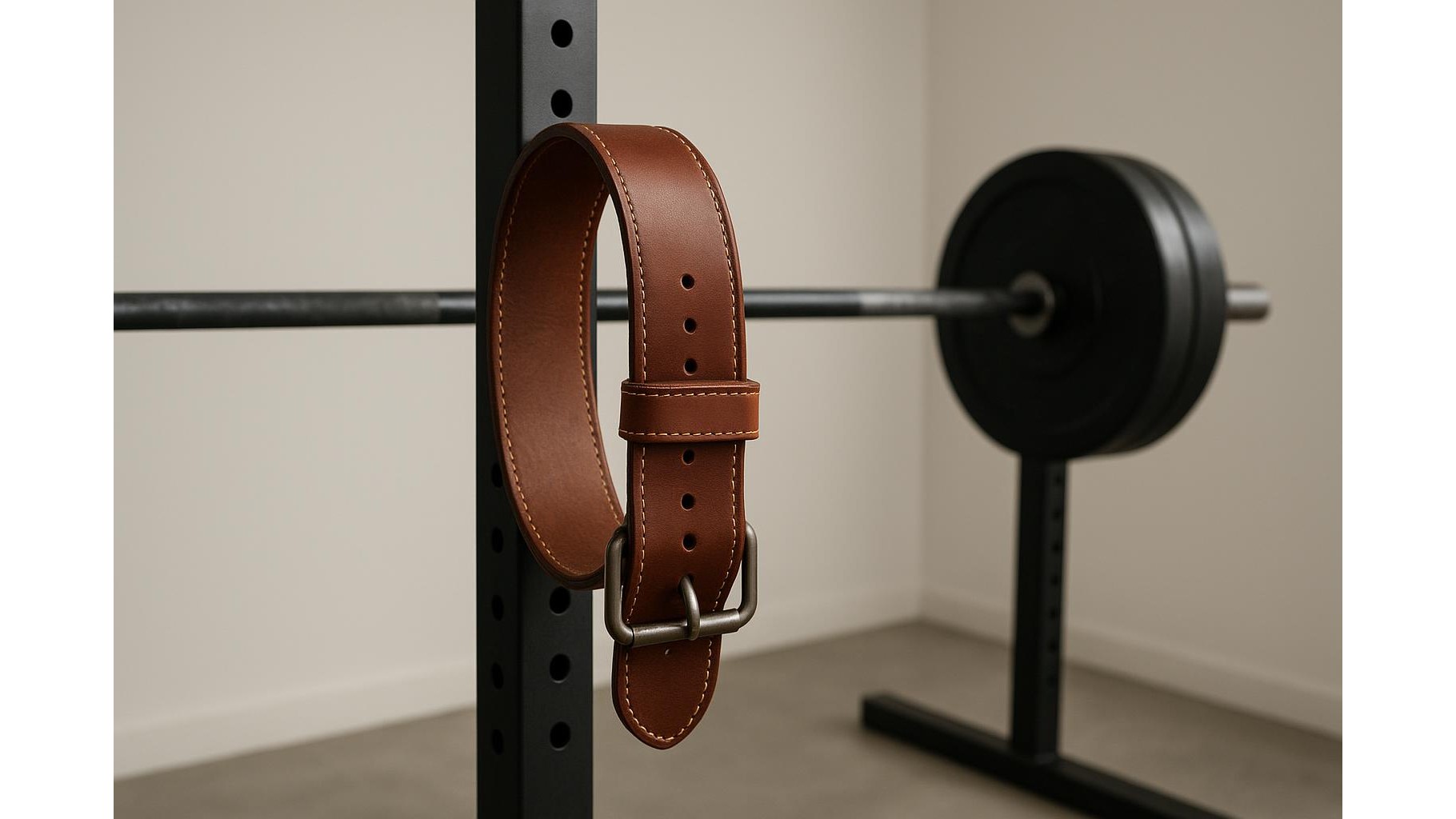
The feel of a belt is defined by its stiffness, thickness and material. A very thick, ultra-stiff powerlifting belt can be excellent for maximum-effort squats, but may feel overkill and uncomfortable for longer home strength sessions. For most home trainees, a 10 mm leather belt or a robust nylon belt gives enough rigidity to support the spine while remaining wearable for multiple sets. Leather tends to last longer and mold to your torso, while high-quality nylon belts are lighter and often more comfortable for overhead presses and conditioning work. If you alternate between squats, deadlifts and presses in the same workout, opt for a belt that feels supportive yet doesn’t dig aggressively into your ribs or hips.
Closure systems: prong, lever or velcro in a home gym
The closure system affects both safety and convenience in a home gym. Single-prong and double-prong leather belts are classic choices that offer secure fastening and fine adjustment, although double-prong models can be slightly slower to fasten between sets. Lever belts are extremely quick to lock and unlock, which is useful if you need to get in and out of the belt frequently, but adjusting them to different tightness levels requires a screwdriver. Velcro-closure nylon belts are popular for home gyms because they are lightweight, easy to pack away and fast to adjust—ideal if you share your gym and belt with someone else. For most home lifters, a sturdy prong or heavy-duty velcro belt offers the best mix of reliability and practicality.
Matching your compact belt to squats, deadlifts and overhead presses
Different lifts place different demands on your torso and belt. For back squats, many lifters like a full 4-inch belt to maximise bracing around the entire midsection. For deadlifts, a slightly narrower or more flexible belt can reduce discomfort at the bottom position and help maintain a better hip hinge. On overhead presses, a compact, less intrusive belt is helpful so the lower edge does not catch your ribs as you drive the bar overhead. In a home gym, the most versatile option is a mid-stiffness belt that you can wear for all three lifts, adjusting the tightness to suit the movement. Over time, you can refine your choice based on where you feel the most support and whether the belt ever distracts you from your technique.
Choosing a compact weightlifting belt for your home gym is about finding the right compromise between support, comfort and convenience. Measure your waist accurately, decide whether you value leather durability or nylon flexibility, and pick a closure system that fits your training style. A belt that fits well and matches your main lifts will help you brace more effectively and feel more confident under the bar, making your home strength sessions safer and more productive over the long term.