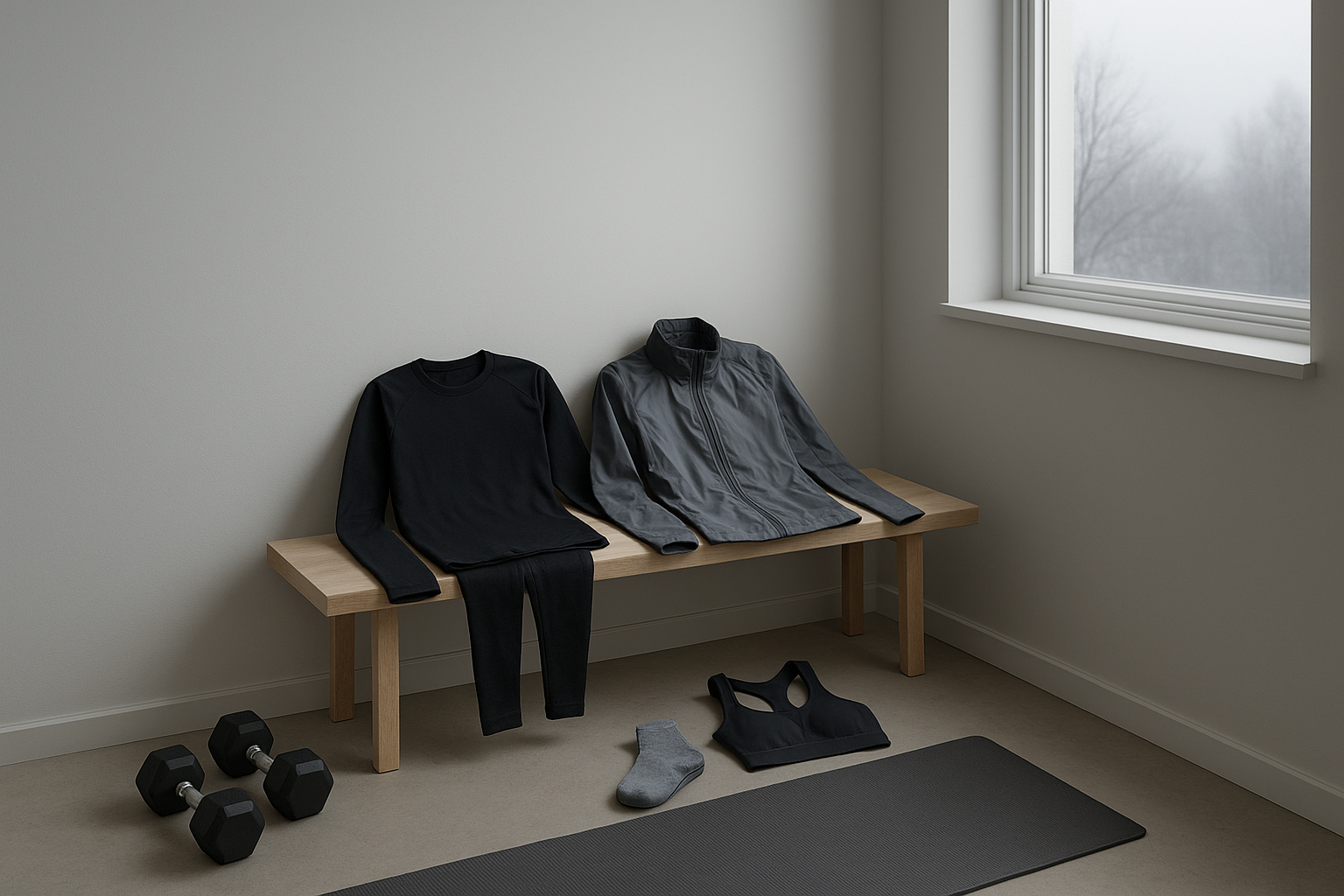
Building a truly versatile home workout outfit means thinking in layers rather than single pieces. From a freezing winter garage to a sun-soaked living room, the right system lets you adjust quickly as your body temperature changes from warm-up to cool-down. Fabrics, fits, and thoughtful accessories all play a role in keeping you comfortable, focused and free to train instead of constantly fiddling with clothes.
Start with a breathable thermal base
Your base layer should balance warmth and moisture management. A good example is the TCA Men’s and Boys’ SuperThermal Compression Base Layer Football Running Top Long Sleeve Thermal – Mock Neck, a snug long-sleeve designed to trap a light layer of heat while wicking sweat away. Users highlight how breathable yet warm it feels under outer layers, even in cold conditions like mountain biking or motorcycling. For home training, a compression-style top like this keeps everything in place during push-ups, rows and kettlebell work, while the mock neck protects you from drafts in garages or lofts. Look for synthetic blends or technical fabrics that dry quickly and avoid heavy cotton that stays damp.
Add insulating but flexible bottoms
For the lower body, choose thermal leggings that insulate without restricting your movement. The Thermal Leggings Women High Waist Fleece Lined Winter Black Sports Leggings Workout Warm Yoga Pants Tights Running Hiking Gym show what to look for in a winter-friendly piece for home workouts. Reviewers praise the soft, lightly brushed fleece lining and the high-waist, double-layered band, which adds core warmth and support without feeling bulky. The key is a fabric that is thicker than standard leggings but not so heavy that you overheat during circuits or yoga flows. Pick a close but comfortable fit so the leggings can be your go-to layer from morning mobility to late-night stretching.
Use a lightweight jacket as your on/off switch
The mid-layer is your main temperature control tool. A lightweight, breathable jacket like the Outdoor Ventures Womens Running Jacket Long Sleeve Sports Jacket Lightweight Breathable Quick Dry Sweatshirt for Fitness Training Cycling with Zip Side Pocket and Thumb Holes works perfectly as an adjustable outer shell. Its quick-dry polyester, full zip and thumb holes make it ideal for the cooler early minutes of a workout: wear it for joint prep and light cardio, then unzip or peel it off once your core is warm. When you move into cool-down stretching or breathing work, zip it back up to avoid getting chilled while you’re still slightly damp. Features like a slim fit and stretchy fabric help it move with you during dynamic sessions.
Don’t forget thermo-regulating socks
Feet often get ignored in home training outfits, but moisture-wicking socks can make a big difference to comfort and grip. The Mens Bamboo Socks, Wicking Breathable Cushioned Sports Socks for Hiking Walking Athletics Working Running Trekking Cycling use bamboo fibre and cushioned terry soles to combine sweat absorption with softness underfoot. Although marketed for outdoor use, their anti-blister, seamless toe design and arch support translate well to home workouts, especially if you train on harder floors or switch between strength moves and cardio. In colder garages, they help maintain warmth, while their wicking properties keep feet dry during higher-intensity sessions.
Supportive top layers for comfort and focus
For women, a well-chosen sports bra is a crucial part of any modular outfit. The FITTIN Adjustable Sports Bras for Women: Padded Racerback Seamless Workout Yoga Bras is a good example of an all-rounder that fits into a layered system. It offers padded, seamless support with adjustable straps, making it adaptable across different sessions from low-impact mobility to higher-intensity intervals. Reviewers appreciate the combination of comfort and support without underwires, which is especially important when you’re training at home and may wear it for longer periods. Pair it with a breathable base layer and a removable jacket so you can scale coverage from warm-up to cool-down without sacrificing support.
By treating your home workout clothes as a set of modular layers rather than a single outfit, you can move smoothly through seasons and session phases. Start with a sweat-wicking base layer, add insulating leggings, pull on a lightweight jacket for quick temperature control, and finish the system with performance socks and supportive underlayers. This approach keeps you comfortable from the first rep in a chilly garage to the last stretch in a warm living room, so you can stay focused on your training instead of the thermostat.