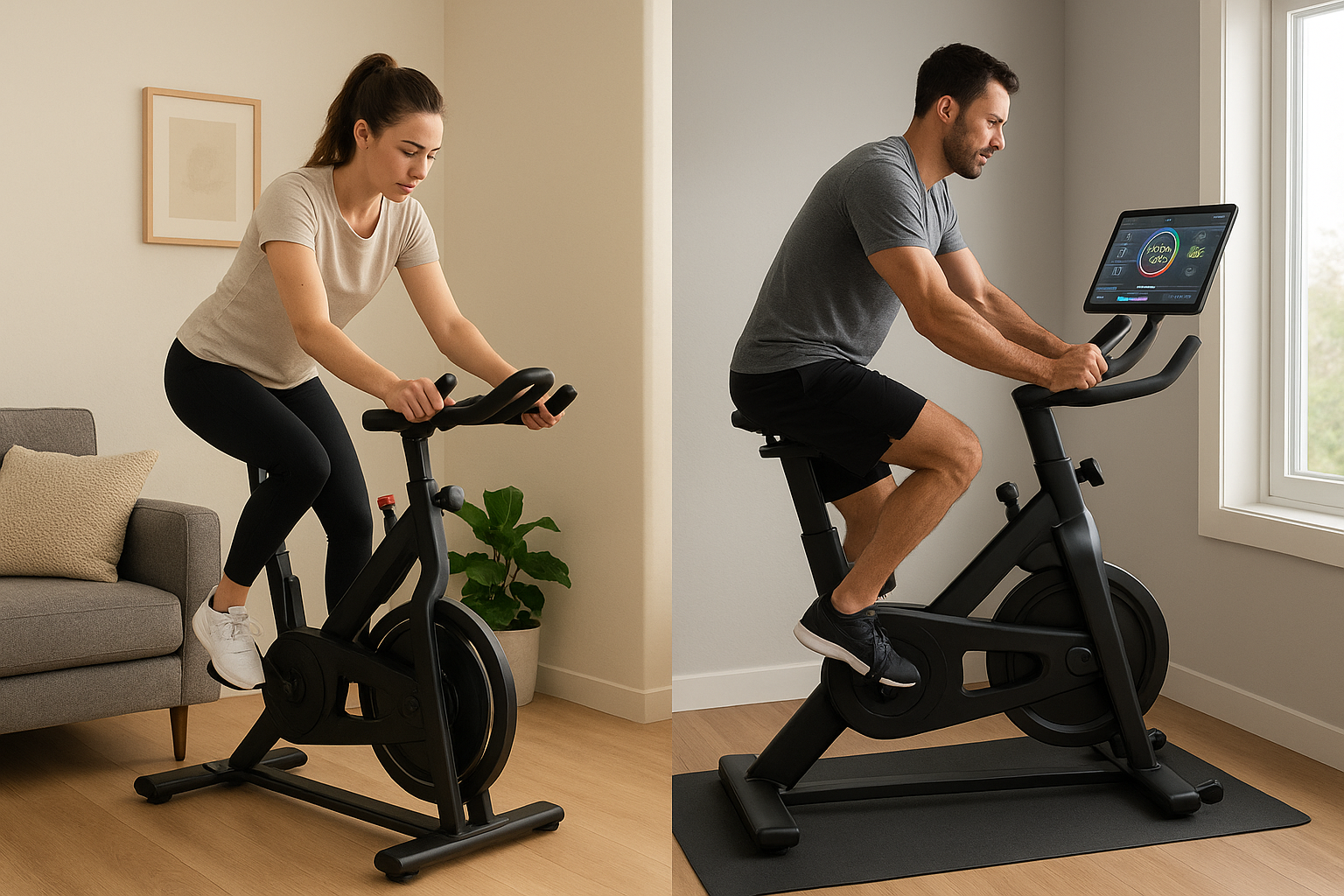
Choosing between a compact spin bike and a fully connected smart bike is one of the biggest decisions home fitness fans will face in 2026. Both options deliver effective low‑impact cardio, but they differ a lot in terms of space, noise, training experience and price. Below, we compare a typical compact spin bike like the YOSUDA Indoor Cycling Bike (e.g. similar to models sold on Amazon UK) with an app‑driven smart bike such as the JLL Smart Exercise Bike with Bluetooth (also comparable to current Amazon UK offerings), so you can decide which format best fits your home and workout style.
Space and portability in a real home
A compact spin bike is built with a small footprint in mind. Models similar to the YOSUDA Indoor Cycling Bike typically measure around 100 x 50 cm, use a simple steel frame and transport wheels, and are light enough to move between rooms or slide against a wall after use. Smart bikes like the JLL Smart Exercise Bike with Bluetooth are still reasonably compact, but the integrated screen mount, heavier flywheel and extra electronics usually make them bulkier and harder to relocate. If you live in a flat, share space with family, or need to tuck your cardio gear beside a sofa or in a bedroom corner, a compact spin bike is usually the more practical choice.
Noise levels and home‑friendly design
When it comes to quiet home cardio, drive system and resistance type matter more than the label on the bike. Many compact spin bikes now use belt drive and magnetic resistance, which makes them surprisingly silent even in small apartments. Smart bikes often use the same technology but add motorised resistance adjustments that can introduce faint whirring sounds. You also need to account for any built‑in or external screens: playing streaming classes at high volume will be louder than the bike itself. In general, both formats can be neighbour‑friendly, but the simplest compact models, without integrated speakers or big fans, tend to be the most discreet for late‑night or early‑morning training.
Training experience and smart features
This is where smart bikes pull ahead. Connected models like the JLL Smart Exercise Bike with Bluetooth are designed to pair with training apps via Bluetooth, automatically log cadence, speed and estimated power, and in some cases let the app control resistance during structured workouts. That means you can follow trainer‑led interval sessions, virtual routes or studio‑style classes and have the bike adjust to match the workout profile. Compact spin bikes, by contrast, typically use manual resistance knobs and basic LCD consoles, so you get a more “analog” experience. You can still follow YouTube spin classes or your own intervals, but you’ll be changing resistance by feel. If you crave data, leaderboards and automatic tracking, a smart bike ecosystem will feel far more immersive.
Budget, value and long‑term costs
A key advantage of a compact spin bike is price. No‑frills models similar to the YOSUDA Indoor Cycling Bike on Amazon UK usually sit in the entry‑level to mid‑range bracket, giving you a solid frame and smooth ride without a huge upfront cost. Smart bikes like the JLL Smart Exercise Bike with Bluetooth command a higher price because of the integrated sensors, motorised resistance and app connectivity, and many users also pair them with paid subscription platforms. When you add in years of membership fees, the total cost of ownership can be significant. If your priority is simply reliable cardio for weight loss and general fitness, a compact spin bike offers strong value. If you know you’ll use metrics‑driven training and interactive classes several times a week, the extra spend on a smart bike can be justified.
Which bike suits which type of home user?
A compact spin bike best suits beginners, budget‑conscious buyers and anyone short on space. It’s ideal if you want a tough workout without being locked into any one platform: you can pedal while watching TV, join free online classes, or follow your own interval plan. A smart bike like the JLL Smart Exercise Bike with Bluetooth is better for tech‑savvy riders who thrive on structure, performance metrics and immersive content. It particularly suits users training for events, cyclists wanting indoor sessions synced with apps, or people who are motivated by virtual communities and real‑time feedback. Think carefully about your personality: are you disciplined enough without guided workouts, or do you need that extra layer of digital coaching?
In 2026, both compact spin bikes and smart bikes can anchor an excellent home cardio setup. Compact models win on price, portability and simplicity, making them perfect for smaller homes and straightforward calorie‑burning sessions. Smart bikes, with their Bluetooth connectivity, app integration and richer data, deliver a more engaging long‑term training environment, as long as you are prepared for higher upfront and potential subscription costs. Evaluate your space, budget, tech comfort and motivation style, then pick the bike that you’re most likely to use consistently—because the best home cardio machine is ultimately the one that keeps you riding week after week.