
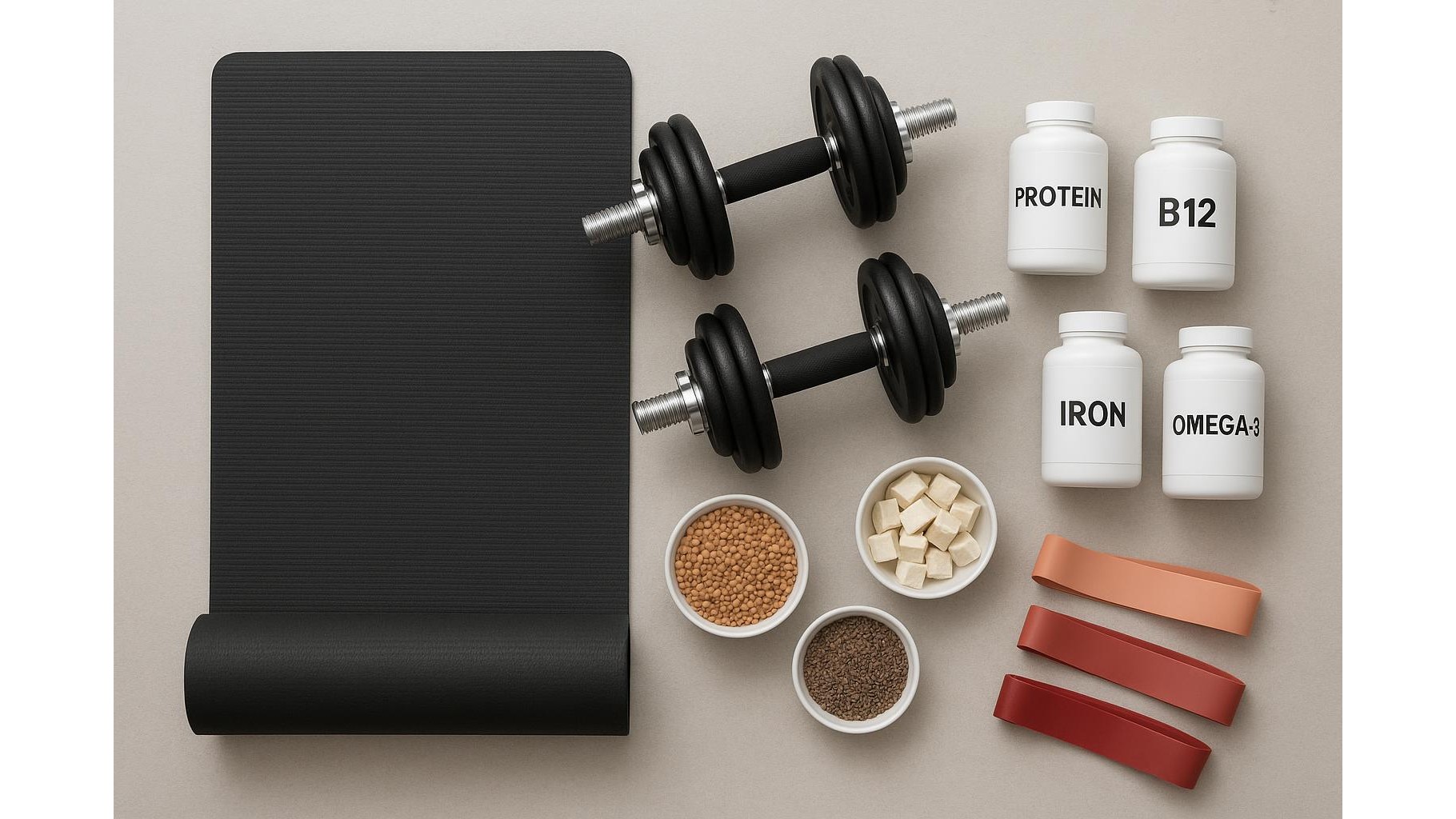
Training hard in your home gym as a vegan is absolutely compatible with great performance and recovery. The challenge is not a lack of options, but knowing which vegan supplements are truly useful and which nutrients you can realistically cover with food alone. This simple checklist focuses on the key nutrients most vegan home athletes should monitor, so you can support your results without buying half the supplement aisle.
Protein: food first, powder as a convenience tool
For most vegan home trainees, it is possible to hit your daily protein target with food: tofu, tempeh, seitan, lentils, chickpeas, beans, soy yoghurt and fortified plant drinks are excellent staples. Aim for roughly 1.6–2.2 g of protein per kg of bodyweight if you train with resistance regularly. However, on busy days or right after a tough session, a vegan protein powder can make life easier, giving you 20–25 g of protein in one shake. Look for blends based on pea, rice or soy protein, with under 3–4 g of sugar per serving and a clear ingredient list. Since whole foods should remain the base of your diet, treat protein powder as a backup, not a replacement for proper meals.
Vitamin B12: the one supplement almost every vegan needs
Vitamin B12 is the non‑negotiable supplement for vegans. It is virtually absent from unfortified plant foods, and running low can affect energy, nerves and long‑term health. Fortified plant milks, nutritional yeast and some meat substitutes contain B12, but their content and your daily intake are often inconsistent. For most vegan home athletes, a dedicated vitamin B12 supplement is the simplest solution. Typical options are daily low‑dose tablets or higher‑dose weekly tablets or drops; both can work if they provide an adequate amount of cyanocobalamin or methylcobalamin and you take them regularly. Because B12 is water‑soluble, the risk of toxicity is very low, but you should still avoid stacking multiple high‑dose products “just in case” without checking with a professional.
Iron: monitor, don’t megadose blindly
Iron is another nutrient to watch, especially for menstruating athletes and those doing intense endurance or high‑volume strength training. Plant sources like lentils, beans, tofu, pumpkin seeds and dark leafy greens can cover your needs when your overall diet and energy intake are adequate. Pair iron‑rich foods with vitamin C sources (for example, peppers, citrus, berries) to boost absorption, and try to keep tea and coffee away from iron‑heavy meals. A vegan iron supplement can be helpful if blood tests show low ferritin or anaemia, but high iron intake without confirmed deficiency can cause problems. The smart move is to ask your doctor for a test before supplementing, then choose a moderate‑dose iron product that clearly indicates its elemental iron content and instructions for use.
Omega‑3 fats: algae oil for a clean, vegan EPA and DHA source
Getting enough omega‑3 fatty acids supports heart health, brain function and recovery from training. Vegans often eat ALA‑rich foods like flaxseeds, chia, hemp seeds and walnuts, which is a good start. However, the conversion from ALA to the more active EPA and DHA forms is limited and highly individual. That is why many vegan athletes choose an algae oil supplement that directly provides EPA and DHA without using fish oil. A good algae‑based omega‑3 product will show clear EPA and DHA amounts per capsule and use minimal additives. If your diet is poor in seeds and nuts, or you rarely eat fortified foods, an algae oil capsule once a day can be a simple, targeted addition to your routine.
Creatine: performance boost that fits a vegan lifestyle
Creatine monohydrate is one of the most researched performance supplements and is naturally lower in vegan diets because it is found mainly in meat and fish. For home gym athletes focused on strength, muscle growth or high‑intensity intervals, a daily 3–5 g serving of vegan creatine can improve power output, training volume and potentially recovery. Most creatine powders are synthetically produced and inherently vegan, but check that the product is labelled as vegan‑friendly and free from unnecessary fillers. You do not need fancy forms: plain creatine monohydrate, taken consistently and paired with sufficient water and carbs in your diet, is usually enough. Always introduce it gradually and pay attention to your digestion and total fluid intake.
In summary, building a strong, healthy vegan body at home is entirely realistic with a food‑first mindset and a few strategic supplements. Focus on covering protein, ensuring a reliable vitamin B12 source, monitoring iron status with tests, considering an algae‑based omega‑3 and adding creatine monohydrate if performance is a priority. By choosing only what you truly need and avoiding overlapping products, you can respect both your diet and your budget while getting the most out of every home workout.









