Finishing a tough home workout is only half the job. The way you cool down and take care of your body and mind in the next few minutes can make the difference between waking up sore and wired, or feeling restored and ready for the next session. A simple, realistic post-workout ritual at home that combines light mobility, calm breathing and basic self‑care can fit easily into your day and still deliver real benefits for recovery, sleep quality and overall stress relief.
Set the scene: lights, temperature and devices
Before you start your post-workout recovery routine, take one minute to reset your environment. Dim the lights, turn off loud music and, if you trained hard, slip on a light layer so you do not cool down too fast. Put your phone on silent or leave it across the room to avoid notifications pulling you out of the moment. These tiny steps send a clear signal to your nervous system that the “work” part is over and it is time to shift into recovery mode. This transition from a fight-or-flight state to a more relaxed one is crucial if you want to reduce tension, lower heart rate and prepare your body for better sleep later on.
Five minutes of gentle mobility from head to toe
Start with 5 minutes of light mobility to keep blood flowing and prevent stiffness. Focus on controlled, slow movements rather than deep, aggressive stretching. Move your neck through gentle circles, roll your shoulders, then open and close your chest with standing or kneeling rotations. For hips and legs, perform easy bodyweight lunges, hip circles and ankle rolls while keeping your breathing smooth. The goal is not to chase an intense stretch, but to “tell” your muscles that the heavy work is done and they can safely relax. This short mobility block can also reduce the feeling of heaviness in your joints and help you notice any tight areas that may need extra care.
Box breathing to calm the nervous system
Once your body has cooled down slightly, shift your focus to the breath. Sit or lie comfortably and practise 3–5 minutes of box breathing: inhale through the nose for 4 seconds, hold for 4, exhale slowly for 4, hold again for 4, then repeat. This simple pattern activates the parasympathetic nervous system, helping to lower heart rate and ease the jittery feeling that sometimes follows intense training or late‑evening workouts. Combining slow breathing with a quiet room can reduce stress hormones and make it easier to transition from high energy to a state that supports deep sleep and muscle repair. If you feel dizzy, shorten the holds and focus on soft, nasal exhales instead.
Targeted self-massage and muscle care
After breathing, spend about 7–8 minutes on self‑massage of the muscles you used the most. Use your hands to gently knead calves, thighs, glutes or upper back, applying just enough pressure to feel relief without pain. If you have simple tools at home like a tennis ball or a basic massage stick, you can roll them under your feet, along your quads or between your shoulder blades while seated or lying on the floor. Keep movements slow and controlled, pausing on tender spots for a few breaths to let tension melt. Pair this with sipping water or a light, protein‑rich snack to support muscle recovery and rehydration, especially after sweaty sessions or evening strength work.
Tech-free wind‑down for better sleep
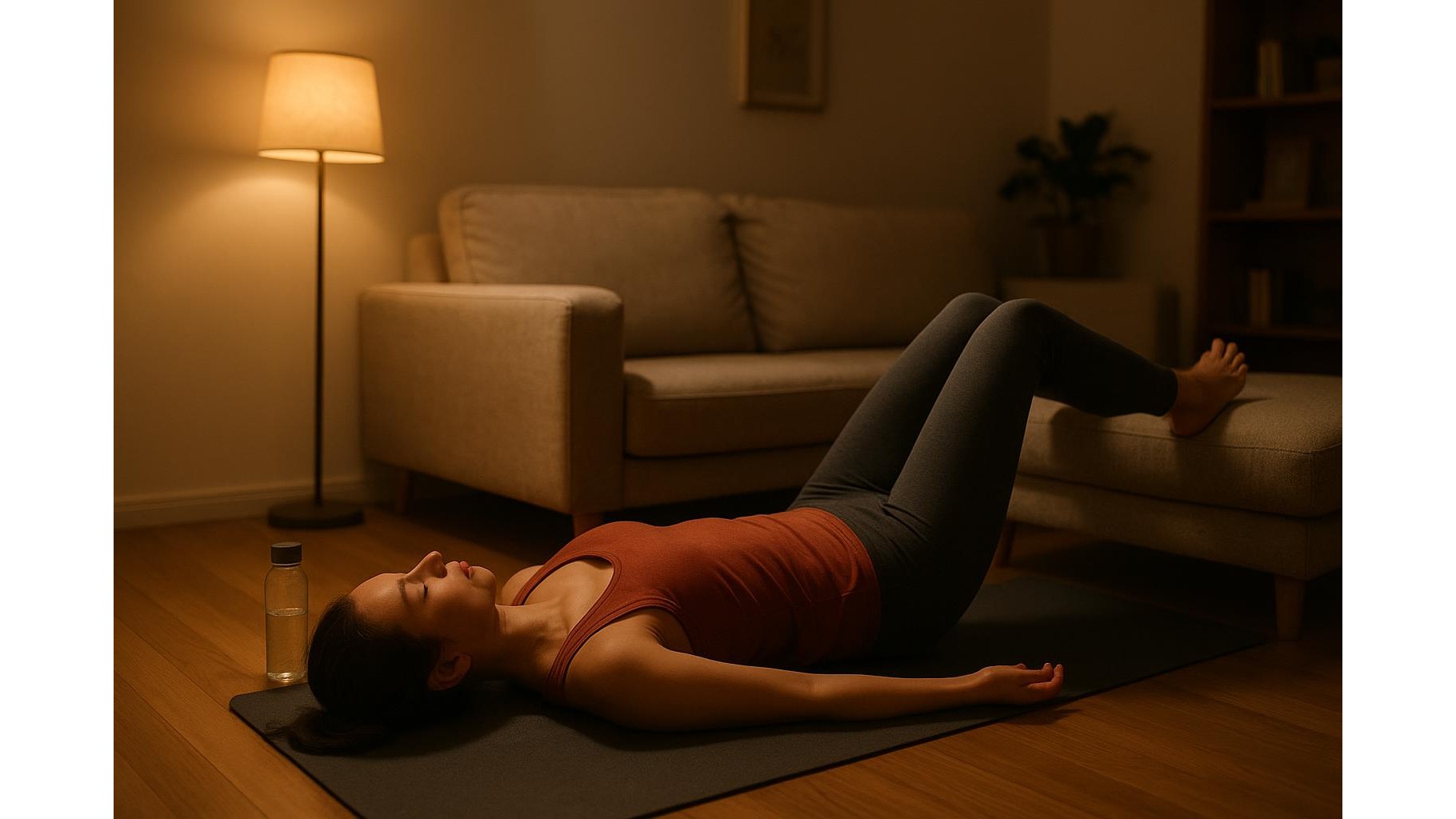
The final step in your 20‑minute recovery ritual is a short, tech‑free wind‑down that bridges training and the rest of your evening. Spend 3–5 minutes lying on your back with your legs supported on a chair or sofa, letting your lower back relax into the floor. Close your eyes, keep breathing calmly and mentally scan your body from toes to jaw, relaxing each area in turn. Avoid scrolling social media or checking work messages during this window; bright screens and constant alerts can re‑activate your nervous system just as you are trying to calm it. This quiet pause reinforces the habit of treating recovery as a key part of your home workout routine, not an optional extra.
By dedicating just 20 minutes to a structured post‑workout ritual at home, you can reduce soreness, calm your mind and give your body the conditions it needs to adapt and grow stronger. A simple mix of gentle mobility, deliberate breathing, basic self‑massage and a short tech‑free pause is realistic enough to repeat after most sessions, even on busy days. Over time, this consistent recovery routine can improve your sleep, help you feel fresher before your next workout and make training at home more sustainable and enjoyable in the long run.