Filming your home workouts with a smartphone is one of the easiest ways to improve your technique, stay safe and track progress in your home gym. With a few smart camera angles, basic lighting tips and low‑cost phone accessories, you can turn any room into a mini video studio for reliable form checks on all your major lifts.
Why filming your home workouts really helps
When you train alone, it’s hard to know if your squat depth is consistent, your deadlift back position is safe or your bench press bar path is stable. Video removes the guesswork. A simple phone recording lets you replay key sets, compare clips over time and spot issues like knee cave, hip shift or excessive lower‑back arch. It also builds accountability: knowing the set is on camera often encourages tighter setups and fewer sloppy reps. To get the most out of this habit, treat filming as part of your warm‑up routine: position the phone, check the frame, then lift.
Best camera angles for the big compound lifts
For effective form checks, angles matter more than video quality. For squats, a 45° angle from the front or rear, at roughly hip height, lets you see knee tracking, hip depth and bar path in the same shot. For deadlifts, set the phone slightly in front and to the side at plate height so you can monitor spine alignment, hip position and the bar staying close to the shins. For bench press, film from the side at chest height to see bar path and shoulder position, or from the head end to monitor elbow flare. For overhead presses, step back and shoot from the side to ensure the bar travels in a straight line over mid‑foot and that you are not over‑arching the lower back. Consistency is key: use the same angle for the same lift so progress is easy to compare.
Lighting and framing: make your phone work harder
Good lighting can reveal details that bad shadows hide, like rounding in the upper back or subtle knee valgus. Aim for the main light source to be behind the camera and facing you, not behind you. If you train early or late, add a simple lamp or window‑facing setup so your body is evenly lit. Keep the entire movement in the frame: barbell, feet and head should all be visible, without cropping at lockout. Step far enough back so your full range of motion fits comfortably, and avoid ultra‑wide angles that distort joint positions. Before working sets, quickly record a 5‑second test clip and check visibility, angle and clutter; this tiny habit saves you from useless footage when the bar is heaviest.
Low-cost tools to stabilise your smartphone
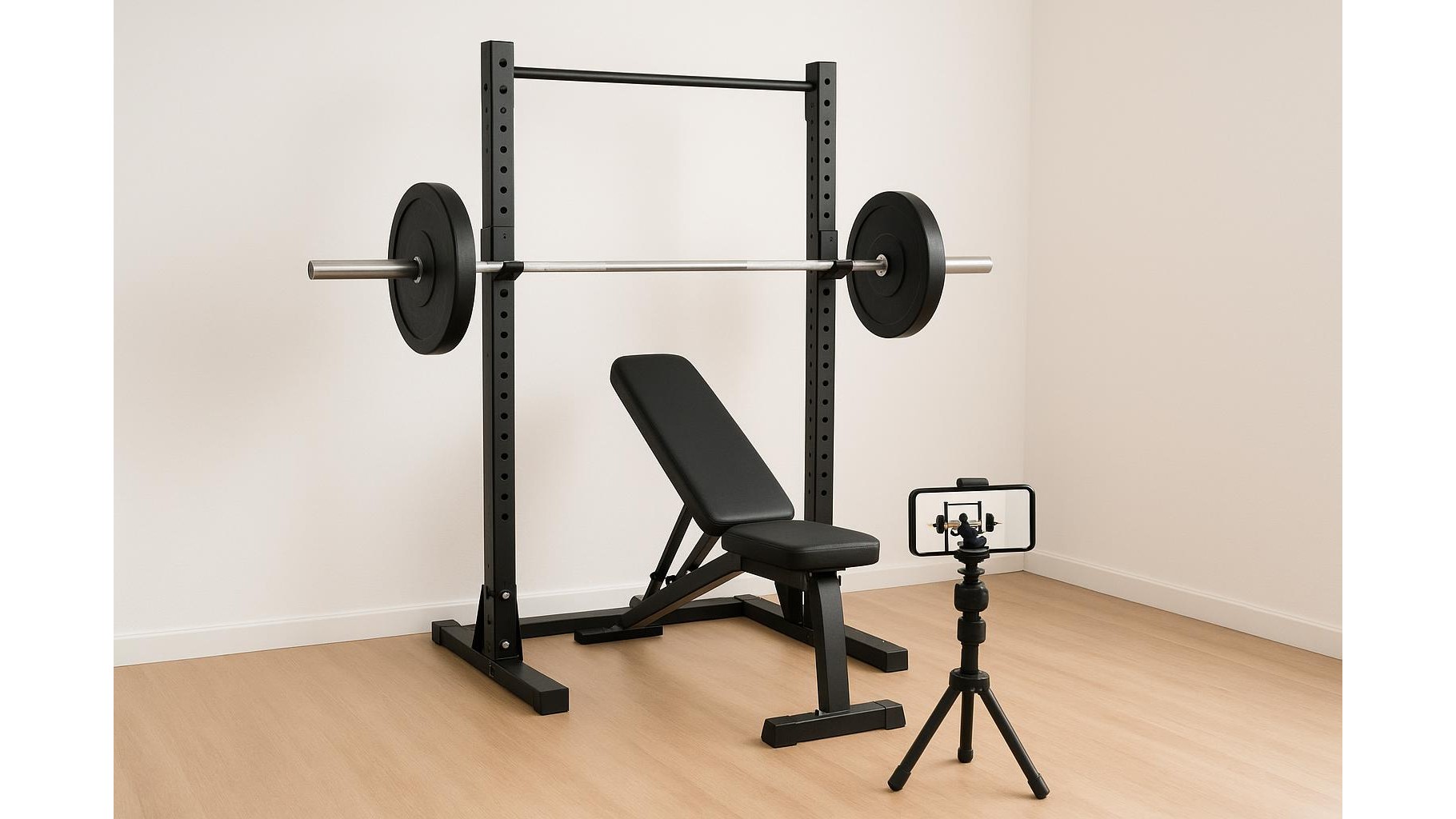
Shaky, badly placed footage makes it harder to judge your technique. A basic smartphone tripod with an adjustable phone clamp is often the best upgrade you can make, letting you reliably set the phone at knee, hip or chest height without balancing it on dumbbells or boxes. Add a simple Bluetooth remote or use your phone’s timer so you can start recording once you are already set up on the bench or at the rack. Even a cheap ring light with phone holder can double as both stand and lighting source in a dark garage gym. Look for accessories that are compact and easy to move between stations, so you can quickly adjust angle between squats, presses and deadlifts without interrupting your training flow.
How to review your training footage effectively
Once your home workout sets are recorded, the real value comes from how you review them. Slow each clip down to 0.5x or 0.25x speed and watch it more than once, focusing on one element at a time: bar path, joint alignment, speed off the floor, stability out of the hole. Compare your reps to trustworthy technique demos or previous clips of yourself to see if cues like “knees out” or “brace harder” are actually changing your movement. Save key sets from each week in a dedicated album or cloud folder labelled by date and lift so you can easily track long‑term changes. When needed, send clips to a coach or knowledgeable friend for feedback; a clear, well‑framed angle makes their advice much more precise.
By combining smart camera angles, simple lighting and a few low‑cost smartphone accessories, you can turn your phone into a powerful technique coach in your home gym. Treat filming as part of your setup, stay consistent with angles and review your footage with intention. Over time, these small habits will lead to safer lifting, cleaner form and more confident progression on every major lift.