
If you train hard in your home gym but wake up with a stiff back or aching shoulders, your sleep position might be holding back your recovery. While you cannot out-sleep poor programming or technique, optimising how you lie in bed can reduce joint stress, support muscle repair and help you wake up ready to lift again. By adjusting your posture and using simple supports like pillows and firm mattresses, you can turn the night into an extra training ally instead of a recovery bottleneck.
Why sleep posture matters for lifters
Heavy lifting loads your spine, shoulders and hips. When you lie down, these same structures should finally get a break. Poor sleep posture – such as twisted lower backs, hyperextended necks or jammed shoulders – keeps low-level stress on tissues that are already fatigued from rows, presses and deadlifts. Over time this can show up as morning lower-back pain, hip tightness or shoulder pinching that makes overhead work uncomfortable. A supportive mattress and pillow set-up that keeps your spine in a neutral line and distributes pressure more evenly helps reduce this background load, allowing better circulation and tissue repair overnight.
Best side-sleeping setup for sore shoulders and hips
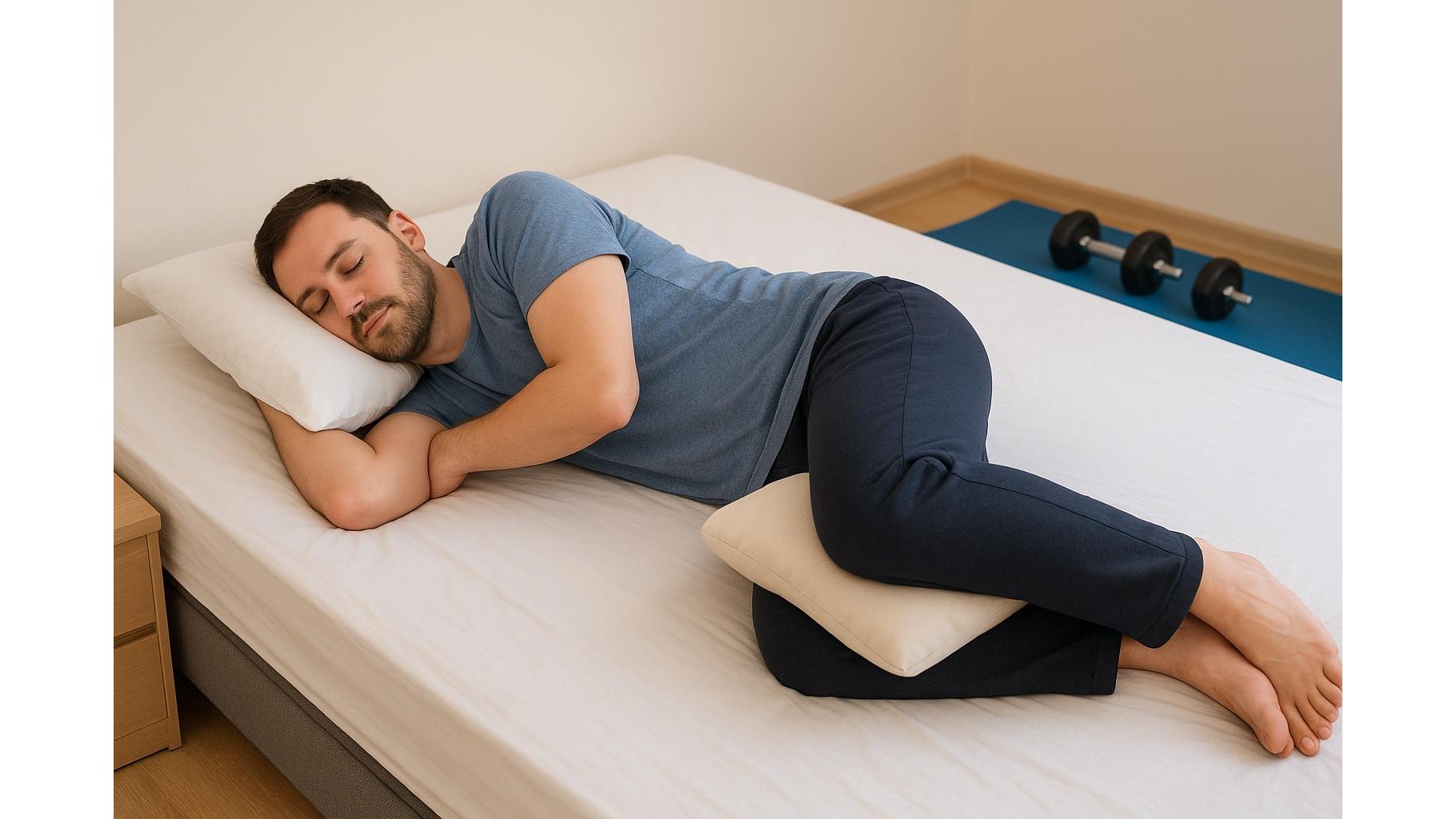
For most home lifters, a well-supported side sleeping position is the most joint-friendly option. Aim to keep your nose, sternum and pelvis in one straight line, avoiding the common twist where your top knee collapses forward and drags your lumbar spine into rotation. Use a medium-firm mattress and a pillow height that fills the gap between shoulder and neck, keeping your head level, not tilted. Place a soft cushion or rolled blanket between your knees to keep hips stacked and reduce tension in the glutes and IT band. If you have cranky shoulders from pressing or dips, hug a thin pillow against your chest so the top arm is supported, avoiding that hanging, internally rotated position that can irritate the front of the shoulder.
Smart back-sleeping tweaks for lower-back comfort
If you prefer sleeping on your back, focus on maintaining a natural lumbar curve without letting your lower spine over-arch. Lifters who squat and deadlift a lot often have tight hip flexors, which can exaggerate this arch when lying supine. A simple fix is to slide a small cushion or folded towel under your knees: this slightly flexes the hips, helping the lower back settle closer to neutral and easing morning stiffness. Choose a pillow that supports the natural curve of your neck so your chin is not jutting up, which can tighten the upper traps and neck muscles you already hammer with rows and shrugs. Keep your arms relaxed by your sides or resting on your torso to avoid falling into an overhead position that can stress the shoulders.
How to make stomach sleeping less risky
Stomach sleeping is usually the least ideal posture for lifters because it forces your neck into rotation and often compresses the lower back. If you absolutely cannot fall asleep any other way, use strategies to minimise the strain. Try a very thin pillow or no pillow under your head to avoid cranking your neck into extension, and place a small pillow under one hip to slightly rotate and reduce direct lumbar compression. Keep the arm on the side you turn your head towards down by your side, not jammed up overhead, to protect the shoulder. A medium-firm mattress can help prevent your hips from sinking deeply, which would exaggerate the arch in your lower back and aggravate any existing deadlift-related soreness.
Pre-bed mobility and recovery habits for home lifters
Sleep position is only one part of night-time recovery for home lifters. A short pre-bed routine focused on mobility and relaxation can make whichever posture you choose feel better. Spend 5–10 minutes on gentle hip flexor stretches, open-book thoracic rotations and easy neck movements, avoiding aggressive static stretching that could irritate tissues. Light foam rolling of the upper back and glutes, combined with slow nasal breathing, can downshift your nervous system from training mode to recovery mode. Keep your last heavy session at least a couple of hours before bedtime, dim screens and avoid stimulants so you fall asleep faster and stay asleep longer. Combine these habits with a more neutral sleep setup and you create an environment where your body can repair from squats, presses and pulls instead of fighting poor mechanics all night.
Dialling in your sleep position is one of the easiest, lowest-cost upgrades you can make to your home training lifestyle. By choosing side, back or modified stomach positions that keep your spine relatively neutral, supporting key joints with simple pillows and pairing this with calming pre-bed mobility, you reduce morning aches and improve recovery between sessions. You do not need a perfect posture to benefit; small adjustments, repeated nightly, help you wake up looser, stronger and more prepared to attack your next workout in the home gym.









