
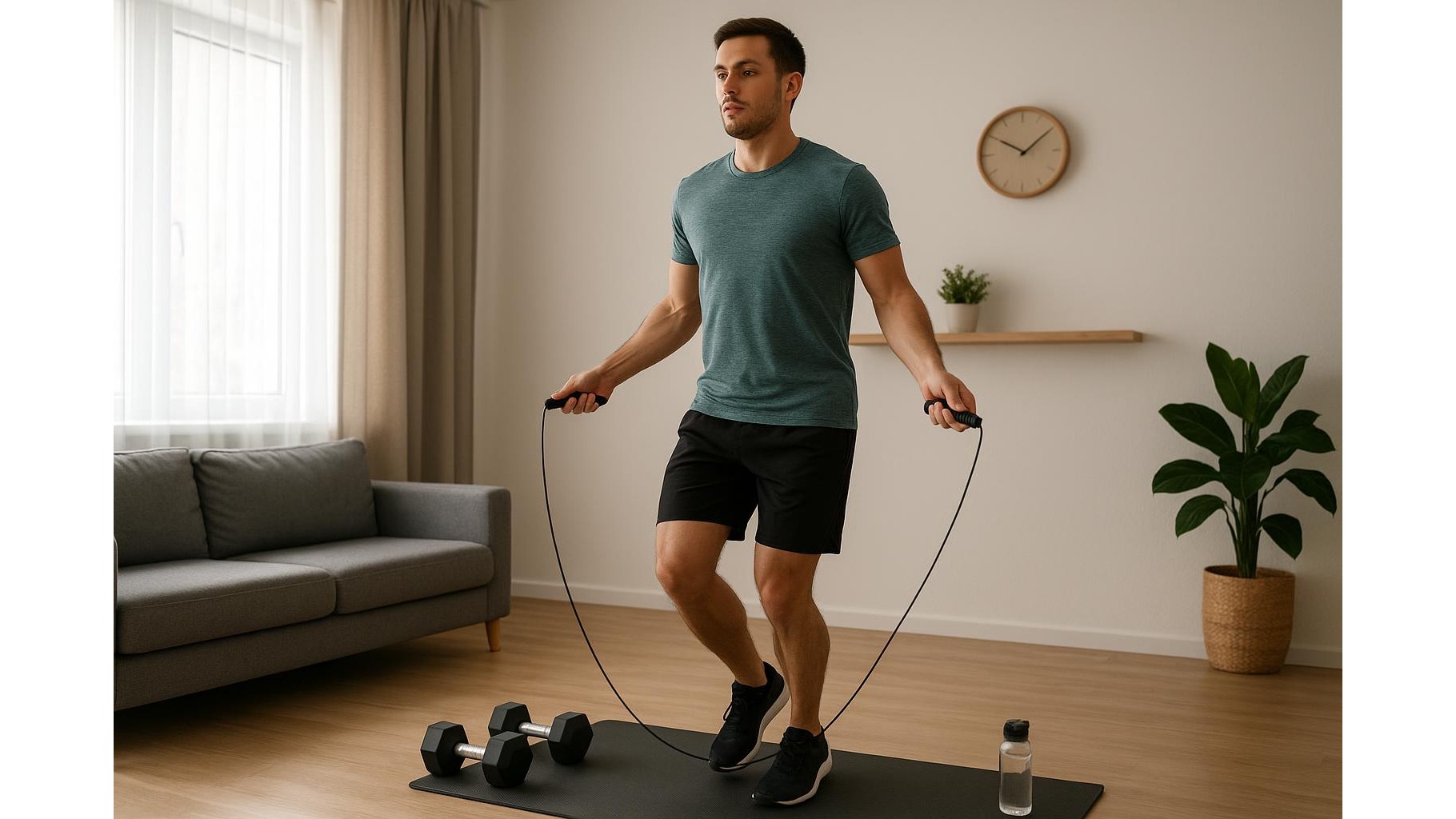
If you want to burn fat, improve conditioning and still keep your workout under 30 minutes, combining jump rope intervals with simple strength training is one of the most efficient strategies you can use at home. This circuit alternates short bursts of skipping with dumbbell or bodyweight moves so you elevate your heart rate, challenge your muscles and maximise calorie burn without leaving your living room.
Why jump rope plus strength is so effective
A jump rope workout is a compact cardio tool that spikes your heart rate quickly, while strength exercises preserve muscle mass, which is crucial when your goal is fat loss. By pairing the two in an alternating circuit, you create a powerful form of metabolic conditioning: the rope intervals boost cardiovascular demand and coordination, and the strength sets keep your muscles under tension so more energy is burned even after the session. You also save time, because there is very little dead rest – recovery happens while you switch from rope to resistance work.
Equipment and setup in your home space
You only need three things for this 30‑minute home gym circuit: a sturdy jump rope, a pair of dumbbells (or adjustable weights) and some clear floor space. Make sure the area is free from low-hanging lights and furniture so the rope can spin freely. Wear supportive trainers and, if you live above neighbours, consider jumping on a mat or rug to soften impact. Keep a bottle of water nearby and set a timer on your phone so you can track 30- to 45-second work intervals without constantly staring at the clock. If you do not own dumbbells, you can substitute with filled backpacks, water bottles or perform all strength moves with bodyweight only.
The 30-minute jump rope and strength circuit
Start with 3 minutes of easy rope skipping to warm up, keeping the jumps low and relaxed. Then move into the main circuit: perform 30 seconds of jump rope followed by 45 seconds of a strength exercise, resting 15 seconds as you transition. Complete 4–5 rounds. A sample circuit: (1) Basic jump rope, then dumbbell squats; (2) Alternating foot jump rope, then push-ups; (3) High-knee jump rope, then bent-over rows with dumbbells; (4) Side-to-side jump rope, then glute bridges or lunges. Beginners can work for 20–25 seconds and rest longer, while more advanced exercisers can push to 40-second intervals and shorten rest to keep intensity high.
Technique tips for safe, efficient training
To get the most from this home fat loss workout, focus on clean movement. When skipping, keep your elbows close to your ribs, wrists doing most of the turning and land softly on the balls of your feet with knees slightly bent to reduce impact. For strength moves, maintain a neutral spine, brace your core and move with control rather than speed; the rope intervals already provide your cardio, so treat resistance work as quality-focused. Choose a load that feels challenging by the last 10 seconds of each set but does not break your form. If you start tripping frequently on the rope or your technique falls apart, take a brief pause, reset your posture and resume at a slightly lower intensity.
Progression, frequency and fat-loss focus
For best results, perform this 30-minute jump rope and strength circuit two to four times per week, leaving at least one rest day between intense sessions. As your fitness improves, progress by increasing work intervals, adding an extra circuit round or choosing more demanding variations such as single-leg exercises or faster rope tempos. Pair these workouts with a moderate calorie deficit, sufficient protein intake and daily movement like walking to support sustainable fat loss. Because the routine is short, flexible and equipment-light, it is easy to slot into busy schedules, helping you stay consistent – the most important factor in changing your body composition.
By combining simple jump rope intervals with focused strength training, this 30-minute home routine delivers a potent blend of calorie burn, conditioning and muscle maintenance. Set up a small space, grab your rope and weights, and commit to moving with intention for just half an hour – over time, these compact sessions can drive significant improvements in fitness, confidence and overall body composition.









