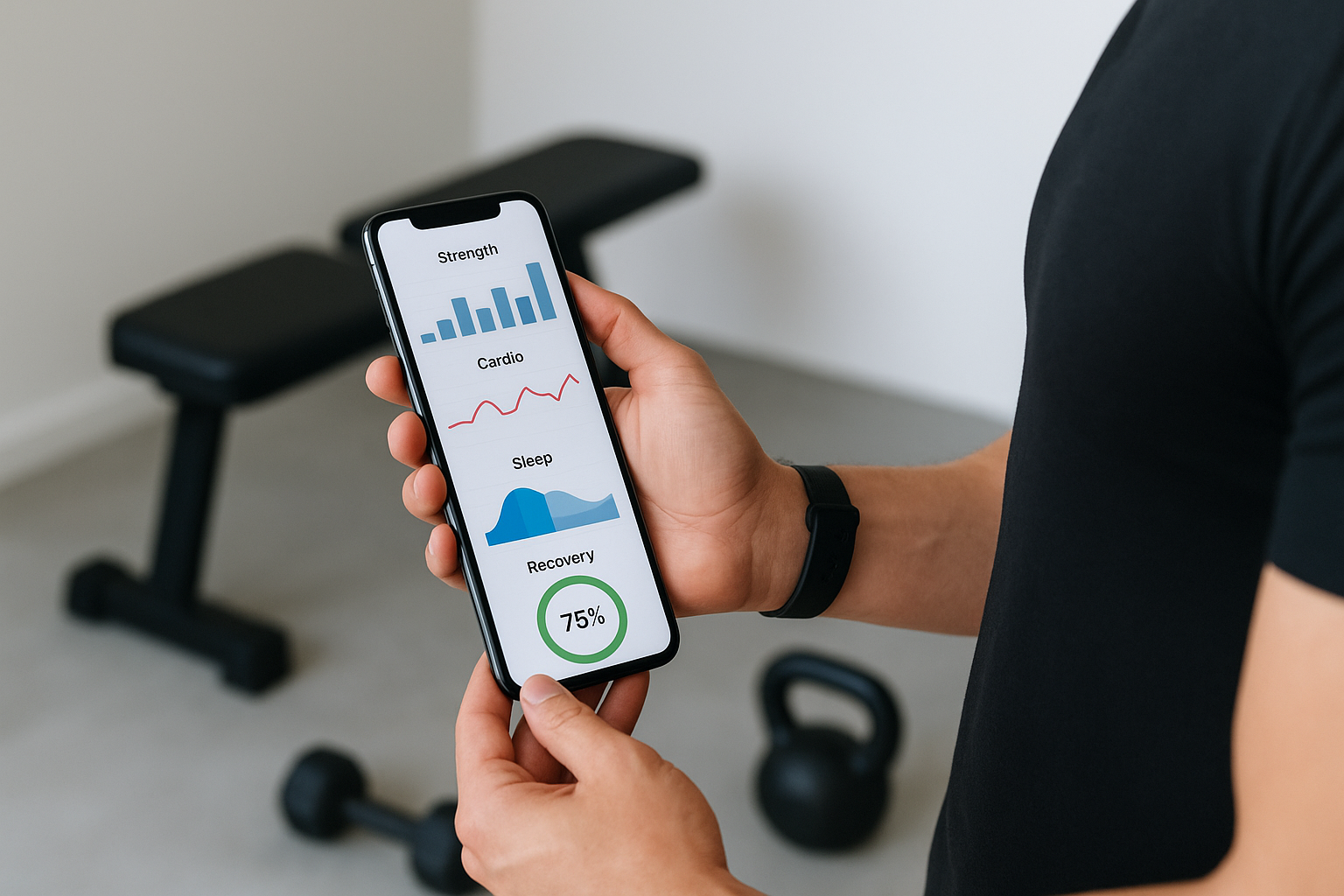
Setting up a home fitness tracking system does not have to mean multiple apps, dashboards and constant notifications. With just one app and one wearable, you can track strength, cardio, sleep and recovery in a way that is clear, sustainable and genuinely useful for your progress, without any tech overwhelm.
Choosing one main app to rule your data
The first step is picking a primary fitness app that will become your single hub for all your data. Look for an app that can track workouts, steps, heart rate and sleep, and that offers easy-to-read trends rather than just raw numbers. Many modern apps focus on daily readiness, recovery and simple scores instead of complicated charts. Whichever app you choose, commit to it as your one source of truth instead of bouncing between multiple platforms that fragment your attention and make your progress harder to understand.
Selecting a simple wearable that does the essentials
Your second piece of the puzzle is a wearable fitness tracker that can feed reliable data into your chosen app. Prioritise a device with continuous heart rate monitoring, basic sleep tracking, step counting and solid battery life, rather than chasing every advanced feature on the market. A straightforward wearable that you can comfortably keep on all day and night is far more valuable than a complex one you constantly forget to charge or wear. Make sure it can sync seamlessly with your main app so that your home workouts, walks and recovery data are all captured automatically, without extra effort on your part.
Syncing devices for a stress-free home setup
Once you have your app and wearable, take a few minutes to set up automatic syncing. Enable Bluetooth on your phone, log in to your wearable account inside your fitness app (or vice versa) and allow the two to share data in the background. Test this by performing a short cardio session at home, such as a brisk walk on the spot or a quick bike ride, then checking that heart rate, duration and calories appear correctly in your app. By building this connection once, you can forget about manual logging and allow every home gym session, from short strength circuits to longer cardio workouts, to be tracked with minimal friction.
Simplifying what you track: strength, cardio, sleep, recovery
To avoid tech fatigue, decide on a small set of core metrics that actually help you make decisions. For strength training, track the exercises you do, sets, reps and how difficult the session felt. For cardio, pay attention to time, distance if relevant, and average heart rate. For sleep, focus on duration and consistency rather than obsessing over every sleep stage. For recovery, look at simple indicators like resting heart rate, a daily readiness score or how refreshed you feel. By concentrating on these basics inside one app, you get a clear picture of your home fitness without drowning in data, graphs and niche statistics.
Building a simple daily routine around your data
A powerful home fitness tracking system does not require constant checking; instead, it should quietly support a daily routine. Start the day by briefly reviewing your sleep and recovery status to decide whether today is best for hard training, moderate effort or active rest. During your home workouts, glance at your wearable only to stay within a target heart rate zone or to keep rest periods consistent, then focus on good form and breathing. In the evening, quickly log what you did for strength and cardio, if the app does not do it automatically, and note how you felt. Over time, this simple cycle will reveal patterns between your training load, sleep quality and energy levels at home.
By choosing one main fitness app and one reliable wearable, you can build a home fitness tracking system that is both powerful and easy to manage. With automatic syncing, a focus on essential metrics and a straightforward daily routine, you gain clear insight into your strength, cardio, sleep and recovery without feeling overwhelmed by technology. This minimalist approach keeps your attention where it matters most: consistently showing up for your home workouts and steadily improving your health over time.