Building strength training habits for kids 8–12 at home does not have to mean heavy weights or complicated machines. With a safe, playful approach, your child can develop better posture, coordination and confidence using only bodyweight exercises and a few household objects. This living-room friendly routine is designed for busy parents who want clear rules, simple movements and a fun format that keeps kids engaged while protecting growing joints.
Why strength training is good for kids
Modern children spend a lot of time sitting, which can lead to weak core muscles, rounded shoulders and low energy. A short, regular home strength workout helps kids build strong muscles and bones, supports healthy weight and improves sports performance. For ages 8–12, the focus should be on good movement patterns rather than maximum effort: squats, pushes, pulls and balances. When done with proper technique and without heavy external loads, bodyweight strength training is considered safe for children and can also boost mood, self-esteem and concentration for schoolwork.
Safety rules before you start
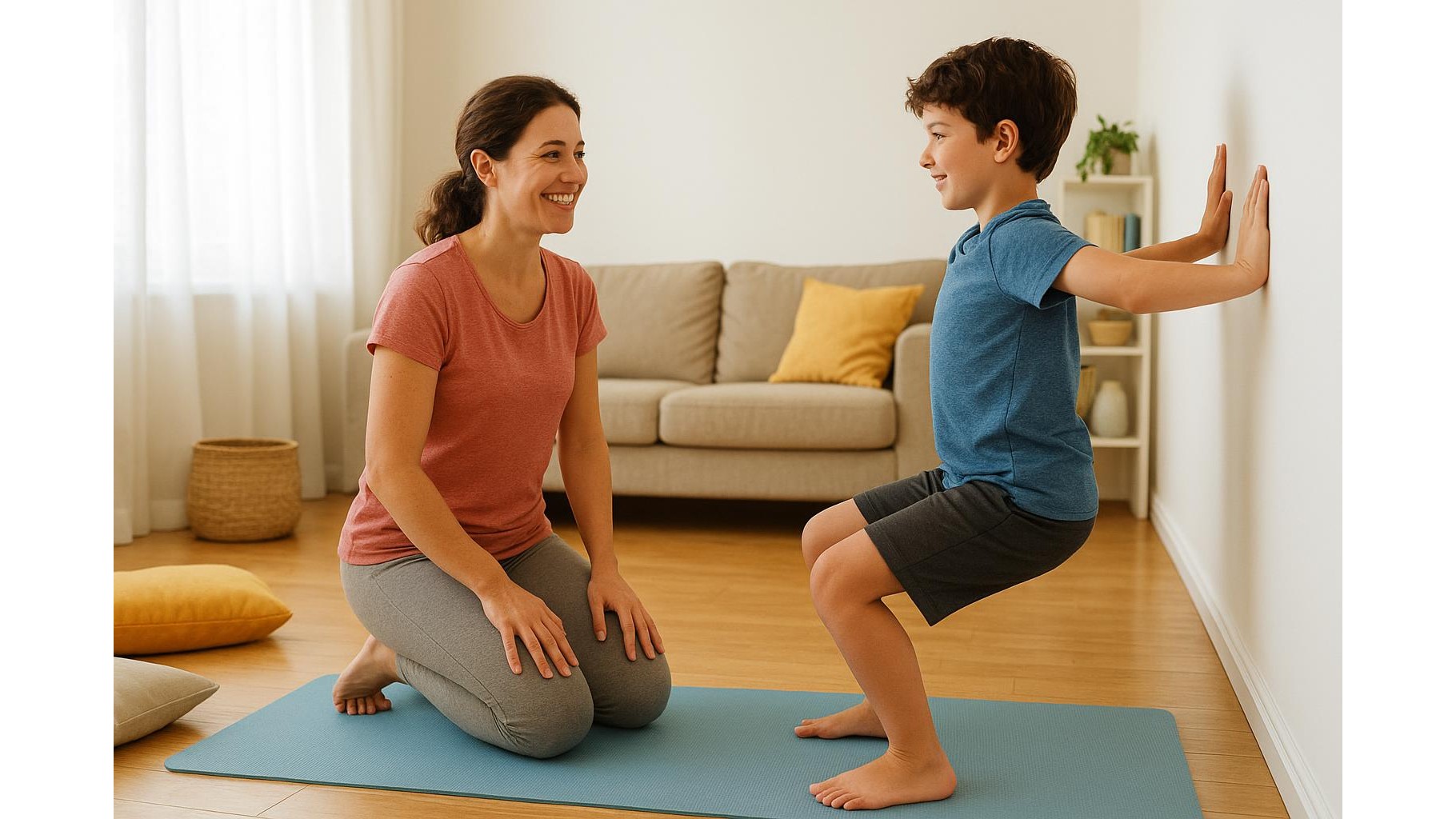
Before any exercise, agree on clear home workout safety rules. First, choose a clutter-free area in the living room and remove slippery rugs or toys. Kids must wear comfortable clothes and either bare feet or non-slip socks. Explain that no pain is allowed: if something hurts in a sharp or strange way, they stop immediately and tell an adult. Movements should be controlled, never rushed, with no racing against the clock. For this age group, avoid headstands, heavy lifting and any exercise that compresses the neck or spine. Keep sessions short (about 15–20 minutes) and always include a gentle warm-up and cool-down to protect growing muscles and joints.
Simple warm-up games in the living room
A playful warm-up for kids prepares the body and sets a positive tone. Start with 3–5 minutes of easy movement: marching on the spot, tiptoe walks, heel walks and gentle arm circles. Turn it into a game: call out commands like “freeze”, “jump”, “spin” or “crawl” and let your child react quickly. You can also play a slow-motion “animal walk” game: bear walks (hands and feet on the floor, hips in the air), crab walks (belly up, moving on hands and feet) and frog jumps (small, soft landings). The goal is to raise the heart rate slightly and warm the muscles without fatigue, so the child feels excited and ready for the main strength routine.
A fun full-body bodyweight routine for ages 8–12
This home bodyweight workout for kids targets all major muscle groups and fits comfortably in a living room. Perform 8–12 controlled repetitions of each exercise, then rest 30–45 seconds. Complete the circuit 2–3 times, depending on your child’s energy and experience:
- Chair squats: Stand in front of a sturdy chair, sit down lightly and stand up again, keeping knees in line with toes.
- Wall push-ups: Hands on the wall at chest height, feet stepped back. Bend elbows to bring chest toward the wall, then push away.
- Tabletop holds: On hands and knees, lift opposite arm and leg, hold for a few seconds, then switch. This strengthens the core and improves balance.
- Glute bridges: Lie on your back, knees bent, feet flat. Lift hips to form a straight line from shoulders to knees, then lower slowly.
- Star balance: Stand on one leg with arms out, hold still for 10–20 seconds, then switch legs, focusing on slow, controlled breathing.
Keep the language playful: talk about “rocket launches” for bridges or “superhero pushes” for wall push-ups to make strength training at home more engaging.
Progression tips and making it more challenging
As your child becomes more confident, you can gently increase the workout intensity without adding heavy weights. Add more repetitions, an extra circuit or slightly longer holds in balance and core exercises. You can also reduce support (for example, moving from wall push-ups to push-ups on a sturdy table). Introduce simple tempo changes: ask your child to lower slowly for three seconds and then push up quickly, always with good form. Keep a small training log where you record the date, exercises and how they felt; this helps kids see progress and builds a positive relationship with exercise and fitness as something they control and enjoy.
Keeping it fun and building lifelong habits
For kids 8–12, consistency comes from fun and variety rather than strict training plans. Schedule strength sessions two or three times per week and treat them like a short, active game rather than a chore. Let your child choose a favourite exercise to “lead” each time or create a simple reward system for completing weekly sessions, such as choosing a family board game or movie. Celebrate effort, not performance, and avoid comparing them with siblings or friends. By keeping home strength training light-hearted, safe and playful, you help your child build healthy movement habits that can last into their teenage years and beyond.
With a clear set of safety rules, a quick warm-up, and a simple full-body bodyweight routine, your living room can become a fun mini gym for children aged 8–12. You do not need special equipment or long workouts to see benefits; what matters most is regular practice with good technique and plenty of encouragement. Over time, your child will gain strength, balance and confidence, along with a positive mindset around home fitness that can support their wellbeing for life.