
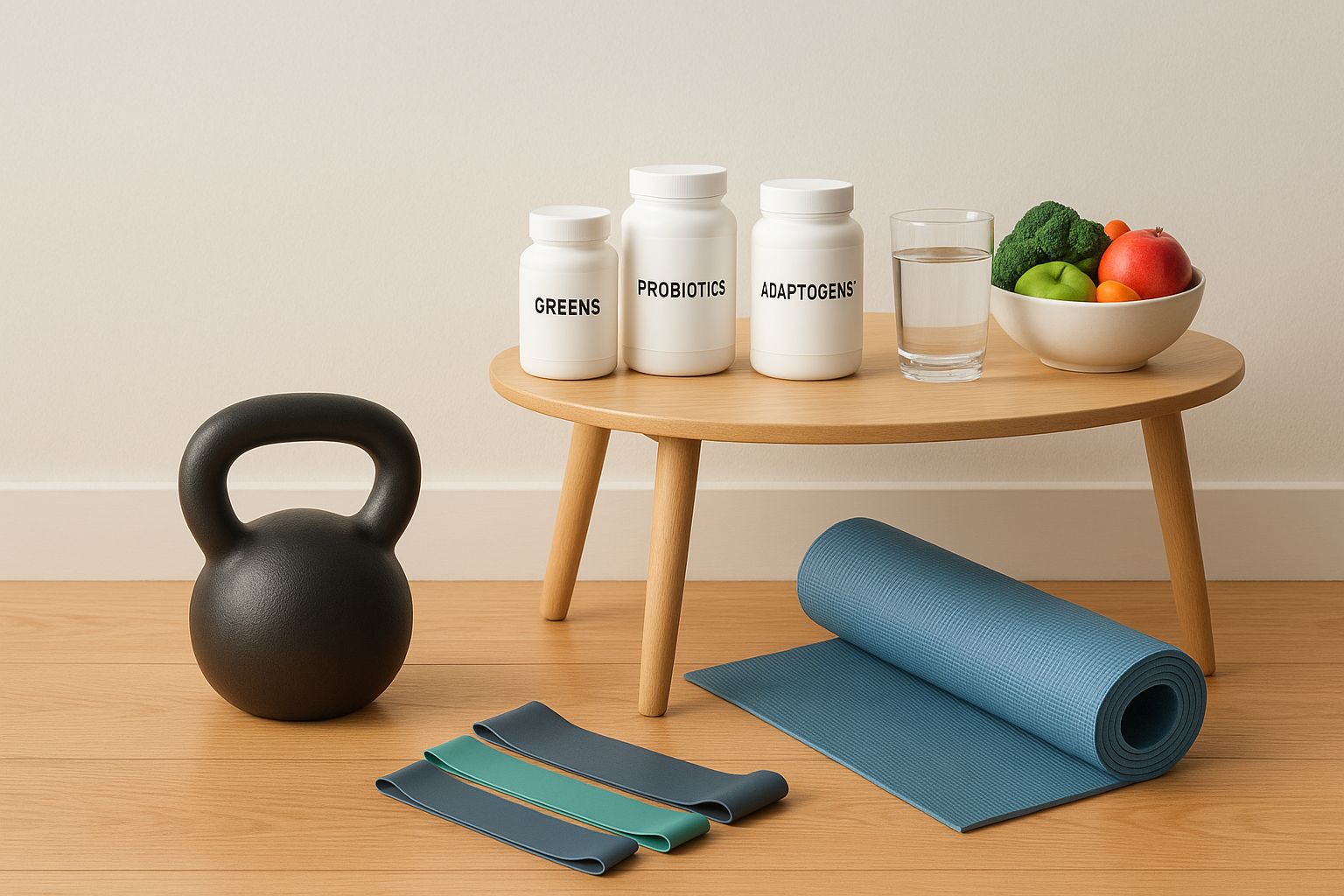
Building a home gym often comes with a desire to upgrade your nutrition and recovery. Alongside protein powders and creatine, you’ll see shelves filled with greens, probiotics and adaptogens, all promising better performance, energy and gut health. But as a home athlete, you don’t need an overcomplicated stack to make progress. Below, we break down what these supplements do, who may benefit, who can skip them and how to keep your routine simple and evidence-based.
Greens powders: concentrated plants or overpriced hype?
Greens powders bundle dried fruits, vegetables, grasses and added vitamins into a quick drink. For home athletes who struggle to reach 5 portions of fruit and veg per day, a greens powder can be a useful top-up, but it doesn’t replace whole foods, fibre texture or the satisfaction of real meals. When choosing a product such as a reputable greens blend on Amazon.co.uk, look for a transparent ingredient list, clear doses of vitamins and minerals and minimal added sugars or artificial sweeteners. These powders may support general micronutrient intake and convenience, but they are not magic for fat loss or muscle gain. If you already eat plenty of colourful produce, you can confidently skip them.
Probiotics and gut health: who actually needs them?
Probiotic supplements are live bacteria that may help support a balanced gut microbiome. For some people, especially those with a history of frequent antibiotics, digestive upset or intense training stress, a quality probiotic can reduce bloating and improve stool regularity. On Amazon.co.uk you’ll see many options claiming billions of CFU and multiple strains. What matters more than huge numbers is that the product lists specific strains (for example, Lactobacillus or Bifidobacterium species), has a clear best-before date and storage instructions. For otherwise healthy home athletes with no gut complaints and a diet rich in fermented foods like yoghurt, kefir and sauerkraut, probiotics are often optional. If you experiment, track your digestion, energy and consistency for 4–8 weeks to decide whether they earn a place in your stack.
Adaptogens like ashwagandha: stress support for lifters?
Adaptogens are plant compounds that may help the body manage stress. One of the best-studied for athletes is ashwagandha, often marketed to support recovery, sleep and even strength. Some research suggests moderate benefits for resistance-trained individuals, particularly under high stress or poor sleep. When browsing ashwagandha capsules on Amazon.co.uk, prioritise standardised extracts (for example, KSM-66 or Sensoril) with clearly stated dosages per capsule and third-party testing where available. Still, adaptogens are not a replacement for fundamentals: a well-structured training plan, 7–9 hours of sleep and adequate calories. If your lifestyle is chaotic, no herb will fix that. Consider adaptogens only after your basic habits and core supplements like protein, creatine and vitamin D are in place.
Who can skip these supplements entirely?
Many home athletes can safely skip greens powders, probiotics and adaptogens without losing progress. If you eat 5–8 servings of fruit and veg daily, include fermented foods a few times per week, manage stress with good sleep and programming, and hit your protein and calorie targets, these products add only marginal gains at best. Your money may be better spent on quality whole foods, basic performance supplements or upgrading your home gym equipment. Remember that “more supplements” does not equal “more results”. The real drivers of change are progressive overload, consistent training, recovery and a sustainable diet — supplements are optional add-ons, not essentials.
How to build a simple, effective supplement stack
To avoid overwhelm, think of your supplement plan as layers. The base layer for most home athletes is simple: whey or plant protein to hit daily needs, creatine monohydrate for strength and muscle, and perhaps vitamin D and a basic multivitamin if diet or sunlight are lacking. Only after this foundation should you consider greens powders, probiotics or adaptogens. Choose no more than one product from each category, introduce it for at least a month and honestly assess whether you notice benefits in energy, digestion, recovery or sleep. Keep a short log alongside your home workouts so you can separate supplement effects from normal training adaptations.
In summary, greens, probiotics and adaptogens can be helpful for some home athletes, but none are mandatory for progress. A well-chosen greens powder might support those with limited vegetable intake, probiotics can assist individuals with gut issues and standardised ashwagandha may benefit highly stressed lifters. Yet for most people training at home, dialling in nutrition, sleep and consistency will deliver far greater returns than chasing every new wellness trend. Start with the basics, add only what fills a genuine gap and let your results — not marketing — decide which supplements stay in your routine.









