
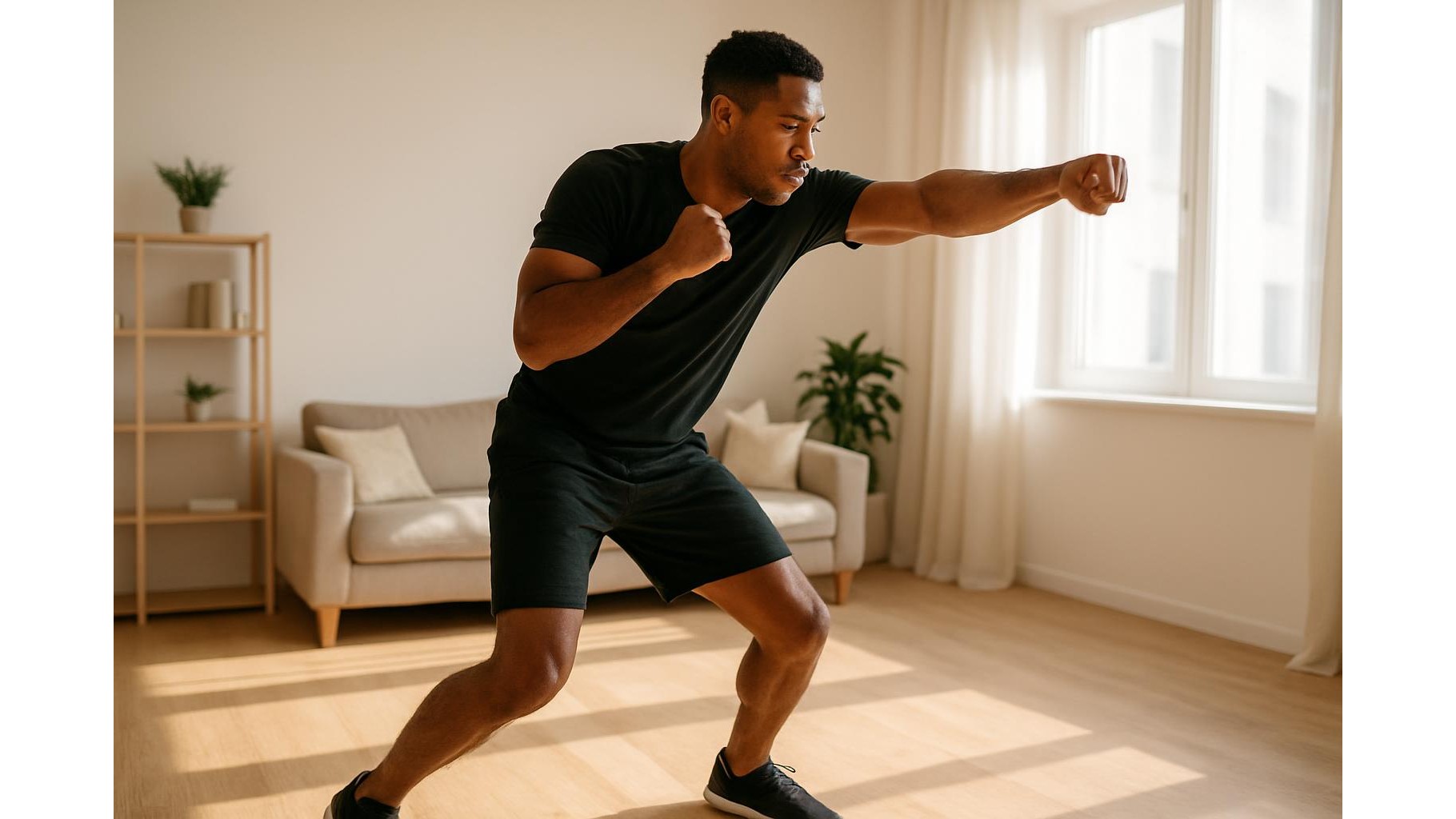
Shadow boxing at home is one of the simplest ways to boost your heart rate, clear your head and build confidence with basic boxing skills. You don’t need a bag, gloves or a big space: just your body, a bit of focus and 20 minutes. This beginner-friendly routine combines simple punches and light footwork into a low-impact, high-sweat workout you can do in your living room, bedroom or even a hallway.
Why shadow boxing is perfect for beginners at home
Shadow boxing is the practice of throwing punches and moving your feet in the air, without an opponent or equipment. For beginners, this is ideal: you can learn technique slowly, build coordination and gradually increase intensity without worrying about getting hit or hurting your hands. Because you’re always on the move, your heart rate climbs, giving you a solid cardio workout while staying gentle on the joints. It’s also a powerful tool for stress relief: focusing on your combinations and breathing helps you switch off from work, studies or daily worries.
Warm-up: 4 minutes to wake up your body
Before throwing your first punch, spend four minutes getting warm. Start with 60 seconds of light marching on the spot, then 60 seconds of gentle arm circles and shoulder rolls to loosen the upper body. Follow with 60 seconds of easy torso twists, rotating the shoulders side to side while keeping the hips facing forward. Finish with 60 seconds of light bouncing or step-taps, letting your heels lift off the floor. Keep everything relaxed, breathe through the nose and mouth, and imagine you’re preparing for a focused but low-impact boxing workout rather than a sprint.
Basic stance and punches for home shadow boxing
To get the most from this 20-minute shadow boxing routine, set up a solid stance. If you’re right-handed, place your left foot slightly forward, feet shoulder-width apart, knees soft and heels light. Hands up by your cheeks, elbows close to the ribs, chin slightly tucked. Left hand is your jab, right hand is your cross. Practice slow, controlled jabs: extend the lead hand straight out, rotate the knuckles to face down, then snap it back to your guard. For the cross, pivot the back foot, rotate the hips and shoulders, then drive the rear hand straight forward. Add simple hooks by swinging the arm in a tight arc at shoulder height, and uppercuts by bending the knees and driving the fist up the centre line. Keep movements small, precise and controlled.
The 20-minute beginner shadow boxing routine
This equipment-free workout uses five 3-minute rounds with short rests. Round 1: jab–cross only. Throw a steady rhythm of one-two combinations for 20 seconds, then move lightly or march on the spot for 10 seconds; repeat until the round ends. Round 2: jab–cross–jab. Add one extra jab at the end of each combo and focus on snapping your hands back to your face. Round 3: jab–cross–hook. After the cross, add a lead hook, rotating your front hip slightly. Round 4: jab–cross–uppercut. Drop the hips a little and drive a rear uppercut up the middle. Round 5: freestyle. Combine all punches in any order, keeping your guard up and your feet moving. Rest 30–45 seconds between rounds, walking slowly and breathing deeply to keep the workout sustainable.
Footwork, breathing and staying safe
Good footwork makes your shadow boxing feel fluid and athletic, even in a small room. Think “light and quiet”: take small steps rather than big jumps, and always push off the foot opposite to the direction you’re moving. Step forward with the front foot, then bring the rear foot with you; reverse the pattern to step back. When moving sideways, lead with the side you’re stepping toward. Match your breathing to your punches, exhaling in short bursts as each shot leaves your hand. To keep it low impact, avoid locking out the elbows or throwing wild punches; aim at an imaginary target just in front of you and stop the punch before your arm fully straightens. If you feel dizzy or breathless, slow down to marching and focus on deep, controlled breaths.
Cool-down and turning it into a habit
End your home boxing session with two to three minutes of gentle movement and stretching. Walk on the spot, roll your shoulders and stretch your chest, back and hips with slow, comfortable holds. This helps your heart rate come down and your muscles recover. To turn shadow boxing into a powerful tool for stress management, schedule this 20-minute routine three to four times per week, ideally at the same time of day. You’ll quickly notice better stamina, sharper focus and a lighter mood. Over time, you can add more complex combinations or longer rounds, but even this simple, equipment-free structure is enough to build a strong, confident and energised you.









