When you are building a home gym and want maximum calorie burn in minimum time, two compact machines often top the list: the vertical climber and the stair stepper. Both promise intense cardio, leg sculpting and a relatively small footprint compared with treadmills or bikes. But they feel very different to use, load your muscles in different ways and don’t have the same impact on your joints or neighbours. In this guide we compare them head to head and highlight two popular Amazon UK options to help you pick the best machine for your goals and space.
Calorie burn and workout intensity
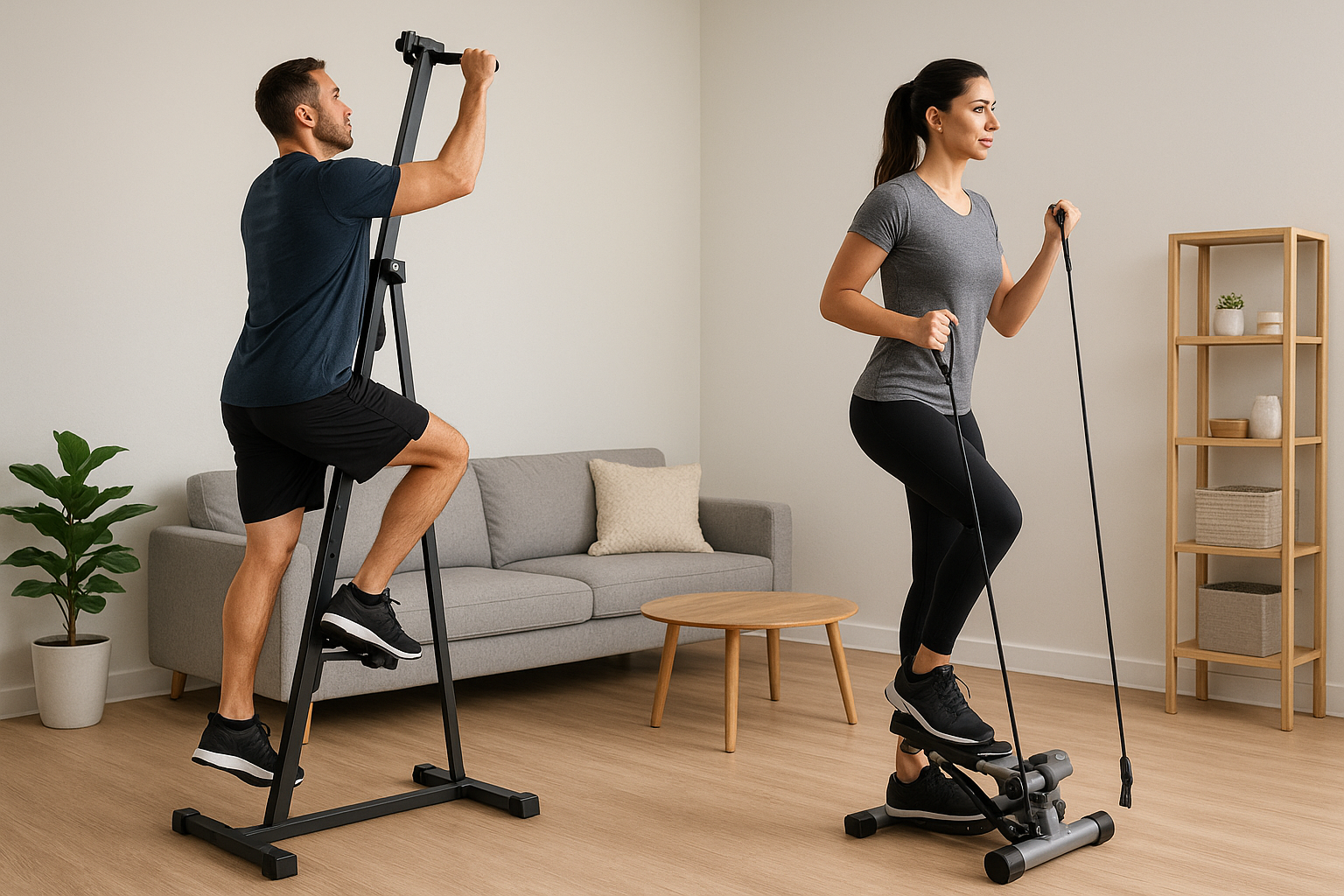
A vertical climber is naturally high intensity because it mimics rock climbing: you drive arms and legs together in a long vertical range of motion. A good example is the MaxiClimber Vertical Climber, which uses your bodyweight and an Elastic Resistance System (ERS) for extra load. Users commonly report that even 5–10 minutes feels like a full session, and that it “gets the heart pumping” far faster than a treadmill. For pure calories burned per minute, the climber has the edge. The stair stepper, such as the compact Niceday Mini Stepper Exercise Machine, offers a steadier, more moderate intensity. You can still burn serious calories, especially in longer bouts of 20–30 minutes, but it is generally easier to sustain and therefore better suited to beginners or lower-intensity daily cardio.
Muscle involvement and training effect
With a vertical climber, you are essentially performing standing climbing strokes: long hip, knee and ankle extension while your shoulders, back and arms pull on the handles. The MaxiClimber is designed to “engage all major muscle groups from top to toe”, giving you a true full-body workout that hits glutes, quads, calves, lats and arms in one move. That makes it ideal if you want to combine strength endurance with cardio and have limited time. A mini stair stepper like the Niceday focuses more on the lower body: glutes, quads, hamstrings and calves. Included resistance bands add some upper-body and core involvement, but the emphasis remains on your legs. This makes the stepper a great option for toning the lower body and building daily activity, while the climber is better for full-body conditioning and high-intensity interval training.
Joint impact, comfort and noise
Both machines are low-impact cardio, but they feel different if you have sensitive knees, hips or lower back. The MaxiClimber uses your own bodyweight for resistance and keeps you in an upright position without impact, which many users find kinder on the back than sitting on a bike or pounding on a treadmill. However, the long vertical movement can be very demanding on deconditioned knees and hips at first, and several reviewers mention intense muscle soreness in the early weeks. The Niceday Mini Stepper uses hydraulic cylinders with an up‑down motion. The compact stroke length and oversized non-slip pedals help keep the movement controlled and joint-friendly, and many owners highlight it as comfortable for short, frequent bouts. On noise, the climber creates a noticeable metal-on-metal sliding sound, while the stepper’s hydraulics can thump if you hit the base. In practice, both are quieter than a treadmill but may be heard in lightweight or echoey houses.
Space, storage and practicality for home use
If you are tight on space, both the vertical climber and the stair stepper beat bulky cardio machines, but they occupy different shapes. The MaxiClimber has a very small floor footprint, roughly the size of a bar stool, but it stands tall (over 1.4 m) and needs ceiling clearance for the moving handles. It folds for storage and can slide into a cupboard or behind a door, though its long legs make it slightly awkward to move. The Niceday Mini Stepper is extremely compact (around 41 × 31 × 23 cm) and weighs under 7 kg, so it can live under a bed, in a wardrobe or even beside your desk. It comes pre-assembled, making it perfect for renters or anyone who wants grab‑and‑go cardio without setup time. If vertical height or storage convenience is your main concern, the mini stepper wins for everyday practicality.
Budget, training style and who each machine suits
Both highlighted machines sit firmly in the budget‑friendly home cardio category compared with smart bikes or rowers. The MaxiClimber offers very high training intensity and a genuine full‑body stimulus with only your bodyweight and ERS bands, which is ideal if you want short, tough sessions and to maximise calories burned in less time. It suits intermediate to advanced exercisers, or highly motivated beginners, who are ready to push through a demanding learning phase. The Niceday Mini Stepper is cheaper, simpler and more forgiving. Its adjustable resistance and resistance bands allow both beginners and experienced users to build steady‑state cardio and light strength work while watching TV or taking a work break. If you value consistency, low perceived exertion and easy daily use, the stair stepper is the safer, more sustainable choice.
In summary, if your top priority is maximum calorie burn per minute and a challenging full‑body workout, a vertical climber such as the MaxiClimber Vertical Climber is hard to beat. You will work harder, sweat faster and train more muscle groups in less time, at the cost of a steeper learning curve and higher perceived effort. If you want a more accessible, joint‑friendly and space‑saving option that you can use daily without dread, a stair stepper like the Niceday Mini Stepper Exercise Machine is an excellent fit. Both can transform your home cardio routine; choosing between them comes down to your fitness level, training style and how quickly you want to burn those calories.