Spending hours at a desk and then asking your body to lift heavy in a home gym is a recipe for tight hips, rounded shoulders and a stiff spine. The good news is that you can offset most of this damage with a simple, structured weekly mobility routine. With just 10–20 minutes a day, you can improve posture, make your lifts feel smoother and reduce those nagging aches that build up over the week.
Why home lifters and desk workers need mobility
Both heavy strength training and long desk sessions load the same areas: hips, shoulders and spine. Over time, you lose range of motion, your squat and deadlift feel tight, and your neck and lower back start complaining. A planned mobility routine keeps your joints moving through full ranges, helping your muscles recover faster and your position under the bar stay solid. Think of mobility as maintenance: you are keeping the “hardware” (joints and tissues) in good condition so the “software” (your lifting technique) can run smoothly.
Key areas to target: hips, shoulders and spine
For home lifters and office workers, three regions deserve daily attention. The hips control your squat depth, deadlift start position and how you sit in a chair; tight hip flexors and glutes can tilt your pelvis and stress your lower back. The shoulders and upper back (thoracic spine) influence your bench press setup, overhead work and your ability to sit tall at the desk instead of slumping forward. Finally, the spine – especially the thoracic and lumbar segments – must be able to extend, rotate and flex without pain. A balanced mobility plan gives each of these areas specific time across the week, instead of random stretching whenever something hurts.
Building a simple weekly mobility template
Start with five short sessions per week, 10–15 minutes each, slotted before or after training or in a work break. For example: Monday and Thursday: focus on hips (deep lunges, 90/90 hip rotations, glute stretches). Tuesday and Friday: focus on shoulders (wall slides, band pull-aparts, doorway chest stretches). Wednesday: focus on the spine (cat–cow, thread-the-needle, controlled segmental flexion/extension). Keep each session simple: 3–5 exercises, 30–60 seconds per side or 8–10 slow reps. Repeat this template every week and aim to move just a little further or more smoothly rather than forcing range.
Using a foam roller to unlock the spine
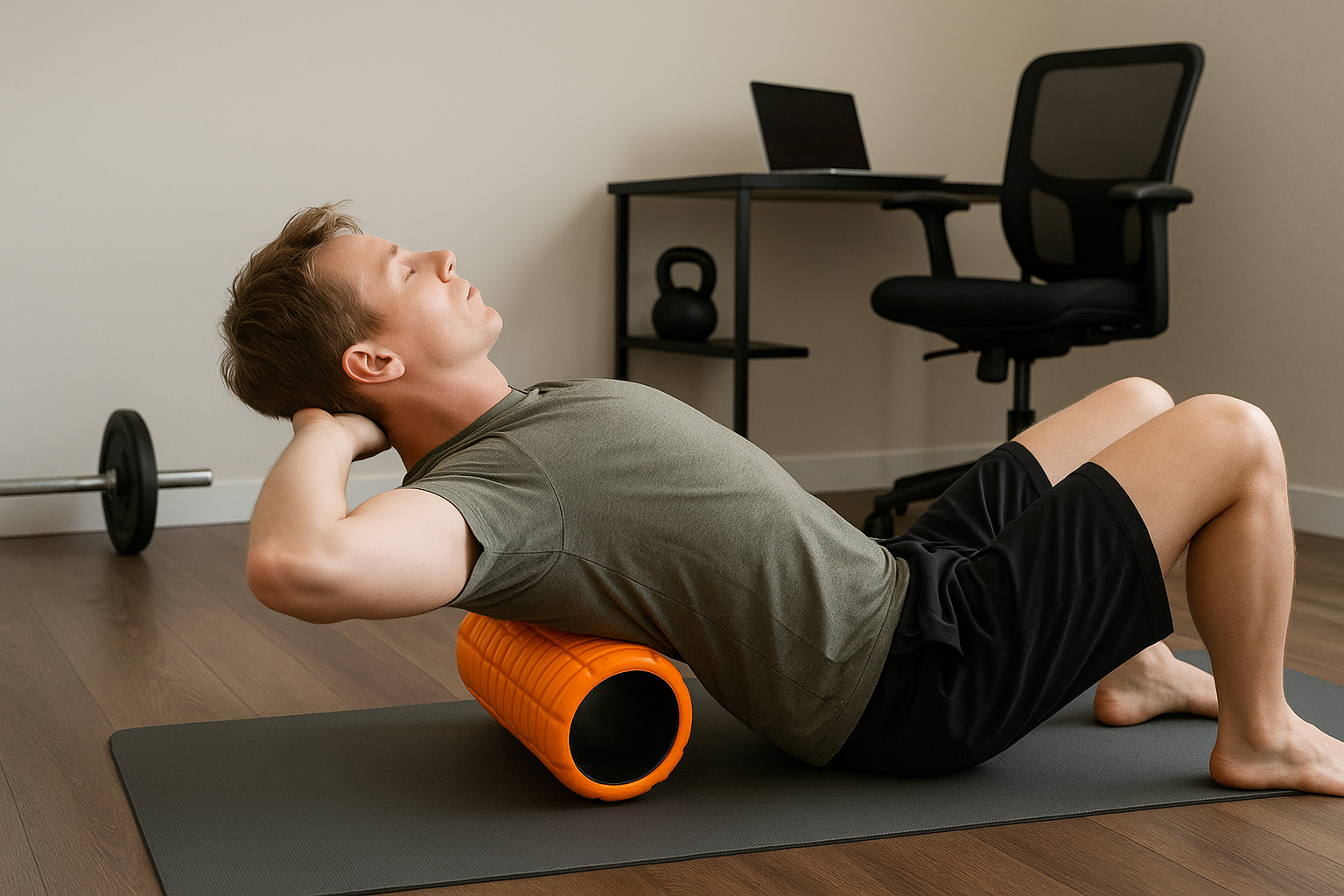
A quality foam roller can dramatically improve spine and upper back mobility for both desk workers and lifters. A standout option is the TriggerPoint Grid Foam Roller, which uses a multi-density, textured surface over a rigid hollow core to mimic a massage therapist’s hands. Its design helps increase blood flow and tissue hydration while staying firm enough not to collapse under bodyweight. To use it for thoracic mobility, lie with the roller across your upper back, support your head with your hands, gently extend over the roller and take slow breaths. Then roll along the upper and mid-spine, avoiding the lower back. Just a few minutes, 3–4 times per week, can reduce stiffness from sitting and make your front squats, bench setup and overhead presses feel more natural.
Integrating mobility into your work and training day
The best mobility routine is the one you can actually stick to. Anchor 5–10 minutes of mobility immediately after your warm-up on lifting days and during a mid-morning or mid-afternoon break on non-lifting days. For desk workers, sprinkle in “movement snacks”: stand up every hour, perform 5–8 hip circles, a set of band pull-aparts and two slow thoracic rotations per side. Keep a foam roller like the TriggerPoint Grid Foam Roller and a light resistance band near your desk or home gym so mobility work is always one reach away. Consistency beats intensity: gentle daily practice will outperform occasional, aggressive stretching sessions every time.
Progressing and tracking your mobility over time
To stay motivated, treat mobility training like any other part of your program by tracking progress. Test a few simple benchmarks every 4–6 weeks: overhead squat with a dowel, hip flexor lunge stretch depth, or how easily you can clasp hands behind your back. Note how your main lifts feel: deeper, more stable squats, a stronger bench arch, or less lower back tightness after long workdays are all signs your routine is working. If an area still feels stubborn, add an extra day focused on that joint or introduce more targeted work with your foam roller. Over time, your mobility routine stops feeling like “extra homework” and becomes a built-in part of lifting and staying pain-free at your desk.
By deliberately targeting hips, shoulders and spine with a short, structured weekly plan, you support both your home strength sessions and long office hours. A reliable tool like the TriggerPoint Grid Foam Roller makes it easier to release tight tissues and maintain healthy posture. Commit to just a few minutes each day, follow the simple weekly structure, and you will move better, lift better and feel far fresher on and off the desk.