Keeping your home workouts fresh is one of the biggest challenges when you train in the same space week after week. That’s where free workout randomizer tools shine: they automatically mix up exercises, time intervals and formats so you don’t have to. Used well, they can boost motivation and adherence while still fitting into a structured, goal‑oriented plan for strength, fat loss or general fitness.
Why use a workout randomizer for home training?
Randomized training tools break the monotony of repeating the same few routines. By shuffling bodyweight exercises, rep schemes and work‑rest ratios, they help you discover new combinations and challenge your body in different ways. This variety can reduce boredom and may even reduce overuse from doing identical movement patterns daily. However, “random” should not mean “reckless”: your weekly structure still matters. Think of these tools as a fun layer added on top of a backbone of planned strength sessions, cardio days and recovery, not a total replacement for programming.
Top free workout randomizer apps to try
Many free apps act as exercise shufflers for home training. Look for ones that let you filter by equipment (for example, bodyweight only, resistance bands, or dumbbells) and fitness level, and that provide clear demonstrations for each move. A good randomizer should allow you to lock in basic parameters—such as session length, focus (full body vs upper/lower), and intensity—while still surprising you with the exact sequence. This keeps your training aligned with long‑term goals like building muscle or improving conditioning, but adds a “game” element that makes you more likely to show up and complete the workout.
Pairing random workouts with minimal equipment
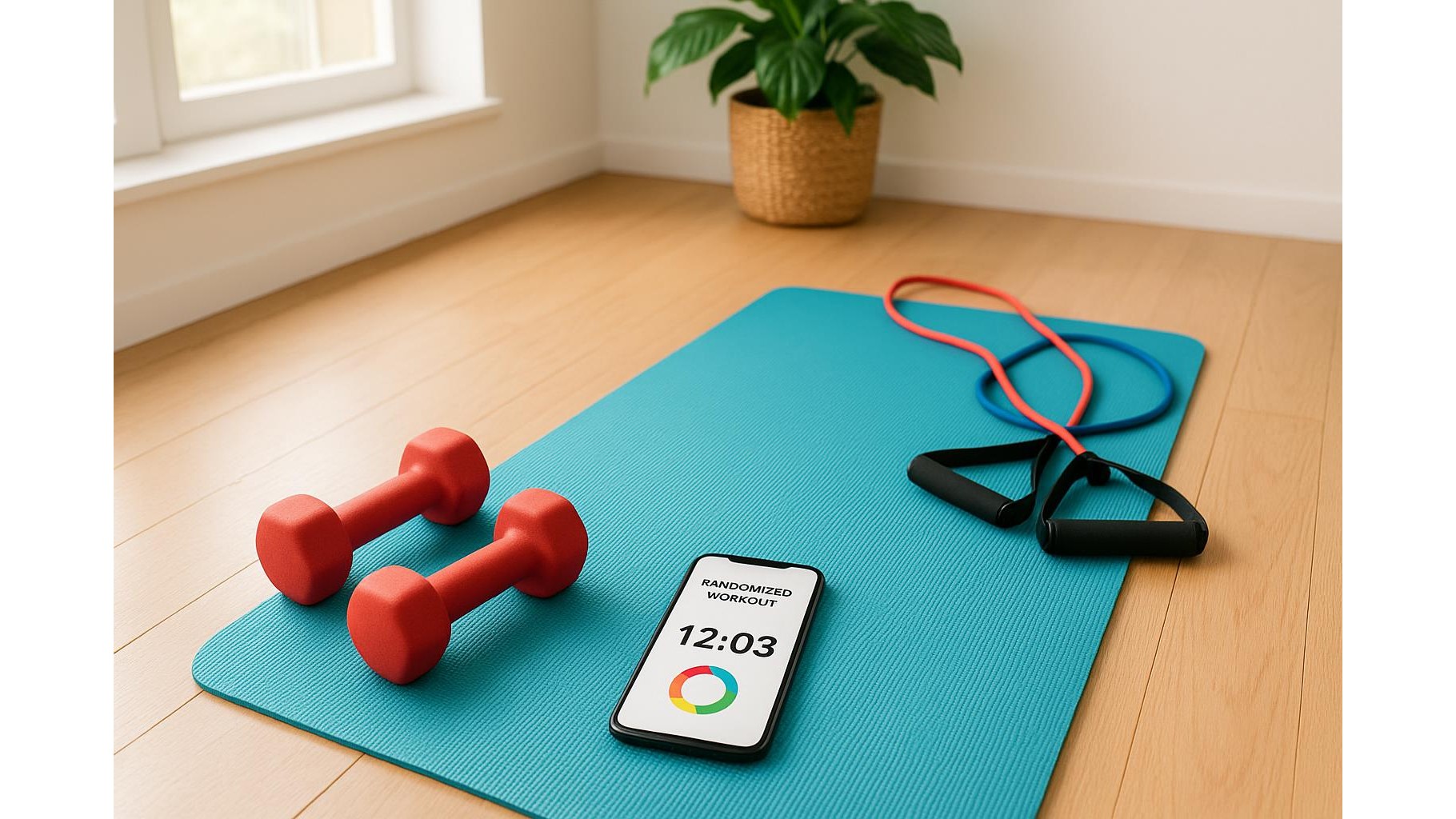
To get the most from these tools, it helps to have a few versatile pieces of home gym equipment. A pair of adjustable dumbbells, a set of resistance bands and a sturdy exercise mat massively expand the pool of exercises your app can draw from while still keeping your setup simple and budget‑friendly. Many randomizers let you tick which items you own; that way, they won’t serve up barbell or machine‑based movements you can’t do. Even with minimal gear you can rotate between strength circuits, EMOMs (every minute on the minute) and HIIT sessions, all generated on the fly but anchored to the tools you actually have at home.
Staying safe while using workout generators
Because randomizer tools can spit out almost any movement, you need a few safety rules. First, be honest with the app about your experience level, existing injuries and mobility limits, and skip or swap any move that feels sketchy. Warm up for 5–10 minutes before every randomized session with light cardio and dynamic stretches, especially for the shoulders and hips. Avoid stacking too many high‑impact jumping moves in a row if you train on a hard floor. Finally, cap the weekly number of intense randomized workouts—two to four is plenty for most people—so that you still have easier days for recovery, technique practice or low‑intensity cardio.
How to keep training random but still goal‑oriented
The smartest way to use workout generators is within a loose plan. Start by deciding your primary goal for the next 8–12 weeks—such as improving push‑ups, building leg strength, or boosting conditioning. Then assign 2–3 “anchor” sessions per week with a consistent structure (for example, progressive strength training on Monday and Thursday). Use your randomizer tools on the remaining days as conditioning or “fun” workouts. Track a small number of metrics—like total reps of push‑ups in 10 minutes, or how many rounds you complete in a circuit—and aim to gradually improve those, even though the exact workouts vary. This way, the randomness keeps you engaged, while progression keeps you moving forward.
Making random workouts a sustainable habit
Ultimately, the best free workout randomizer is the one you enjoy enough to use consistently. Treat each session as a mini‑challenge rather than a test you can “fail”, and adjust the duration or intensity on tough days instead of skipping entirely. Combine your apps and tools with simple rituals—laying out your mat the night before, scheduling sessions in your calendar, or training at the same time each day—to automate the habit. Over time you’ll build a flexible, resilient home routine that feels more like play than punishment, while still delivering steady progress toward your fitness goals.