If you are building a serious home gym, you have probably seen sleek, non-motorized curved treadmills used by sprinters and CrossFit athletes. These manual machines promise a more natural running feel, higher calorie burn and no need for a power outlet. But they are also expensive, heavy and demanding to use. Before you add one to your training space, it is essential to understand who truly benefits from a curved treadmill and which technical details matter most for home use.
What is a curved treadmill and how does it work?
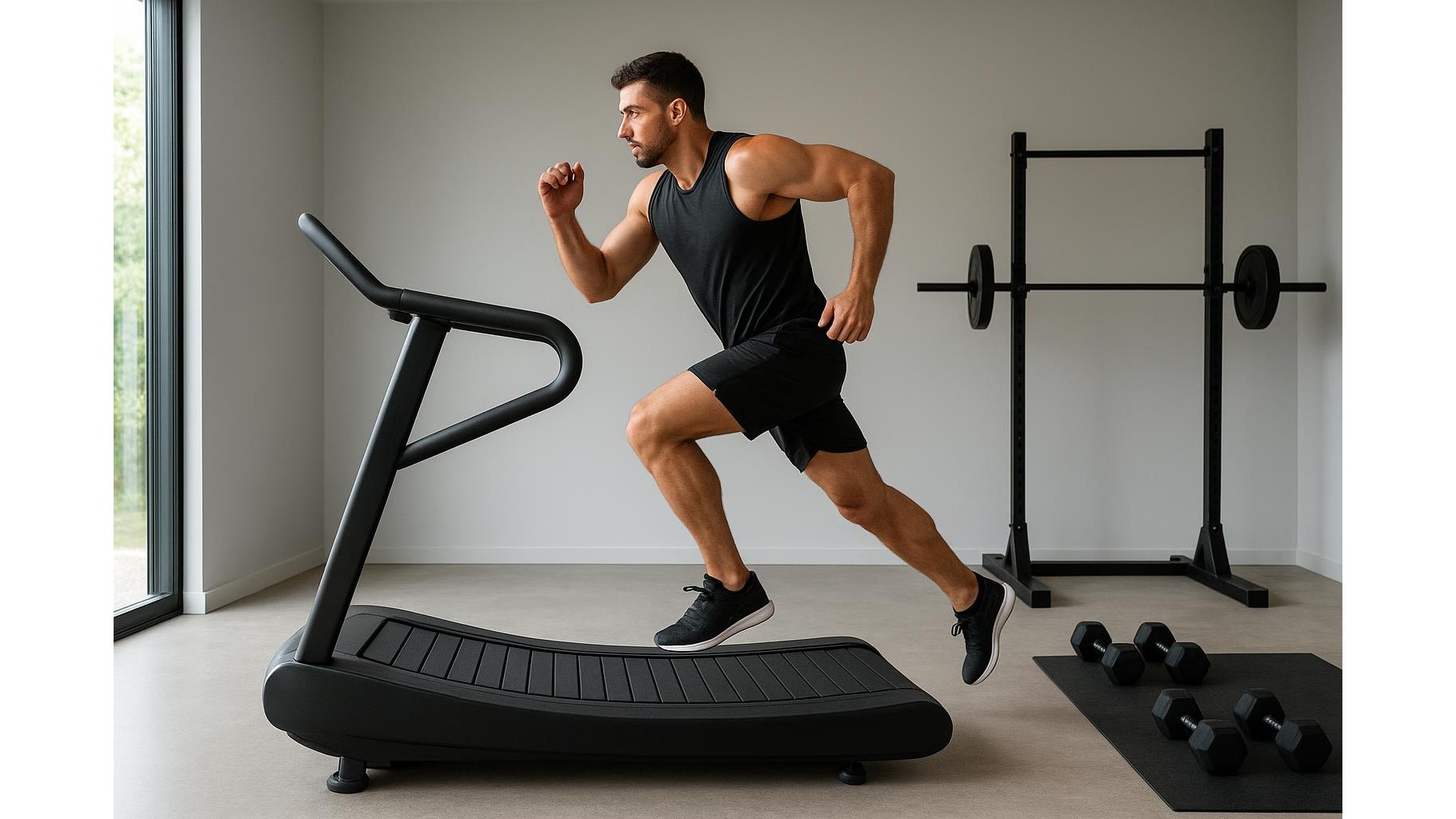
A curved treadmill is a non-motorized running machine with a slightly arched deck that moves only when you walk or run. Your foot strike pulls the belt backward and your body weight and position on the curve control the speed. Move further forward and the belt accelerates; drift back and it slows down. Because there is no motor, you provide all the power, which can make the workout more intense and closer to outdoor running. The curved shape encourages a midfoot or forefoot strike and a more upright posture, but it can also feel unstable for beginners who are used to flat, powered treadmills.
Who really needs a curved treadmill at home?
Non-motorized curved treadmills for home are best suited to specific users rather than casual walkers. They work particularly well for HIIT and sprint training, athletic conditioning and CrossFit-style workouts where quick speed changes are essential. Strong runners who already have good technique can benefit from the increased calorie burn and joint-friendly, motor-free design. On the other hand, beginners, people with balance issues or those mainly interested in relaxed walking may find a curved treadmill too challenging and fatiguing. For them, a traditional motorized treadmill with cushioning and preset programmes is usually more comfortable and better value.
Key pros and cons for home use
The main advantages of a curved treadmill at home are its self-powered operation, responsiveness and durability. With no motor, there is less that can break, no need for a nearby socket and lower long-term maintenance. The instant speed control is perfect for short sprints, and many users report a more engaging, outdoor-like feel. However, the downsides are significant. Good curved treadmills are expensive and heavy, often harder to move than standard models. The learning curve can be steep, especially for longer steady runs. Some cheaper models also have less smooth belts, limited adjustability and may feel jerky at slower paces, which can limit their usefulness if you want a versatile family cardio machine.
Space, noise and practicality in a home gym
Before buying, check how a curved treadmill for home fits your space and lifestyle. These units are usually longer and heavier than compact folding treadmills and they almost never fold, so you need a permanent area with adequate clearance around the deck. While there is no motor noise, the sound of the belt and your footsteps can still be noticeable, especially at higher speeds or in flats with neighbours below. Because the machine is always ready—no boot-up time or programming—curved treadmills are great for quick, intense sessions, but they are less ideal if you like to walk while watching TV or work, where ultra-quiet, low-speed operation matters more than performance.
What to check before buying a curved treadmill
When evaluating curved treadmills for home, focus on a few critical specs rather than just looks. A solid, high user weight capacity and a stable, heavy frame help ensure durability and smoother belt movement. The running surface should be long and wide enough for your natural stride, especially if you plan on sprinting. Look for a smooth, low-friction belt that moves easily but does not feel loose or jerky, with quality slats and bearings. Useful extras include a simple console to track speed, distance and time, front handles for stability, and transport wheels. Read user reviews carefully to understand real-world noise levels and how the belt behaves at walking versus sprint speeds, and be honest about your fitness level and training style before committing.
In summary, a non-motorized curved treadmill can be a powerful addition to a home gym for athletes and dedicated trainees who love high-intensity intervals and want a durable, self-powered machine. However, it is not the right choice for everyone. The cost, weight and demanding feel make it less suitable for beginners or casual users who mainly want comfortable, low-impact walking. By carefully assessing your goals, space, noise tolerance and the key technical features before you buy, you can decide whether a curved treadmill truly fits your home training or whether a more traditional treadmill or other cardio equipment would serve you better.