Feeling knee soreness after squats and lunges is common, especially when you train hard at home without a coach watching your form. The good news: in many cases, you can reduce discomfort and protect your joints with a smarter warm-up, small technique changes, and a few low-cost recovery tools. This guide walks you through practical tweaks you can apply in your next home workout to keep your knees happier and your strength gains moving forward.
Why your knees hurt after squats and lunges
Post-workout knee pain often comes from a mix of factors: poor alignment, lack of warm-up, weak glutes, and doing too much too soon. When the knees collapse inward during squats or lunges, stress shifts to the joint instead of being shared by the hips and ankles. Training only on hard floors without shoes or with very soft shoes can also increase impact. Finally, jumping from light to heavy loads or adding lots of reps overnight can irritate the tissues around the kneecap. Understanding these triggers helps you adjust your home routine before soreness turns into a more serious injury.
Warm-up moves that prep and protect your knees
A focused warm-up is one of the simplest ways to protect your knees before strength training. Spend 5–8 minutes on light cardio like marching in place or gentle step-ups to increase blood flow. Follow with dynamic mobility: leg swings front-to-back and side-to-side, bodyweight hip circles, and ankle rocks (small knee bends over the toes while holding onto a chair) to wake up the joints that support your knees. Finish with activation drills such as glute bridges and mini band side steps to switch on the glutes, which help keep the knees tracking over the toes in squats and lunges. These low-effort drills can significantly reduce post-session stiffness and give your joints better support during every rep.
[p]
Technique tweaks for squats and lunges at home
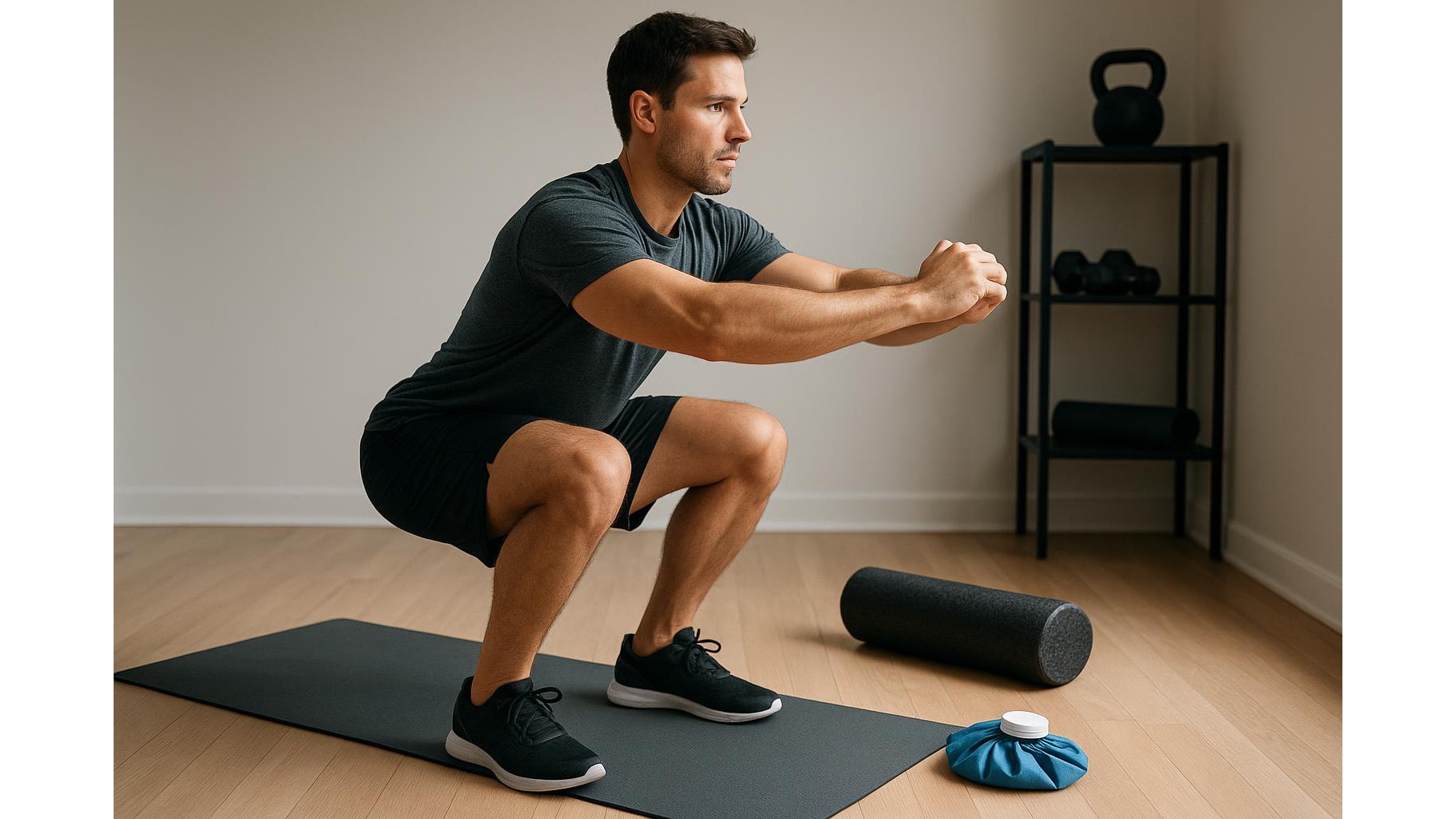
Small technique changes can dramatically reduce knee strain. In squats, think “hips back first,” as if you are sitting into a chair, and keep knees tracking in line with your second toe rather than collapsing inward. Limit depth to a range where you feel stable and pain-free; you do not need to hit a deep parallel squat if your knees protest. For lunges, take a slightly longer step so your front knee stays roughly above the ankle, not pushed way past the toes. Try reverse lunges (stepping back instead of forward), which usually feel gentler on the joints. Reduce load and total sets on days when your knees are more sensitive, and build up gradually from there to give tissues time to adapt.
Simple at-home recovery habits
After training, plan a brief recovery routine rather than collapsing on the sofa. Start with 5–10 minutes of easy walking around the house to flush metabolites from the legs. Follow with gentle stretching for the quads, hamstrings, calves, and hips: hold each stretch for 20–30 seconds without bouncing. If you tolerate cold, you can apply a flexible ice pack or a bag of frozen peas wrapped in a thin towel around the knee for 10–15 minutes to help reduce acute soreness. Elevating the legs on a pillow while you read or relax can also ease swelling. Finally, prioritize sleep and hydration—your cartilage and connective tissues repair best when you are well-rested and adequately fueled.
Low-cost tools that support knee comfort
You do not need expensive gadgets to support your knee recovery at home. A basic yoga mat or folded towel provides extra cushioning under the knees during lunges or floor work, reducing pressure on sensitive areas. Light resistance bands can increase glute activation in your warm-up, indirectly protecting the knees. A simple foam roller or firm massage ball allows you to release tight quads, IT band region, and calves, which often pull on the knee joint when neglected. If you find certain movements consistently uncomfortable, consider consulting a physiotherapist online for a form check and personalised regressions. Combining these affordable tools with smart programming can make your home gym much more knee-friendly.
When to modify training and seek help
Mild, short-lived muscle soreness around the knees can be normal after a new or tougher strength session, but sharp, localized pain inside the joint or ongoing swelling is a warning sign. If your knees hurt during every squat or lunge despite careful form, reduce frequency, lighten the load, and use partial range-of-motion variations while you build strength and mobility. If pain persists for more than a couple of weeks, worsens with daily activities like stairs, or is accompanied by locking or giving way, it is important to seek professional assessment. Early intervention helps you adjust your program, address mobility or strength deficits, and return to pain-free training faster.
By refining your warm-up, improving technique, and adding simple recovery habits, you can significantly reduce knee soreness after strength training at home. Thoughtful exercise progressions, strategic use of low-cost tools, and listening to your body’s feedback allow you to keep squats and lunges in your routine while protecting your joints. These practical tweaks not only make today’s workouts more comfortable but also support long-term knee health so you can continue building strength with confidence.