Being a busy parent often means training at home in short bursts and then jumping straight back into family life. Without a plan for recovery, those hard‑earned workouts can quickly lead to fatigue, nagging aches and stalled progress. By building simple habits of stretching, self‑massage and better sleep into your day, you can keep energy high, reduce soreness and stay consistent with your home fitness routine.
Why recovery matters for parents who train at home
When you are juggling work, children and house tasks, you rarely have time to cool down properly after a workout. Yet muscle recovery is when the body actually adapts and gets stronger. Skipping it can mean tight hips from sitting and lifting kids, tense shoulders from screens and poor sleep from a nervous system that never truly winds down. A simple home routine that includes gentle mobility, light massage and a regular sleep schedule helps your body repair, lowers injury risk and makes each short training session more effective.
Micro‑stretching sessions that fit into a packed schedule
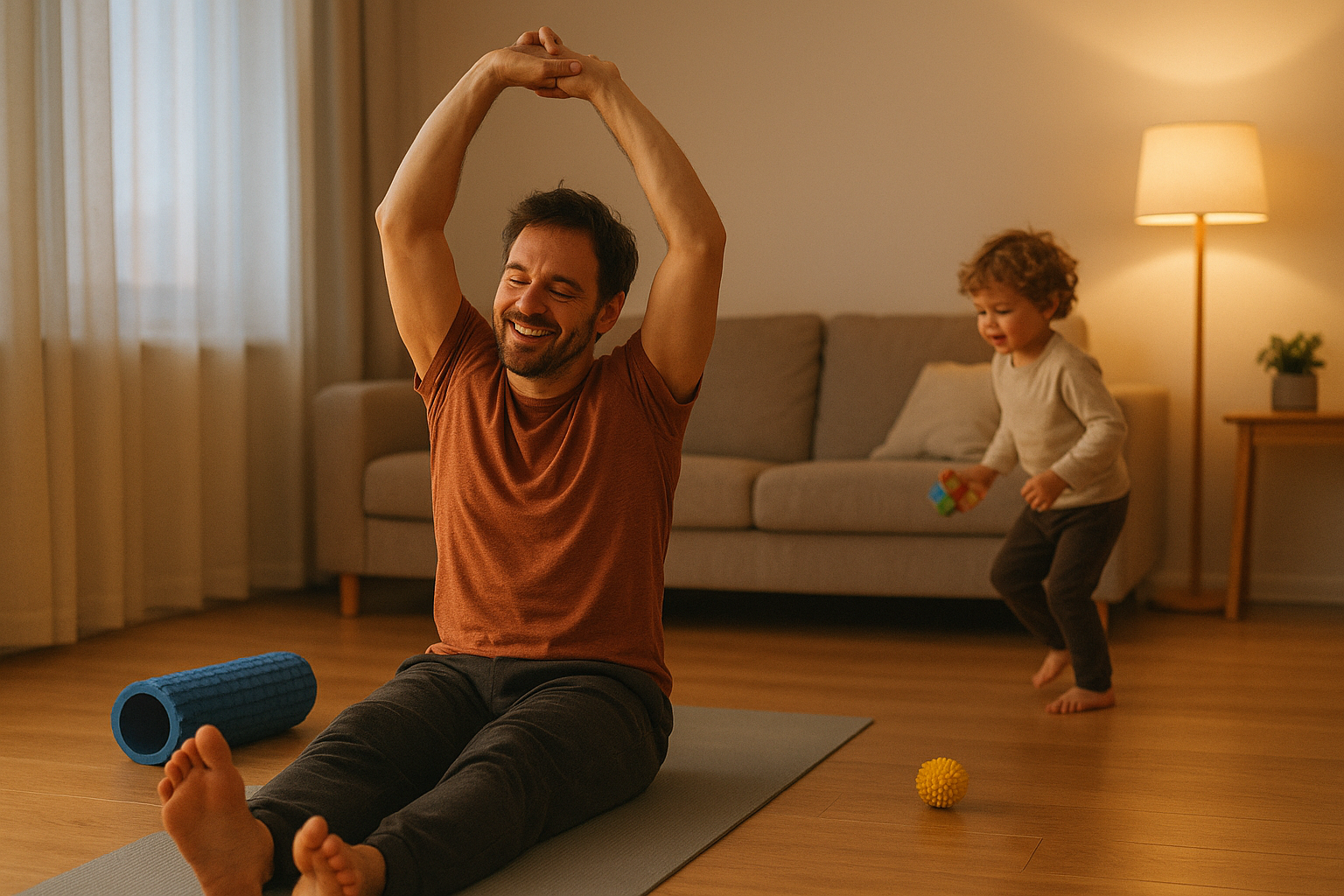
Instead of chasing a perfect 30‑minute stretching block, think in terms of micro‑sessions of 3–5 minutes scattered through the day. After your home workout, choose two or three areas: calves, hips and upper back are great staples for parents who sit, drive and carry children. Hold each stretch for 20–40 seconds and breathe slowly through your nose. You can even turn playtime into stretching time by sitting in a gentle hip stretch on the floor while you read to your kids. Consistency beats duration: a few minutes of daily stretching keeps muscles supple, improves posture and makes the next workout feel smoother.
Easy self‑massage ideas with simple tools
Self‑massage helps release tight spots and improves blood flow to tired muscles, and it does not need to be complex. Use a basic foam roller or a firm ball to work common tension zones such as the upper back, glutes and feet. Roll slowly for 30–60 seconds on each area, staying on a mild discomfort level rather than chasing pain. This is ideal “TV time” recovery: you can unwind on the living‑room floor while the kids watch a programme or after you put them to bed. Even 5–10 minutes of self‑myofascial release several times a week can reduce soreness and help you feel fresher for your next home session.
Creating a sleep‑friendly evening routine
For parents, sleep quality is often more realistic than sleep quantity. To support recovery, aim for a consistent wind‑down routine even if your nights are interrupted. Dim the lights 60 minutes before bed, limit bright screens and avoid intense exercise late at night. A short sequence of stretching and light self‑massage around the neck, shoulders and feet can signal to your nervous system that it is time to relax. Keep your bedroom as dark and cool as possible and reduce noise where you can. Small upgrades to your pre‑sleep habits compound over time, improving hormone balance, mood and the body’s capacity to repair from home workouts.
Planning your weekly recovery “minimums”
With a full family schedule, perfection is not the goal; a realistic minimum effective dose is. At the start of each week, decide on simple recovery targets you can actually keep: for example, three 5‑minute stretching blocks, two short self‑massage sessions and a basic bedtime routine at least four nights. Place these in your calendar like appointments, ideally linked to existing habits such as post‑workout, after dinner or once the kids are asleep. By treating recovery habits as part of your training plan rather than an optional extra, you protect your energy, support long‑term progress and set a powerful example of self‑care for your children.
Home recovery for busy parents does not have to be complicated or time‑consuming. By breaking it into tiny, repeatable actions—brief stretching breaks, simple self‑massage with basic tools and a consistent sleep routine—you can stay pain‑free, boost performance and enjoy your home workouts more. Focus on what you can do today in just a few minutes, and let those small choices compound into better health, more patience and sustainable fitness, even in the busiest seasons of family life.