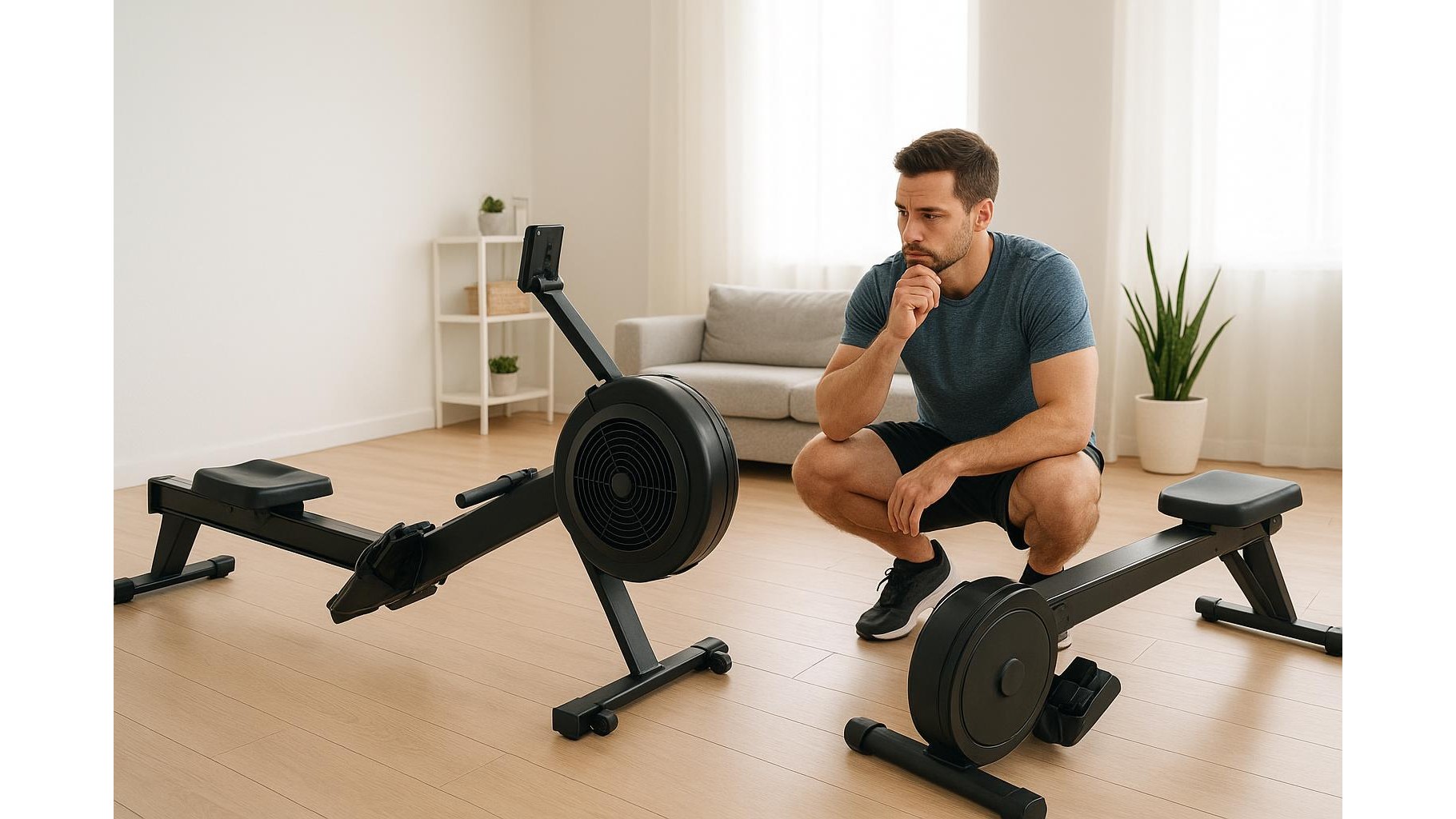
When you are building a home gym, a rowing machine is one of the smartest investments you can make for low‑impact, full‑body cardio. But choosing between a fan rower (air resistance) and a magnetic rower can be confusing: both promise smooth strokes, adjustable resistance and compact designs, yet they feel very different in action. This guide breaks down noise, resistance feel, maintenance and training goals so you can pick the right machine for your space and style of workouts.
How fan rowers and magnetic rowers create resistance
Both fan and magnetic rowers use a flywheel, but the way they generate resistance is different. A fan rower uses air: when you pull the handle, the flywheel blades push against the air, so resistance naturally increases with your stroke power. The harder you row, the more resistance you feel, which closely mimics on‑water rowing. A magnetic rower uses a magnet positioned near the flywheel; changing the distance (manually or electronically) changes the drag. Here, resistance is set by a dial or console level and stays consistent, even if your stroke speed varies. Understanding this basic difference is key: fan rowers are dynamic, magnetic rowers are more fixed and controlled.
Noise level and home‑friendly factors
Noise is often the deciding factor in a home cardio machine. A fan rower produces a noticeable whooshing sound from the air moving through the cage. The faster you row, the louder it gets. This is motivating for some, but less ideal in flats, shared spaces or if you train early in the morning. Magnetic rowers, by contrast, are significantly quieter. With no air rushing through a fan, you mainly hear the seat rolling on the rail and the chain or belt. That makes magnetic models a better pick if you live in an apartment, have thin walls, or want to watch TV or listen to podcasts while rowing without turning the volume up.
Resistance feel and training goals
If you are chasing performance‑oriented training—high‑intensity intervals, power development, or preparing for on‑water rowing—an air‑based fan rower usually provides a more realistic, progressive load. Because resistance scales with your effort, it rewards powerful strokes and makes pacing similar to outdoor rowing or other ergometers used in gyms. Magnetic rowers shine for steady‑state cardio, fat‑loss sessions and low‑impact endurance. The resistance is smooth, linear and predictable across the stroke, which many beginners and recreational users find easier to control. If you like structured workouts at specific levels (for example, 30 minutes at level 7), a magnetic system keeps that feeling consistent.
Maintenance, durability and ease of use
From a maintenance perspective, both designs are relatively low‑care compared with treadmills. Fan rowers have a simple mechanism: a chain or belt, a flywheel and a fan cage. They may need periodic chain lubrication and occasional dusting of the fan housing, but there is little to go wrong. Magnetic rowers add more components—magnets, sometimes motors and electronics to adjust levels—which can mean more potential wear points over years of heavy use. However, modern magnetic rowers are generally reliable and user‑friendly, with intuitive consoles and often more pre‑set workout programmes. Assembly and day‑to‑day use are straightforward for both, but if you prefer minimal electronics and a very robust feel, fan rowers often appeal more.
Space, storage and which rower suits your lifestyle
Most home rowers are designed with space‑saving in mind: many fold or store vertically. Fan rowers can be slightly longer due to the fan housing, while magnetic models often emphasise compact frames and lightweight designs that are easy to move. Think about where you will row: if you have a dedicated corner in a garage gym and love intense intervals, the dynamic feel of a fan rower is ideal. If you are tucking the machine behind a sofa in a small flat, a magnetic rower may fit better, roll more easily and keep the household happy with lower noise. Ultimately, match the rower to your lifestyle: serious performance training and realistic rowing feel point towards air resistance; quiet, controlled cardio and family‑friendly use favour magnetic resistance.
Choosing between a fan rower and a magnetic rower comes down to your priorities: realistic, effort‑based resistance and simple durability, or quiet, smooth and highly controllable workouts. Consider your space, how hard you plan to train, the people you live with and how often you will row. Aligning these factors with the characteristics of each resistance type will help you invest in a rowing machine that keeps you motivated and fits seamlessly into your home cardio routine.