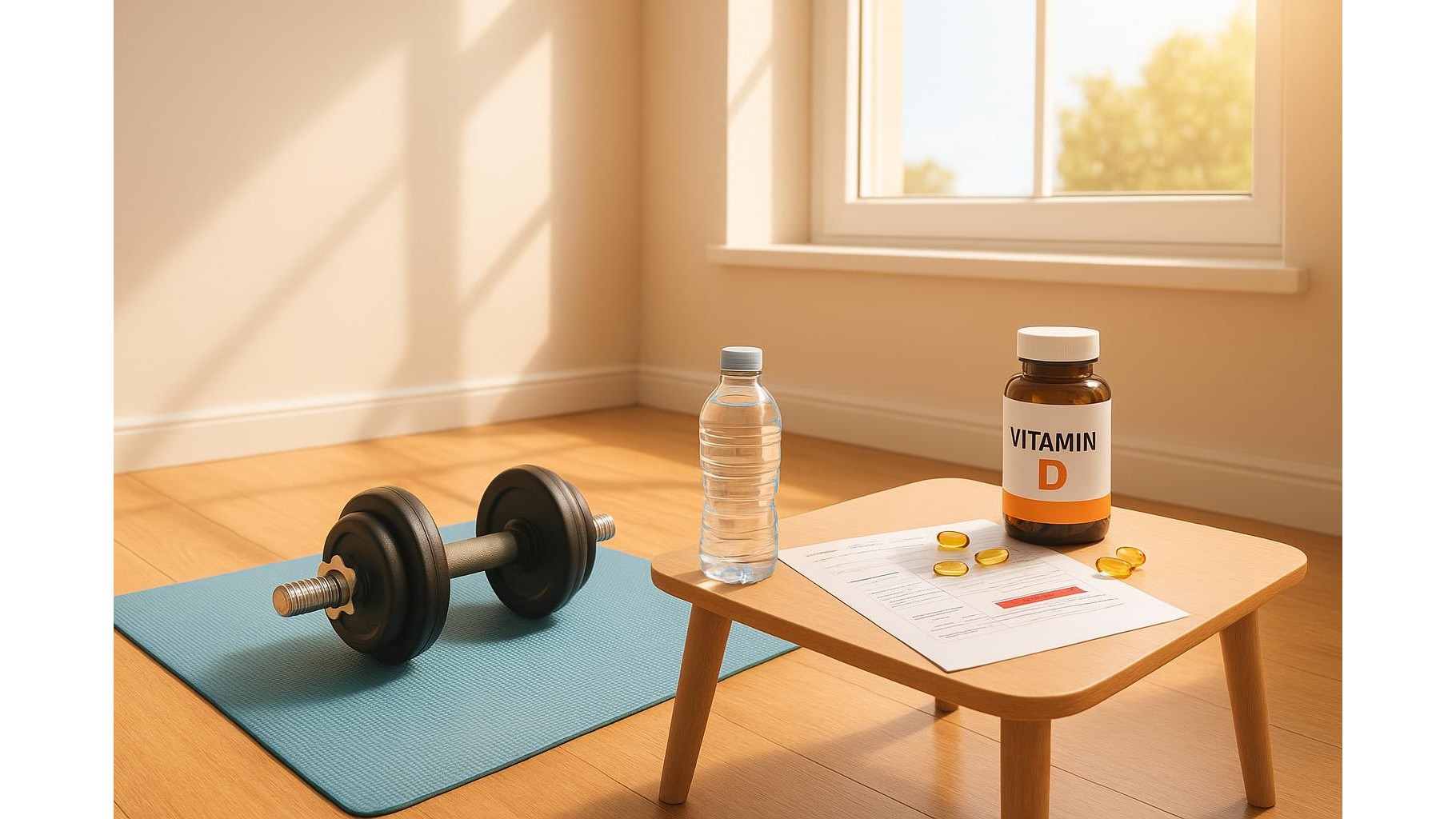
Spending more time training at home means less accidental sun exposure on your commute or outdoor sessions. That matters, because your body makes vitamin D primarily through UVB light on the skin. Over time, low vitamin D can influence muscle function, recovery, mood and even how often you get sick – all factors that directly affect your consistency in a home gym. In this article we look at what the science really says, how to test your levels, and how a simple supplement can support strength and performance without mega-dosing or hype.
What vitamin D actually does for lifters
Vitamin D acts more like a hormone than a classic vitamin. It helps regulate calcium and phosphate balance, which are essential for muscle contraction and strong bones. Research in resistance training shows that people with very low vitamin D status tend to have reduced strength, poorer muscle power and greater risk of falls or injuries, especially in older adults. For a home trainee who squats, deadlifts or jumps in a limited space without a coach watching, optimising this background factor can reduce the chance that fatigue, weak stabilisers or sore joints derail your progress. Vitamin D is not a steroid and will not add kilos to your lifts by itself, but it helps your neuromuscular system work at its best so you can actually benefit from your training plan.
Immunity, mood and your ability to train consistently
Another major role of vitamin D is in immune function and inflammation. Meta‑analyses suggest that correcting low vitamin D may modestly reduce the risk of acute respiratory infections, especially in people who start out deficient. Fewer colds and shorter down‑time means more weeks of uninterrupted home workouts. Vitamin D also interacts with areas of the brain involved in mood regulation; low levels are frequently seen in people with low mood or seasonal dips when daylight shrinks. If you are trying to build a sustainable habit with early‑morning or after‑work training at home, feeling slightly better, less fatigued and more motivated can be the difference between hitting your session or skipping it. The effect is subtle, but over months it supports the consistency that truly drives long‑term strength and body composition changes.
How much vitamin D do you actually need?
For most healthy adults training at home, common guidelines suggest around 1000–2000 IU (25–50 µg) daily as a typical supplemental dose, especially in autumn and winter at higher latitudes. Some athletes and clinicians use up to 4000 IU per day, which is often considered the upper safe limit for long‑term intake for adults, but this should ideally be guided by blood testing. The important thing is to avoid extremes: chronic mega‑doses can lead to excessive calcium levels and health issues, while very low intakes leave you in the deficient range where performance and health may suffer. Consistency matters more than chasing a magic dose; taking a moderate amount every day with a meal containing fat improves absorption and keeps your blood levels stable across the training week.
Testing your levels and interpreting the results
If you are serious about optimising home fitness performance, the best first step is to test your vitamin D status rather than guessing. The standard marker is 25(OH)D in blood, usually measured in nmol/L in the UK. Many laboratories consider values below about 25–30 nmol/L as deficient, 30–50 nmol/L as insufficient, and around 50–125 nmol/L as a reasonable target range for most people. At‑home finger‑prick testing services can be convenient if you do not want to visit a clinic, and allow you to recheck after three to six months of supplementation. Remember to discuss unusually low or high results with a health professional, particularly if you have kidney issues, malabsorption conditions or are taking medications that affect vitamin D metabolism. Objective data helps you tailor your intake instead of following generic social media advice.
Practical tips for home trainees
To integrate vitamin D into your home training lifestyle, think in terms of small, automatic habits. Store your supplement with your protein powder or on the kitchen counter and take it with the same meal every day, ideally one containing eggs, oily fish, nuts or other dietary fats. Combine smart sun exposure – short periods of midday sun to forearms and lower legs in spring and summer, without burning – with a winter supplementation plan. Track how your sleep, mood and training logs change over several months rather than expecting quick, dramatic effects. For lifters with limited equipment at home, feeling recovered and mentally switched on often matters more than adding another fancy gadget to your gym. Vitamin D is a low‑cost tool that, when used sensibly, supports the recovery, immunity and consistency that make your programmes work.
Putting vitamin D into your overall home fitness strategy
Vitamin D will never replace solid programming, progressive overload, adequate protein and sleep, but it can remove a common weak link that silently undermines them. For home trainees who spend more time indoors, especially in darker months, checking and optimising vitamin D status is a simple, evidence‑based win for strength, mood and immune resilience. Approach it like any other training variable: measure when you can, adjust conservatively, and give changes time to show up in your performance, energy and consistency. Treated this way, vitamin D becomes one more small but meaningful advantage in building a stronger, healthier body from your own living room.