Lifting at home is great for consistency, but your tendons can take a beating if you rush sessions or ignore warning signs. Sore elbows, creaky knees and tight shoulders are often load-management problems, not just “getting older”. With a few simple habits, you can protect your joints, keep progressing and avoid the lay‑offs that derail home training.
Warm-up that actually prepares your tendons
Before heavy work, tendons need time to warm up and “wake up”. Spend 5–10 minutes on light movement: bodyweight squats, wall push-ups and band pull-aparts. Then add joint-specific warm-ups such as slow tempo push-ups for elbows, mini step-downs for knees and arm circles for shoulders. Start your first working exercise with a couple of very easy sets (around 40–50% of your working weight) focusing on smooth control. This gradual loading increases blood flow to the tendon and makes it more resilient to the heavier sets that follow.
Smarter loading to keep elbows, knees and shoulders happy
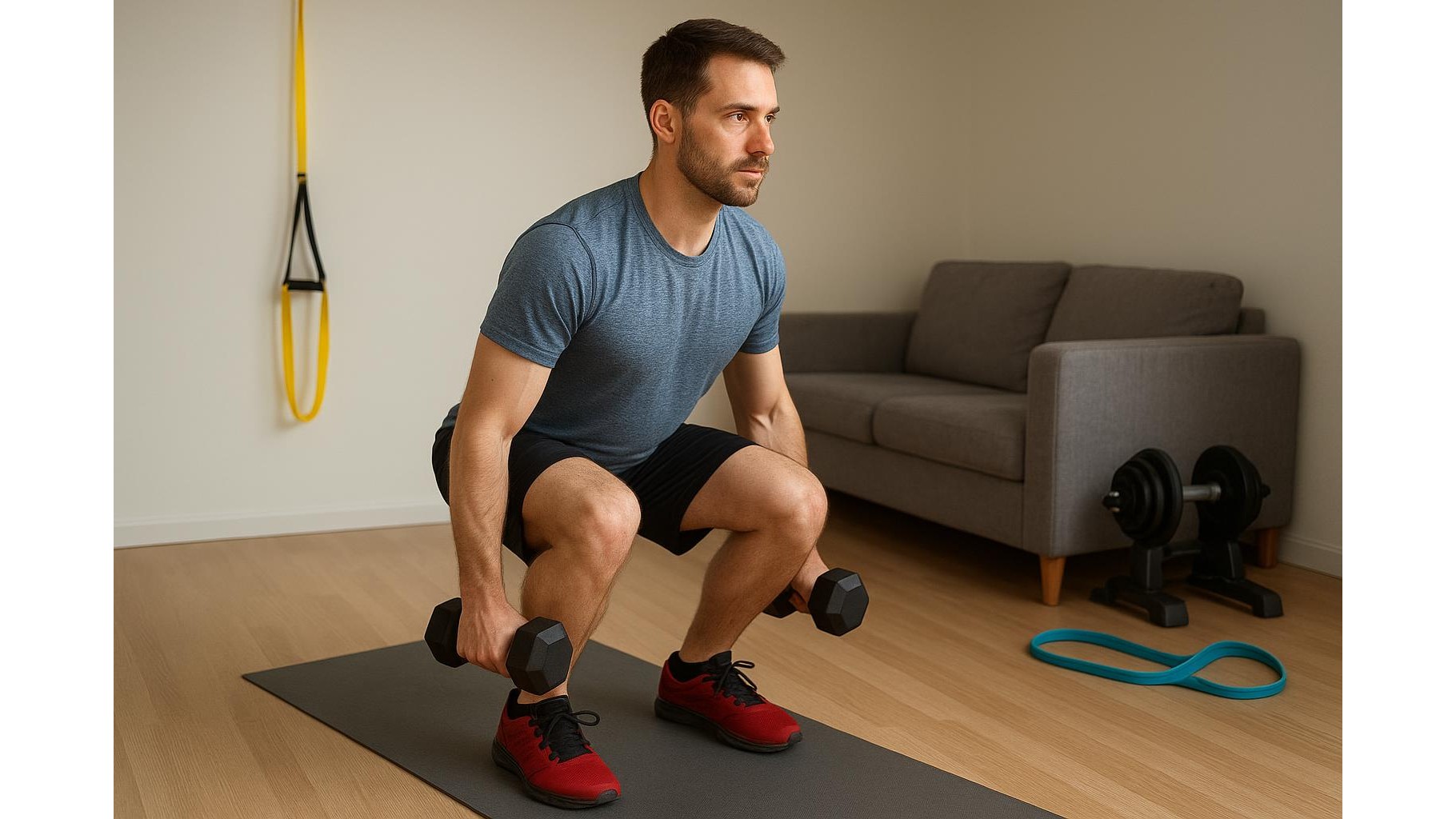
Most tendon irritation comes from sudden jumps in volume or intensity. Track your weekly sets per body part and avoid big spikes: increase total work by about 10–15% per week at most. For elbows, limit high-volume straight-bar curls and heavy skull crushers if you notice tightness, and swap in neutral-grip pressing where possible. For knees, mix deep squats with shallower ranges and controlled split squats instead of endless jump variations. For shoulders, alternate pressing angles and avoid always grinding to failure. Think in training blocks: 3 weeks building up, 1 week slightly easier, to give tendons room to adapt.
Simple at-home recovery habits that actually matter
Recovery for tendons is less about fancy gadgets and more about consistent basics. Prioritise sleep (7–9 hours) and adequate protein so tissues can repair. Between sessions, use light movement—such as easy band rows or air squats—to keep blood flowing without adding stress. Short bouts of heat (a warm shower or compress) before training can improve comfort, while brief cold exposure after very hard sessions may help manage soreness. Most importantly, learn to distinguish normal “training stiffness” from sharp or escalating pain; if a specific exercise always triggers pain, reduce load, limit range of motion for a while, or replace it with a friendlier variation.
Targeted support and technique tweaks at home
Small technique adjustments can dramatically reduce tendon strain. For elbow health, keep your wrists stacked over your elbows in pressing and avoid flaring elbows excessively during push-ups and bench variations. For knees, don’t fear letting them travel slightly over the toes in squats, but control the descent and avoid bouncing at the bottom. For shoulders, think “chest up, shoulders down and back” to keep space in the joint during pressing and overhead work. If a tendon is irritated, use slow eccentrics (for example, 3–5 seconds lowering in a squat or push-up) with light to moderate weight, which can help stimulate healing without overloading the area.
Building a tendon-friendly weekly home routine
A tendon-friendly home routine balances strength, mobility and recovery. Plan 2–4 lifting days per week with at least one rest or light-movement day between similar sessions. Start each workout with 5–10 minutes of warm-up, follow with 3–5 main exercises and finish with 5 minutes of easy mobility for the joints you worked. Rotate heavy, moderate and light days so your elbows, knees and shoulders are not pushed maximally every session. Over time, this consistent, measured approach builds stronger tendons that can tolerate higher loads, rather than relying on sporadic bursts of all‑out effort.
Caring for your tendons at home does not require complicated routines or expensive equipment. By warming up properly, progressing your training load gradually, prioritising simple recovery habits and making small technique tweaks, you can protect your elbows, knees and shoulders while still getting stronger. Listen to early warning signs, adjust before pain becomes injury, and your home gym can support years of sustainable lifting.