Building consistent home strength sessions does not require expensive software or complex coaching platforms. With just a basic rep counter and a simple interval timer app on your phone, you can create structured, repeatable workouts that track sets, manage rest and support progression over time. The key is deciding how these apps work together so you stop guessing and start following a clear plan every time you train.
Setting up your basic tools on your phone
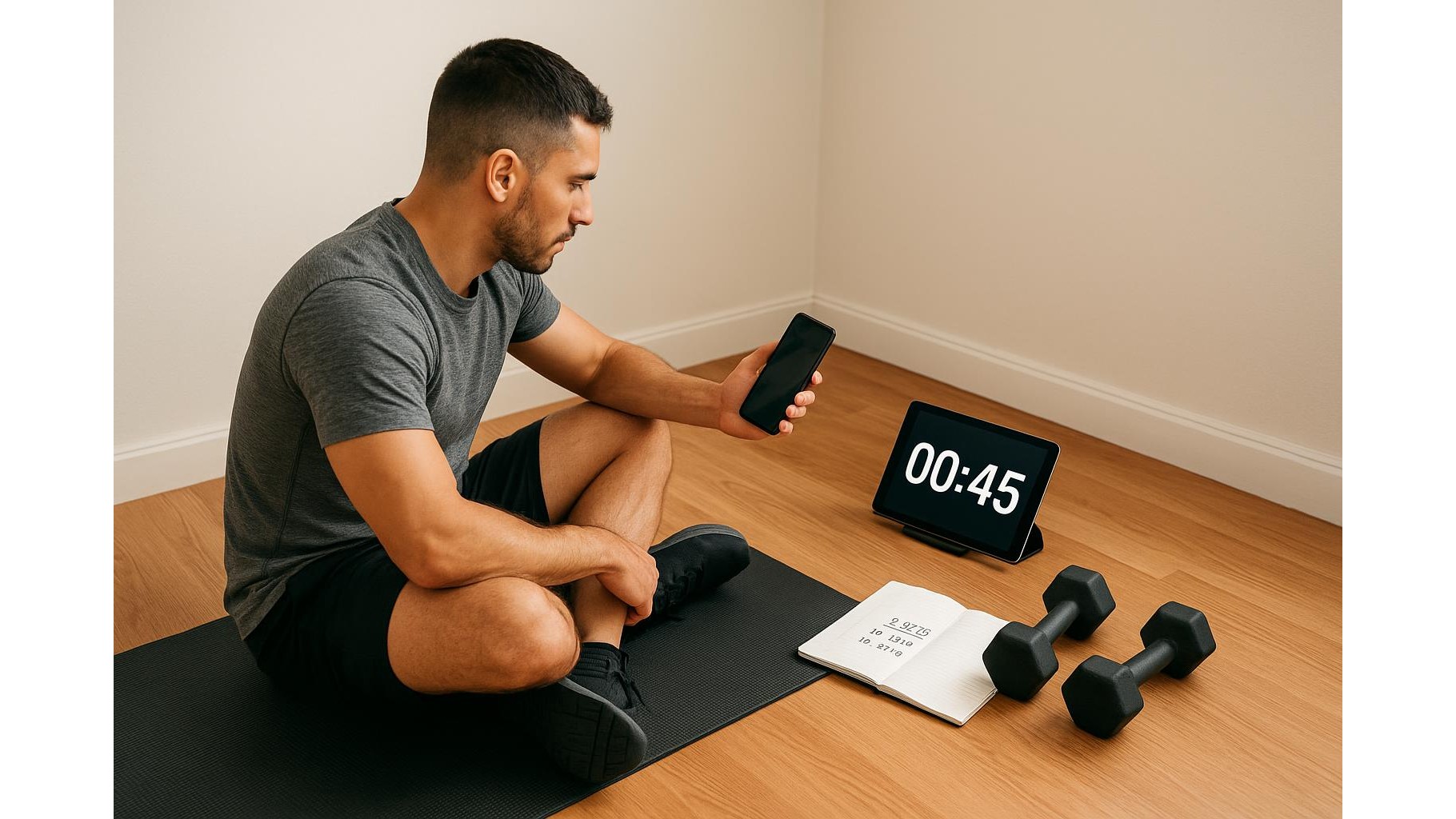
To begin, choose a straightforward rep counter app and a separate interval timer (or HIIT timer). Most smartphones already have a timer/stopwatch, but dedicated apps make it easier to pre‑set intervals like 40 seconds work, 20 seconds rest. Keep things minimal: pick apps with a clean interface, large numbers and simple start/stop controls so you can quickly glance between exercises. Create a dedicated “training” folder on your home screen and place your rep counter, timer and music app together, so starting a session becomes a one‑tap routine instead of a distraction‑filled scroll through your phone.
Designing your home strength workout structure
Before you touch the apps, decide on a basic workout template. For example: 3–4 big movements (squats, push‑ups, rows, hip hinge), 3–4 sets each, 8–12 reps and 60–90 seconds rest. Write this in a simple note on your phone. Your rep app will handle how many reps you perform, while the timer app will manage how long you rest. This prevents you from rushing sets or taking endless breaks. For circuit‑style training, you might instead program your timer for 45 seconds work and 15 seconds to transition, cycling through 4–5 exercises. The apps provide the skeleton; you fill it with movements that match your goals and equipment.
Using the rep counter to track sets and progression
The rep app’s main job is to make progression crystal clear. Set a target like 3 sets of 10 goblet squats. Each time you complete a set, log the actual reps you hit. If you reach the upper end of your target range comfortably for all sets over a couple of sessions (for instance, 3 x 12), you know it is time to add load, add a set or move to a harder variation. Many rep apps let you save specific workouts, so you can quickly reload “Full Body A” and see your last performance. This history turns random home workouts into a structured training plan and keeps you honest about whether you are really improving or just repeating the same effort.
Letting the interval timer control your rest
Most people either rest too little or far too long when training at home. A dedicated interval timer solves this. After you finish a set and log your reps, immediately hit start on a pre‑set rest interval, such as 60 or 90 seconds. When the timer beeps, you go again, even if you feel like lingering. For circuit sessions, set your timer for multiple rounds that automatically cycle work and rest periods so you do not have to touch your phone mid‑set. This consistent timing improves conditioning, makes sessions more time‑efficient and creates a repeatable standard: if you get more reps with the same rest, you know your fitness is progressing.
Combining apps into a simple home training workflow
Once your tools are ready, follow the same workflow every session. Step 1: open your note or training plan and quickly review the exercises and targets. Step 2: start your warm‑up with the timer app (for example, 5 minutes of light intervals). Step 3: for each working set, perform the exercise, log reps in the rep app and immediately start your rest interval on the timer. Step 4: when all sets are done, jot a short comment like “felt easy” or “last set tough” in your rep log. Over time, this repeatable flow removes decision fatigue, reduces distractions and gives you objective data to tweak volume, rest or exercise selection.
The combination of a rep counter app and a simple interval timer turns casual home training into structured strength work without paying for complex coaching software. By pre‑planning your template, logging reps and standardising rest, you create a clear feedback loop: you know what you did, how long it took and where to push next time. Keep the tech simple, stay consistent with your process, and your home gym sessions will steadily become more effective, efficient and focused.