Living in a small flat doesn’t mean giving up on a serious full body dumbbell workout. With the right plan you can train every major muscle group in just one square meter, avoid clashing with the sofa and keep neighbours happy. This 45‑minute routine uses only a pair of adjustable dumbbells and your body weight, with smart exercise choices and setup tips tailored to cramped living rooms.
Set up your one‑square‑meter home gym
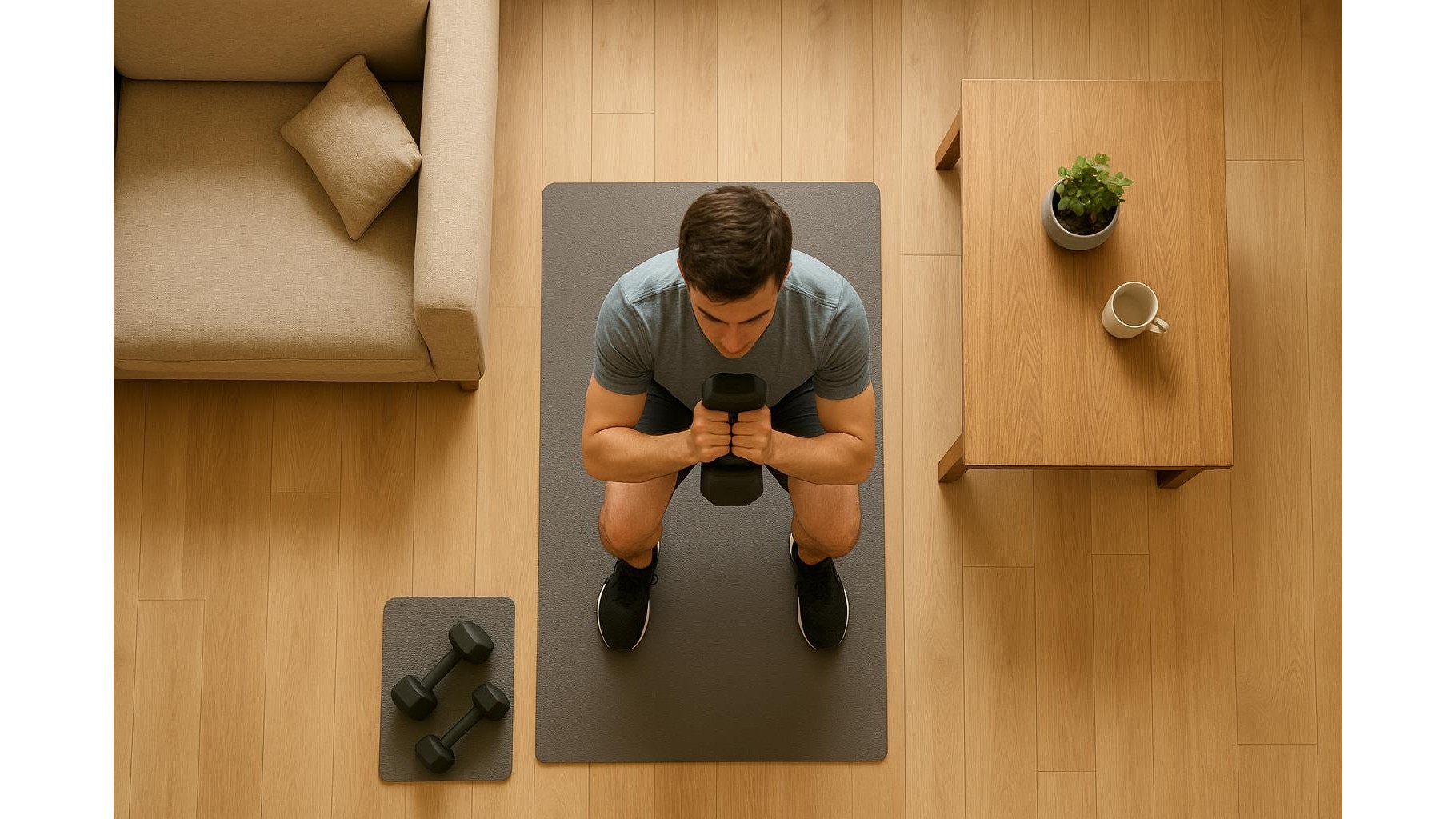
Before you start, clear a patch of floor roughly the size of a small rug. Stand in the centre, extend your arms out to the sides and rotate slowly to check you won’t hit a wall, lamp or TV. Place your dumbbells just in front of your feet so you can reach them without bending and twisting awkwardly. If you train early or late, lay down a thick rug or mat to soften noise and reduce vibration through the floor. Keep a small towel and water bottle within arm’s reach so you don’t wander around with weights in hand. This simple setup lets you stay in your “training box” and focus fully on form and breathing.
The 45‑minute full body dumbbell structure
This space‑saving dumbbell workout is organised into three blocks: lower body, upper body and core/conditioning. Work for 40 seconds, rest for 20 seconds, and cycle each block three times before moving on. Start with a light warm‑up of body‑weight squats, arm circles and hip hinges for 5 minutes. Because you’re training in a tiny space, favour stationary movements like squats, deadlifts and presses over walking lunges or long rows. Choose a dumbbell weight that feels challenging but allows smooth, controlled reps without wobbling or banging into furniture. If you only own one heavier dumbbell, you can still train effectively with unilateral (one‑arm, one‑leg) versions of these moves.
Lower body power without big movements
For legs and glutes, alternate goblet squats and Romanian deadlifts. Hold one dumbbell vertically at your chest for goblet squats, keeping your feet shoulder‑width apart, sit your hips back and down, then drive through your heels to stand tall. For Romanian deadlifts, hold one or two dumbbells in front of your thighs, hinge at the hips with a slight knee bend, feel the stretch in your hamstrings, then squeeze your glutes to come up. Both exercises are almost on‑the‑spot, meaning you won’t drift into the coffee table. Add standing calf raises between sets for extra lower‑leg work: hold a dumbbell in one hand, use the other to balance lightly on a wall, and lift your heels as high as possible before slowly lowering.
Upper body strength in tight quarters
Upper body training in a small living room focuses on vertical and horizontal presses and rows. Start with overhead dumbbell presses from a standing or seated position, keeping your elbows slightly in front of your shoulders to avoid flaring into nearby walls. Pair these with bent‑over rows, hinging at the hips and pulling the dumbbells towards your hips, not your chest, to protect your lower back. To hit the chest without needing a bench, perform floor presses: lie on your back, dumbbells above your chest, lower your elbows gently to the floor, then press back up. Finish with lateral raises using a lighter weight, raising the bells only to shoulder height and slightly in front of your body to save shoulder joints and surrounding furniture.
Core, conditioning and noise‑friendly choices
The final block targets core strength and light conditioning while keeping impact low to respect neighbours. Swap out jumping moves for quiet alternatives: instead of burpees, use dumbbell thrusters (front squat into press) done smoothly, not explosively. Add plank rows by holding a high plank with hands on the dumbbells and rowing one weight towards your hip at a time; widen your feet to maintain balance in a narrow space. Finish with Russian twists sitting on the floor, holding one dumbbell close to your chest and rotating your torso gently side to side without slamming the weight down. Focus on controlled breathing and tension in your mid‑section, not speed.
Safety tips and progression in a tiny living room
Training so close to furniture demands extra attention to technique and safety. Always start with a lighter load to groove the movement pattern before increasing weight. Keep dumbbells close to your body when you pick them up or set them down to avoid sudden swings. If the floor is slightly uneven, test your stance before every heavy set. To progress without buying more equipment, slow down the lowering phase of each rep, pause at the bottom, or add an extra set rather than chasing heavier loads. With consistent practice three times per week, this 45‑minute full body dumbbell workout will build strength, stability and cardio capacity – all within a single square meter of your living room.
In summary, you don’t need a dedicated gym room or bulky machines to get fit at home. By using stationary, compound exercises, planning your space carefully and respecting noise and safety, you can turn even the smallest living room into an efficient home gym. Commit to this structured routine, track your reps and perceived effort, and tweak rest times and tempo as you improve. Over time you’ll build a stronger, more resilient body without ever leaving your one‑square‑meter training zone.