
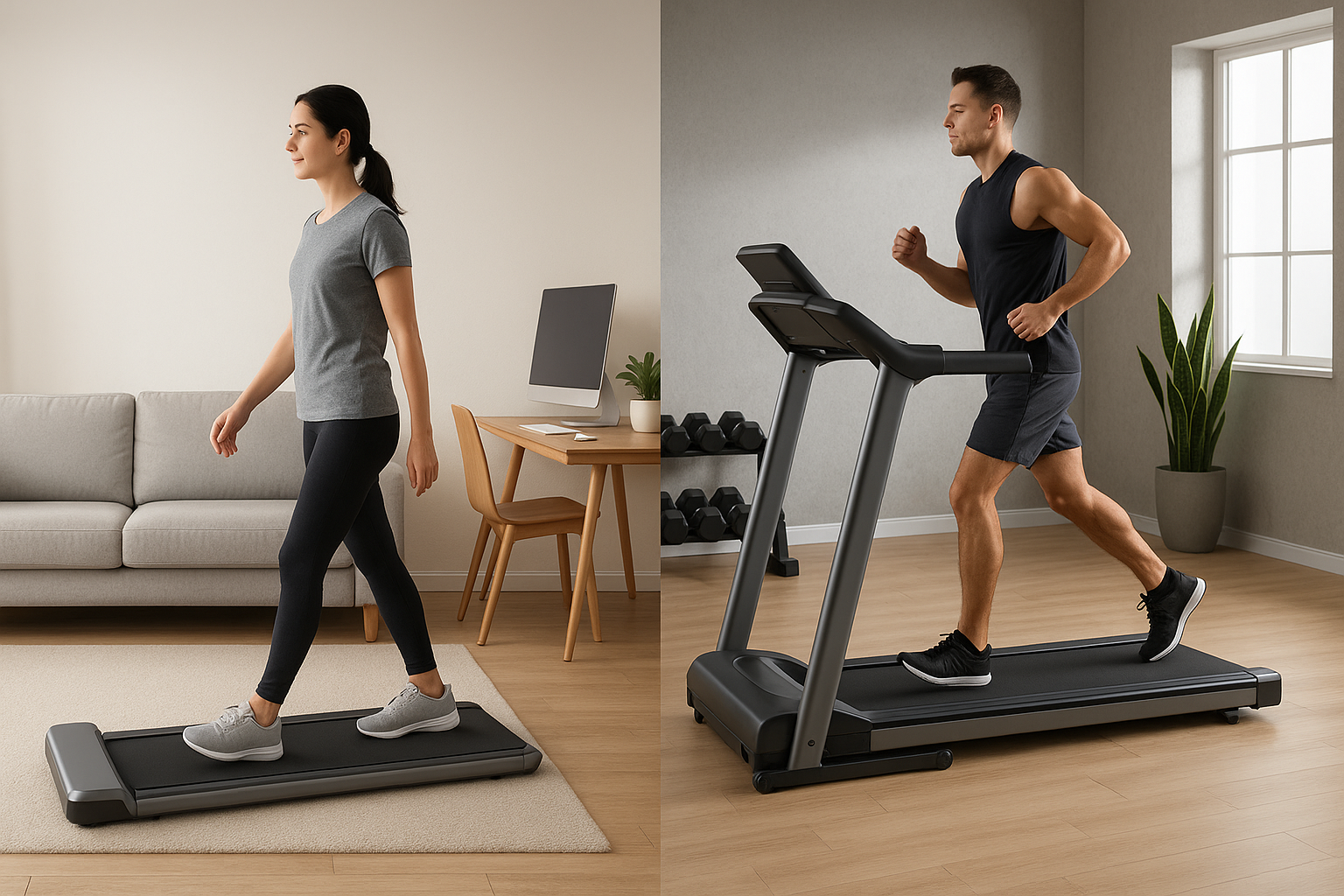
Choosing between a walking pad and a classic treadmill can define how often and how comfortably you train at home. Both solutions let you boost daily steps, support weight management and improve cardiovascular health, but they serve different needs in terms of space, noise, workout intensity and tech features. In this article we compare these two cardio machines from a home-gym perspective, with practical guidance for small apartments, hybrid work-from-home users and more serious runners.
Space and portability in a real home environment
The biggest advantage of a walking pad is its compact footprint. Most models are slim, foldable and can slide under a bed, sofa or desk when not in use, making them ideal for studio flats or shared living spaces. By contrast, a classic treadmill usually needs a dedicated corner, both for the running deck and the upright console. Folding treadmills exist, but even folded they are bulkier and heavier than walking pads. If your priority is saving space and keeping your living room visually clean, a walking pad clearly wins. However, if you have a spare room or a permanent home gym area, the larger size of a traditional treadmill becomes less of a problem and can even add stability.
Noise levels and home-friendly comfort
For people living in flats with neighbours above or below, noise is a serious factor. Walking pads tend to be quieter because they are optimized for low-impact walking at moderate speeds and have simpler, smaller motors. They are perfect for early-morning or late-night sessions while family members sleep, or for combining with TV watching. Classic treadmills, especially models that support running, often use stronger motors and can be louder both in mechanical noise and impact sound when your feet hit the belt. Thicker decks and quality cushioning can reduce this, but in general a walking pad is the more discreet choice. If you plan to run regularly or do sprints, be prepared to manage sound with rugs, mats and possibly choosing a room farther from bedrooms.
Training intensity, speed and performance goals
The main limitation of a walking pad is its maximum speed and lack of incline. Most units are designed for walking or light power walking, which is great for NEAT (non-exercise activity thermogenesis), step goals and gentle cardio, but not enough for serious running or interval training. Classic treadmills usually offer higher top speeds and adjustable incline, allowing structured workouts such as hill intervals, tempo runs and progressive long runs. If your goal is to improve running performance, train for races or replicate outdoor routes, a classic treadmill will better support progressive overload and variety. On the other hand, if your realistic aim is to simply move more during working hours and break up sedentary time, the lower intensity of a walking pad can be more sustainable and easier to integrate into daily life.
Connectivity, apps and smart-home integration
Both walking pads and classic treadmills now come with Bluetooth connectivity and app support, but the experience can differ. Many walking pads are minimalistic: a simple remote control, basic LED display and an app mainly for tracking steps, distance and time. This is ideal for users who just want to see progress and sync with a smartwatch or fitness app. Classic treadmills, especially mid-range and premium models, increasingly feature built-in screens, integrated training platforms, virtual running routes and structured programs that adjust speed and incline automatically. If you are motivated by guided workouts, virtual classes or detailed performance metrics such as cadence and heart-rate zones, a more fully featured treadmill setup will be more engaging. However, if simplicity and easy pairing with your phone are enough, a walking pad covers the basics perfectly.
Budget, user profiles and long-term value
When it comes to budget, walking pads are generally more affordable, both in upfront cost and in any accessories needed. They make sense for beginners, remote workers who want to walk while emailing, and anyone uncertain about long-term adherence to cardio training. Classic treadmills cost more but also offer greater training potential and durability if you buy from a reputable brand. For active runners, families where several people will use the machine or users planning structured weight-loss and conditioning programs, a quality treadmill can provide better long-term value. The key is matching the machine to your profile: a walking pad for low-impact daily movement and space-saving convenience, or a classic treadmill for performance, variety and shared use.
In summary, the choice between a walking pad and a classic treadmill depends on space, neighbours, training goals and budget. Walking pads shine in compact homes, for desk-based workers and for those who want quiet, low-intensity movement throughout the day. Classic treadmills demand more room and investment but reward you with higher speeds, incline options and richer training features suited to serious fitness goals. Before buying, honestly assess how you live, how you train now and how you realistically want to train in the next few years. That clarity will guide you towards the cardio machine that truly fits your home and lifestyle.









