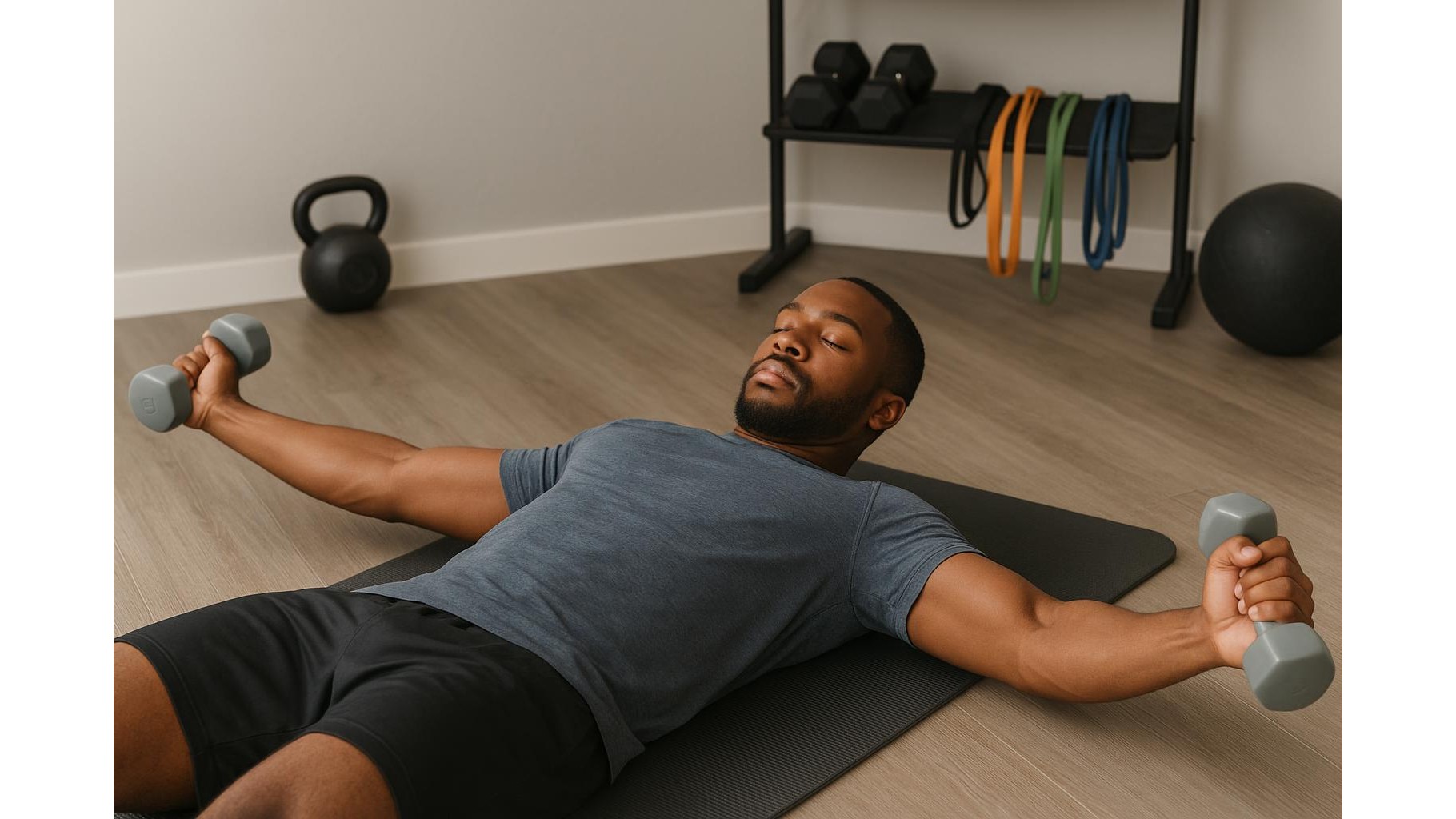
After a heavy day of bench press and push-ups, your chest, shoulders and triceps can feel tight, sore and beaten up. A smart at‑home recovery routine helps reduce stiffness, restore mobility and keep your pressing performance moving forward. In about 15 minutes, you can combine gentle mobility, light activation and simple self‑massage to support blood flow, ease tension and protect your joints long term.
Set up your space and listen to fatigue, not ego
Before you start, clear a small floor area and grab a yoga mat or a folded towel. The goal today is recovery, not more grinding. That means staying well below pain, moving slowly and breathing deeply. If your joints feel sharp or unstable, you scale back the range of motion or skip that drill. Think of this session as your insurance policy: you’re helping your shoulders glide smoothly, your chest open up, and your triceps relax so they can come back stronger for the next bench and push‑up workout.
[p_iol_placeholder type=”cta” id=”telegram”/]
Gentle mobility to open chest and shoulders
Begin with 4–5 minutes of easy upper‑body mobility work. From a kneeling position, perform slow cat‑camel reps, rounding and extending your spine to wake up the upper back. Follow with chest‑opening drills like wall angels or doorway stretches: place your forearms on the door frame, step slightly forward and breathe into the stretch without forcing it. Add some controlled arm circles and scapular push‑ups (where you keep the elbows straight and only move the shoulder blades) to re‑educate shoulder mechanics after heavy benching. Aim for smooth, pain‑free movement rather than chasing an intense stretch.
Light activation for shoulder stability and posture
Once you feel looser, add 4–5 minutes of gentle activation to remind stabilising muscles to do their job. Face pulls with a light band, wall slides and Y‑T raises on the floor or couch are great options. Keep the resistance light enough that you could do 20–25 reps without burning out. Focus on pulling your shoulder blades down and back, keeping ribs tucked and avoiding shrugging. These small, precise movements counter the rounded shoulders that often follow lots of bench press and push‑ups, helping you maintain healthy pressing mechanics and better posture over time.
Triceps and chest release with simple self‑massage
Next, spend about 3–4 minutes on self‑massage for your chest and triceps. You can use your fingers, a basic massage ball or even a tennis ball against the wall. Gently roll the ball across the front of your shoulder, upper chest and along the triceps, pausing on tight spots and breathing slowly until they ease. Avoid aggressive pressure; you’re aiming to reduce tone, not bruise the tissue. This targeted work can free up shoulder movement, ease elbow stress and make the next day’s soreness far more manageable, especially if you push heavy frequently.
Finish with breathing and gentle stretching
Wrap up with 2–3 minutes of down‑regulation so your nervous system gets the message that the hard work is over. Lie on your back with your feet up on a chair, one hand on your belly and one on your chest. Take slow nasal breaths, expanding the lower ribs first and exhaling longer than you inhale. Then add a few easy stretches for the chest and lats, keeping intensity at about 4 out of 10. This combination of breathing and light stretching improves recovery by promoting circulation and helping your body shift into a more relaxed, parasympathetic state.
This at‑home upper body recovery routine is a compact but powerful way to respect your shoulders, chest and triceps after heavy pressing. In just 15 minutes you address mobility, activation and self‑massage without needing complex equipment. Perform it after your toughest bench and push‑up sessions, or on rest days when you feel especially tight. Over time, you’ll likely notice less soreness, smoother reps and healthier joints, allowing you to keep progressing your home gym pressing while staying pain‑free.