In a busy life, it’s easy for home workouts to be the first thing sacrificed when work, family and chores pile up. The real solution is not more motivation, but smarter systems. By combining habit stacking, simple digital reminders and clear environmental cues, you can turn training at home into something that feels automatic instead of a daily willpower battle.
Turn home training into an automatic habit
Habit stacking means attaching a new behaviour to something you already do every day. Instead of vaguely deciding to train “sometime after work”, you link your home workout to a stable anchor such as your morning coffee, your lunch break or putting the kids to bed. For example: “After I start the kettle, I do 10 minutes of mobility” or “After I close my laptop at 6pm, I start a 20‑minute strength session”. Keeping the stack tiny at first (even 5–10 minutes) makes it hard to skip and builds a reliable rhythm. Over time, the anchor triggers the workout almost on autopilot.
Use digital reminders as guardrails, not nagging
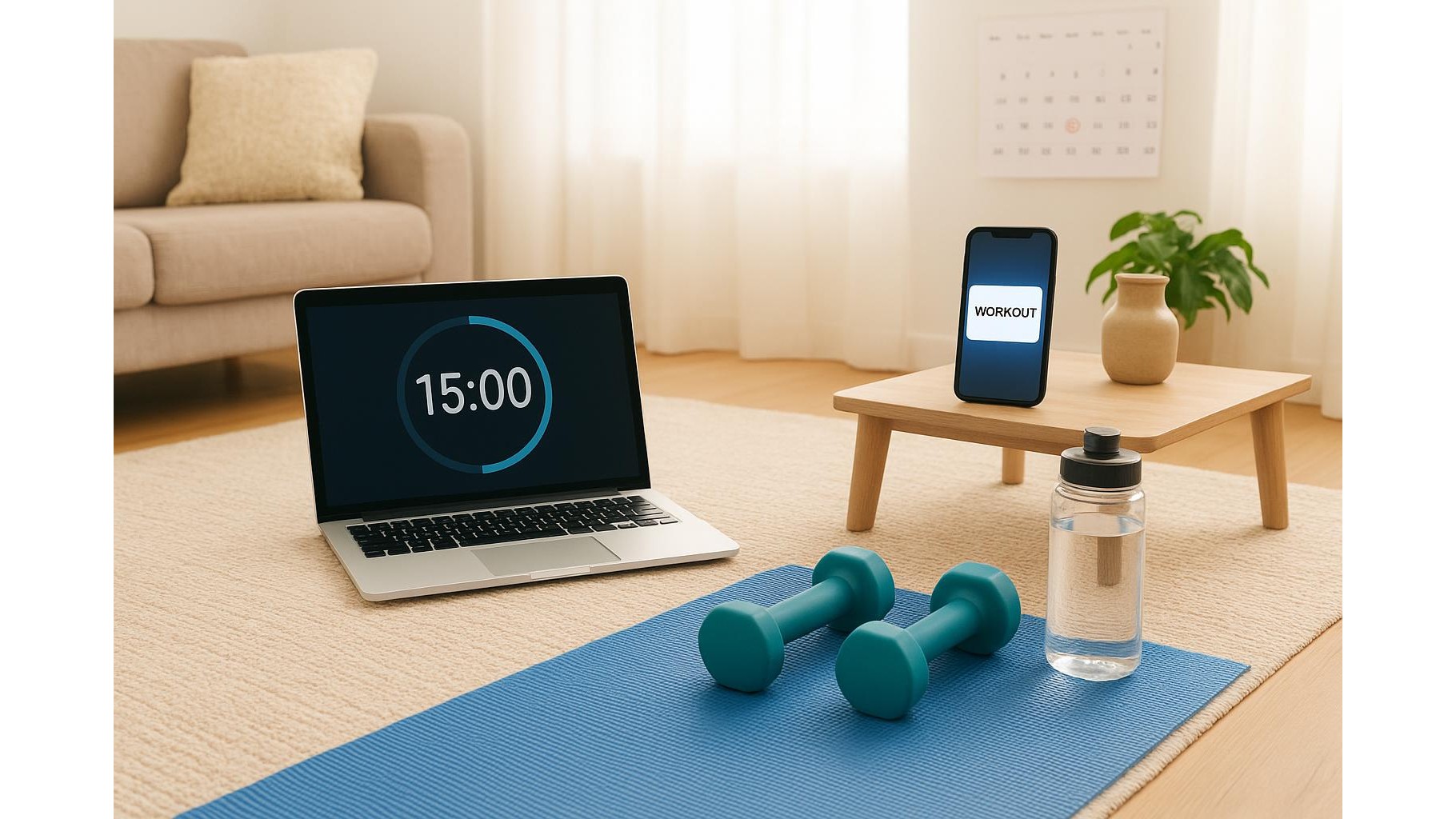
Busy professionals and parents live by their calendars. Treat your home workout time like an important meeting with yourself and protect it with clear reminders. Add a recurring event in your digital calendar with a 15‑minute alert, and a second reminder at the exact start time. Keep the title specific: “20‑min dumbbell strength in living room” is more concrete than “Workout”. You can also set smartphone alarms with labels like “Press play on workout” to remove friction. The goal is not to annoy you, but to gently push you back to the habit stack you’ve already chosen whenever life starts to pull you off course.
Design your environment so training is the default
Environment often beats motivation. Make your home subtly tell you that you are someone who trains. Keep your most-used home gym equipment visible and ready: a pair of adjustable dumbbells by the sofa, a rolled-out exercise mat in the corner of the bedroom, or a resistance band hanging near your desk. Prepare your space the night before: place your workout clothes and a filled water bottle where you will see them when your anchor moment arrives. These simple environmental cues reduce decision fatigue—there’s no searching for gear, clearing space or debating what to do—so you can transition straight from “I should” to “I’m doing”.
Make your plan ridiculously simple
Protecting your home workout time also means simplifying what happens during that time. Create a tiny, repeatable routine that doesn’t require thinking: for example, a 20‑minute circuit of squats, push‑ups, rows and planks done three times per week. Keep a short list of “backup” 10‑minute sessions (bodyweight only, no equipment) for chaotic days, so you never abandon the habit entirely. Write your plan on a sticky note near your training area or in a simple notes app on your phone. When the reminder pops up and your habit stack triggers, you already know exactly what to do—no scrolling, no overplanning, just execution.
Build accountability that fits real life
For many people, a quiet home makes it too easy to skip workouts. Add light accountability that matches your lifestyle. This could be a shared calendar with your partner so they see your training blocks, a message to a friend each time you complete a workout, or tracking your sessions in a simple habit app and aiming for a visible streak. Keep the focus on consistency, not perfection: if your planned 30 minutes shrink to 10, you still log the habit. The more you collect small wins, the more your identity shifts to “I’m someone who trains”, and the less effort it takes to defend that time.
Protect the boundary and be kind to yourself
Even with habit stacks and reminders, life will sometimes interfere. The key is to protect the boundary around your workout time most of the time and to bounce back quickly when you miss. Communicate your training window to family members, close the door if possible, and treat it with the same respect as a work call. When a session is genuinely impossible, decide immediately when the next one will be and update your reminders. Over weeks and months, these small, system-based decisions turn home training from a fragile intention into a stable, energy‑giving part of your day.