Setting up your first home gym starts with one cornerstone piece of equipment: a good starter barbell set. The right choice will let you learn technique safely, build strength progressively, and avoid buying everything twice when you get stronger. This guide walks you through bar types, weight ranges, plate materials, key safety features, and how to choose a set that fits both your body and your limited space.
Understanding bar types for beginners
The heart of any barbell set is the bar itself. For a first home gym, most people should look for a 7 ft, 20 kg Olympic-style barbell with rotating sleeves, as this matches standard gym equipment and supports future progress. Avoid very short or ultra-light “toy” bars unless you are highly space constrained. A useful benchmark is to choose a bar rated for at least 150–200 kg even if you are a beginner today; this ensures stability and long-term use. Check that the knurl (the rough grip pattern) is not overly aggressive, so it remains comfortable for higher-rep training at home.
Choosing the right weight range
When selecting a starter barbell set for home use, the total weight matters more than you might think. Many entry-level kits include around 50–70 kg in plates, which is fine for complete beginners, especially for upper-body work. However, compound lifts like squats and deadlifts can progress quickly, so consider whether the set is easily expandable with additional plates. If possible, start with at least 80–100 kg total weight including the bar, or ensure the plates use a common standard (like 50 mm Olympic holes) so you can mix brands as you grow stronger.
Plate materials and space-saving design
Plate material affects noise, durability, and how friendly your setup is to floors and neighbours. Cast iron plates are compact and budget-friendly, making them ideal for a small home gym where space is at a premium. Rubber-coated or PU-coated plates are quieter and kinder to floors, a smart choice if you train in an apartment or shared space. For most beginners training mainly in a rack or off stands, full bumper plates (designed for dropping) are not essential, but a few rubberised plates can significantly reduce clatter and protect your home environment.
Safety features that actually matter
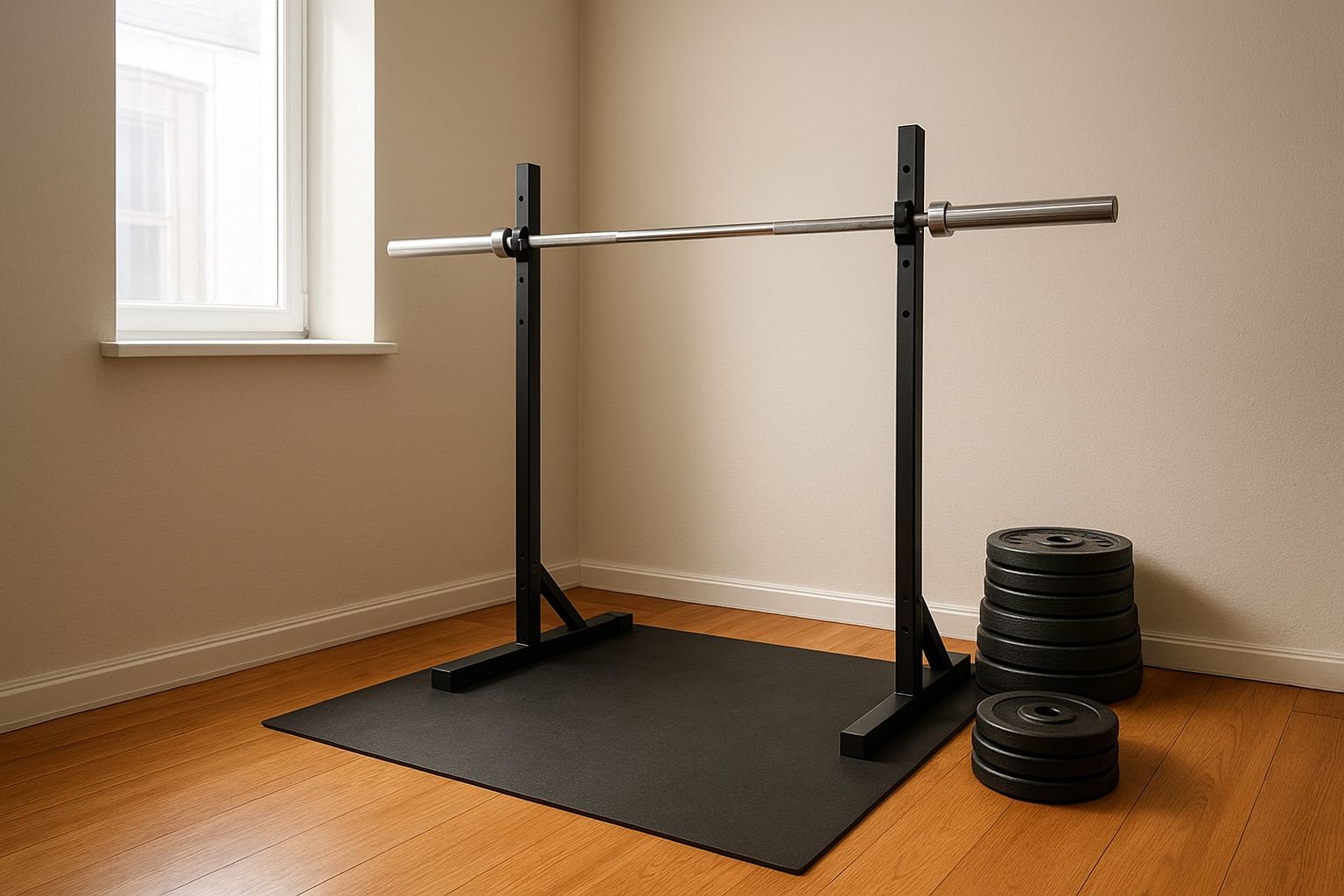
In a home gym, safety is non‑negotiable because you are often lifting alone. Prioritise a barbell with secure spin-lock collars or quality spring collars that keep plates firmly in place, especially during overhead or dynamic movements. Check the bar’s load rating and sleeve construction to avoid bending or excessive whip under load. If you plan to bench or squat, consider how the barbell set will integrate with a future power rack or stands and whether the bar length is compatible with standard rack widths. Stable, grippy plates that don’t wobble on the bar will also make your training feel more secure and predictable.
Future-proofing your first home gym setup
To avoid outgrowing your gear in a few months, think beyond your very first workouts. Choose a standard Olympic bar with 50 mm sleeves so you can add plates from many brands later. Opt for a set that leaves room for progressive overload: it’s better to start with slightly more capacity than you need than to be forced into an early upgrade. Consider how easily the set can be stored in a small space; a simple wall-mounted bar holder and a compact plate tree or stackable plates can keep your living area tidy. Planning for growth now means your first barbell set can remain the backbone of your home gym for years.
Bringing it all together for confident buying
Choosing a starter barbell set for your first home gym is about more than picking the cheapest bundle. Focus on a solid, standard-length bar, a sensible starting weight with room to expand, plate materials that fit your flooring and noise tolerance, and safety features that support solo training. By prioritising compatibility, durability, and space efficiency, you create a setup that is comfortable for today’s technique work yet robust enough for tomorrow’s personal bests. With a carefully selected barbell set, your home gym becomes a sustainable, long-term base for strength and fitness.