When you are trying to stay active at home or during long workdays, compact cardio devices can make the difference between sitting all day and actually moving. Two of the most popular options are the mini stair climber and the under‑desk elliptical. Both promise low‑impact movement in a small footprint, but they feel and perform differently. Below we compare their real‑world pros and cons for calorie burn, joint impact, noise and everyday usability for workers, parents and beginners.
How mini stair climbers work and who they suit
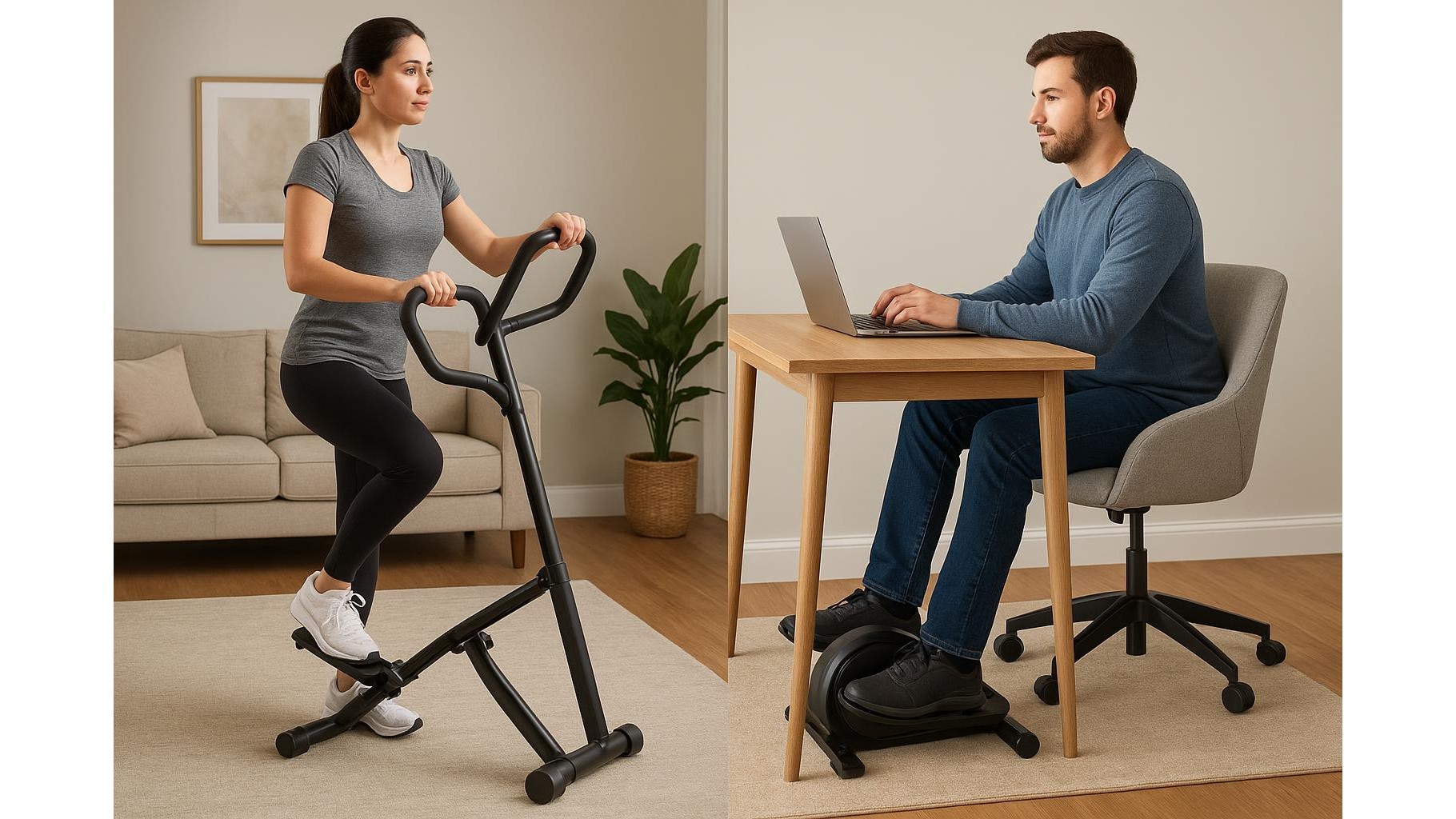
A mini stair climber is a small stepper with two independent pedals that simulate walking up stairs. Most models offer adjustable resistance and sometimes elastic bands for upper‑body work. In general, the stepping motion is more vertical and demands noticeable effort from your calves, glutes and quads. That makes mini stair climbers ideal if you want short, intense bouts of exercise that feel similar to climbing stairs or hiking. Because you are standing, core and balance muscles are also engaged, which can improve stability over time. However, standing sessions are harder to sustain while typing or taking notes, so climbers work better for quick cardio breaks than for all‑day movement at the desk.
How under‑desk ellipticals keep you moving while you work
An under‑desk elliptical is designed specifically for seated use. The pedals follow an elliptical path, so your feet glide forward and back in a smooth arc. This motion is gentler on the knees than a pure up‑and‑down stair step, and you can keep your legs moving while answering emails or joining calls. Many office users find they can pedal at low resistance for long stretches without affecting productivity. Because your upper body stays relatively still, the cardiovascular challenge may feel milder than on a mini climber, but the total active time across the day can be much higher. For people who are mostly sedentary, this steady background movement can significantly increase daily calorie burn and circulation.
Calorie burn, joint impact and noise comparison
From an evidence‑based perspective, calorie burn depends more on intensity × duration than on the machine itself. A mini stair climber typically produces higher heart rates in shorter bursts because you are supporting your full body weight. This can be great for HIIT‑style intervals of 5–15 minutes. Under‑desk ellipticals, by contrast, are ideal for low‑to‑moderate‑intensity movement sustained over 30–120 minutes while you sit. For sensitive joints, the elliptical pedalling motion is usually kinder on knees, hips and ankles than repetitive stair‑stepping, and there is less balance demand. In terms of noise, quality matters more than category, but ellipticals are often slightly quieter at continuous use because the motion is smoother; mini climbers can produce more mechanical clunking if used vigorously on a hard floor.
Footprint, storage and lifestyle fit at home
Both tools are compact compared to treadmills or full‑size ellipticals. A mini stair climber has a very small floor footprint and is easy to slide under a bed or in a wardrobe, but you need ceiling clearance and a safe, stable area to stand and step. Under‑desk ellipticals are a bit longer, since the pedals travel forward and back, and they must fit under your desk with enough knee space. However, once in place, you can simply leave them there and pedal whenever you sit down to work or watch TV. For parents at home, that means you can squeeze in movement during homework supervision or evening streaming. For remote workers, the key advantage is seamless integration into your workstation, turning sedentary hours into active ones without outfit changes or dedicated workout time.
Best choice for workers, parents and beginners
If you are a desk‑based worker who spends long stretches seated, an under‑desk elliptical usually delivers more total movement because you can pedal for hours at light intensity. It is especially helpful for those with joint sensitivity, older beginners or anyone recovering from impact‑related issues, provided a health professional has cleared light exercise. A mini stair climber shines when you want efficient, time‑effective workouts: busy parents can jump on for 10‑minute stair sessions between tasks, and fitter users can use it for cardio intervals that genuinely feel like a workout. Absolute beginners or people with balance problems may find the seated elliptical safer to start with, then add short standing sessions later for variety and strength.
In summary, both a mini stair climber and an under‑desk elliptical can keep you moving more at home, but in different ways. The mini climber emphasizes intense, weight‑bearing cardio in very short sessions, making it ideal when you are short on time but want to feel challenged. The under‑desk elliptical excels at low‑impact, long‑duration movement that quietly boosts your step count and calorie burn while you work or relax. Choosing the right tool comes down to your joints, your workspace and whether you prefer structured workouts or subtle, continuous activity throughout the day.