Running is tough on your joints, especially if you rack up weekly miles without balancing them with strength training. A smart home strength workout for runners does not need fancy machines – just your bodyweight, a pair of dumbbells, and 40 focused minutes. This routine targets your hips, glutes, core and knees to keep you running longer, faster and with fewer aches.
Why runners need strength work at home
Many runners assume that more miles automatically mean better performance, but neglecting strength training often leads to knee pain, hip instability and poor running economy. Building stronger
Essential kit: adjustable dumbbells for small spaces
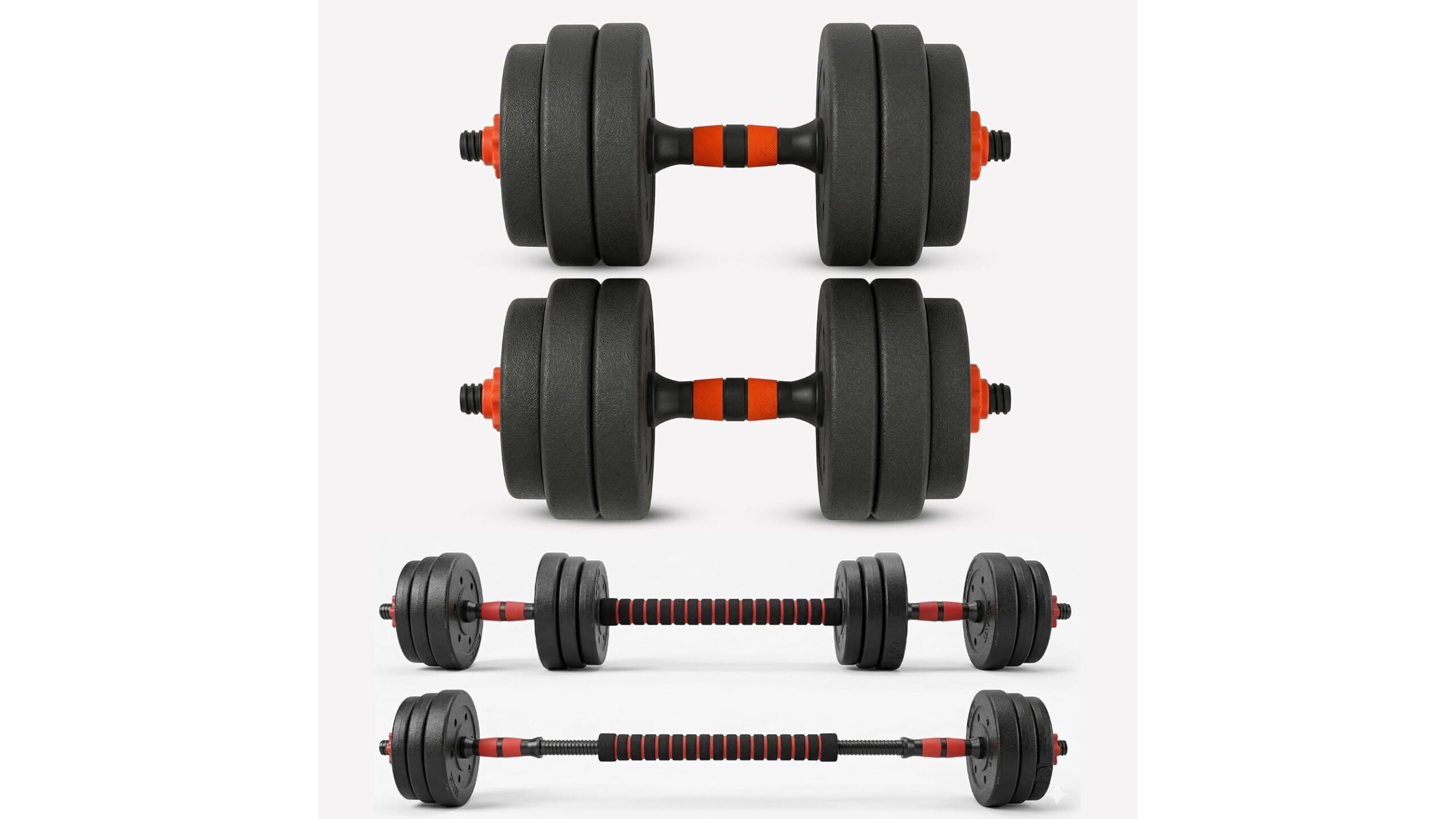
For this 40-minute plan you only need space to lie down and one set of adjustable dumbbells. A practical choice is the Gallant 20kg Weights Dumbbells Set, 2 in 1 Adjustable Dumbbells Pair Barbell Weights Set. This set offers up to 20 kg with multiple plates and spinlock collars, so you can quickly tweak the load for squats, deadlifts or upper-body moves without cluttering your home gym. The vinyl-coated plates protect floors and reduce noise – ideal for apartment training. Because the set converts from dumbbells to a barbell, you can perform heavy hip hinges and rows for powerful posterior-chain work that supports strong, efficient running mechanics.
40-minute strength workout structure
This home strength workout for runners is split into four 10-minute blocks: warm-up, lower body, core and upper body/posture. Start with 5–7 minutes of dynamic moves (leg swings, hip circles, bodyweight lunges, glute bridges) to wake up your joints. Then perform 3 lower-body exercises – dumbbell goblet squats, Romanian deadlifts with the Gallant 20kg Weights Dumbbells Set, and reverse lunges – in a circuit of 3 rounds, 40 seconds work and 20 seconds rest. The next block focuses on anti-rotation and bracing: side planks, dead bugs and dumbbell suitcase carries. Finish with rows, overhead presses and band pull-aparts (or light dumbbell reverse flyes) to support a tall, relaxed running posture.
Key exercises to protect knees and hips
To truly protect your knees, you need to strengthen the muscles that stabilise them: the glutes, hamstrings and quadriceps. Goblet squats with a single adjustable dumbbell encourage good depth and upright torso control, building quad strength without excessive joint stress. Romanian deadlifts with the Gallant dumbbells target the hamstrings and glutes that control knee alignment on landing. Add single-leg work like split squats or step-ups to mimic running’s unilateral load and correct side-to-side imbalances. Combine these with glute bridges and clamshells on the floor and you create a robust hip complex that keeps your knees tracking straight even late in a race.
Core and upper body for better running form
A strong core is essential for efficient running, especially when fatigue sets in. Side planks, dead bugs and bird dogs train your trunk to resist unwanted movement rather than just flexing your spine, which translates directly to better control with each stride. Using the Gallant 20kg Weights Dumbbells Set for single-arm rows and overhead presses challenges the core even more, as your body has to stabilise while the weight moves. Strengthening the upper back and shoulders helps you maintain an open chest and relaxed arm swing, improving breathing and speed. Just 2–3 sets per exercise, twice a week, can noticeably improve your posture on long runs.
Progression tips and weekly schedule
To keep improving, gradually increase one variable at a time: add weight using extra plates on your adjustable dumbbells, extend your working intervals, or insert an extra set. A simple weekly schedule might include one 40-minute strength session on an easy run day, and another on a non-running day. Aim for at least 48 hours between heavy strength workouts to allow recovery. Runners returning from knee pain should start with lighter loads and higher control, focusing on perfect form around the hips and ankles. Track two things over time: how your legs feel after long runs and whether you can maintain pace more easily. Both are strong signs that your home strength routine is boosting performance and resilience.
By dedicating just 40 minutes twice a week to this home strength workout for runners, you reinforce the muscles that stabilise your knees, drive your stride and support good posture. With minimal kit like the versatile Gallant 20kg Weights Dumbbells Set, you can build a reliable home gym corner that keeps your body strong, balanced and ready to handle more miles with confidence.