
Building a sustainable fitness lifestyle is not just about tough workouts and strict programmes. A powerful way to stay consistent is to design a simple, repeatable home self-care ritual that supports both your physical performance and your mental health. By anchoring your week around movement, recovery, sleep and mindset, you turn exercise from a chore into a nurturing routine you actually look forward to.
Create a calm space for your weekly self-care ritual
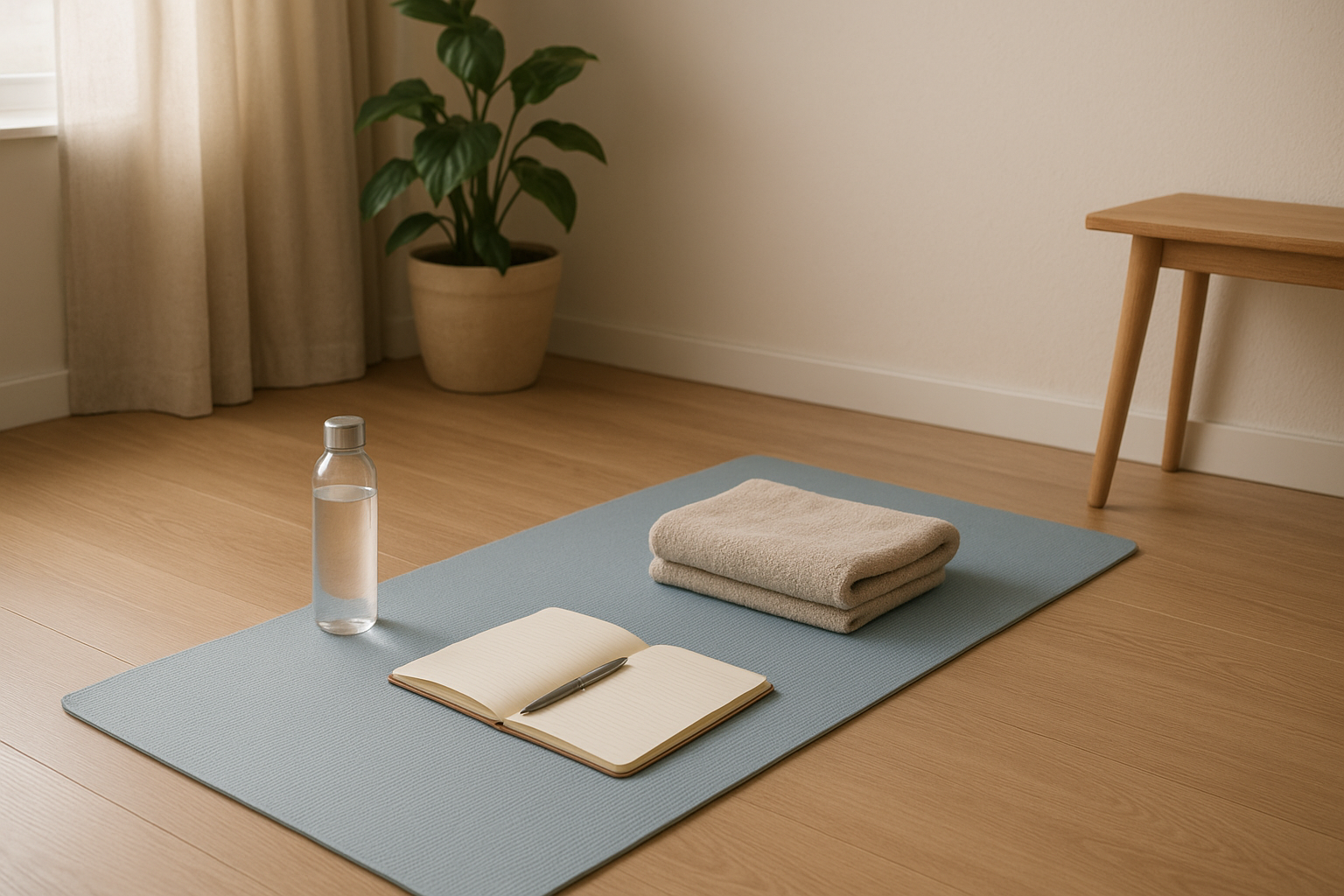
Your environment shapes your habits. Start by choosing a small corner of your home as your dedicated self-care and workout space. Keep it uncluttered, with just a yoga mat, a water bottle and maybe a soft light or candle. A quality mat helps signal to your brain that it is time to shift into ritual mode, supporting mobility work, stretching and gentle bodyweight exercises. Before each session, take one minute to tidy the area, dim overhead lights and silence notifications. These small steps help your nervous system downshift from busyness into focused, intentional time for yourself.
Pair home workouts with light mobility and recovery
Instead of seeing workouts as isolated events, frame them as the centre of a wider recovery routine. After your strength or cardio sessions, take 5–10 minutes for light mobility: controlled leg swings, hip circles, shoulder rolls and gentle neck stretches. This maintains joint range of motion and reduces stiffness, making it easier to train consistently. Add simple myofascial release using your bodyweight on the floor to ease tight muscles in the calves, quads and upper back. By finishing each workout with deliberate winding down, you teach your body to recover faster and reduce the mental barrier to training again later in the week.
Use sensory cues to manage stress and switch off
An effective home self-care ritual also targets stress management. Sensory cues help your brain associate specific smells, sounds and sensations with relaxation. Soft lighting, calm background music or a gentle soundscape can lower arousal levels before bed or after intense training. A short sequence of diaphragmatic breathing – inhaling through the nose for four seconds, exhaling for six – activates the parasympathetic nervous system, helping you unwind. Over time, repeating these cues creates a powerful association: when you roll out your mat, dim the lights and breathe slowly, your body recognises it is time to decompress rather than stay in high-alert mode.
Build a sleep routine that supports training and mood
Sleep is the foundation of both fitness progress and mental well-being. Aim for a consistent sleep and wake time, even on weekends, to stabilise your circadian rhythm. Create a 20–30 minute pre-bed ritual that you repeat most nights: light stretching on your mat, a warm shower, then a screen-free wind-down. Keep your bedroom cool, dark and quiet to support deep sleep and muscle recovery. When your sleep is dialled in, your energy, motivation and resilience during home workouts all improve dramatically, and everyday stress feels easier to manage.
Anchor your week with mindset and reflection habits
A sustainable self-care ritual is as much about your mindset as your muscles. Once a week, take 10 minutes to review how your body and mind felt: Which workouts left you energised? When did stress peak? What helped you unwind? Use a simple notebook or digital note to jot down three things: one win from training, one challenge, and one small adjustment for the coming week. Adding a brief gratitude practice – writing down two or three things you appreciate about your body and life – reinforces a kinder, more compassionate relationship with yourself. This mental framework reduces all-or-nothing thinking and helps you stay consistent, even when life gets busy.
By turning your home into a supportive environment for self-care, you create a weekly rhythm that nurtures both fitness and mental health. A calm space, short but regular mobility work, sensory cues for relaxation, a reliable sleep routine and simple reflection habits can transform scattered workouts into a meaningful ritual. Start small, repeat often and let your self-care routine evolve with you; over time, these intentional choices will make you stronger, calmer and more confident in both body and mind.









