
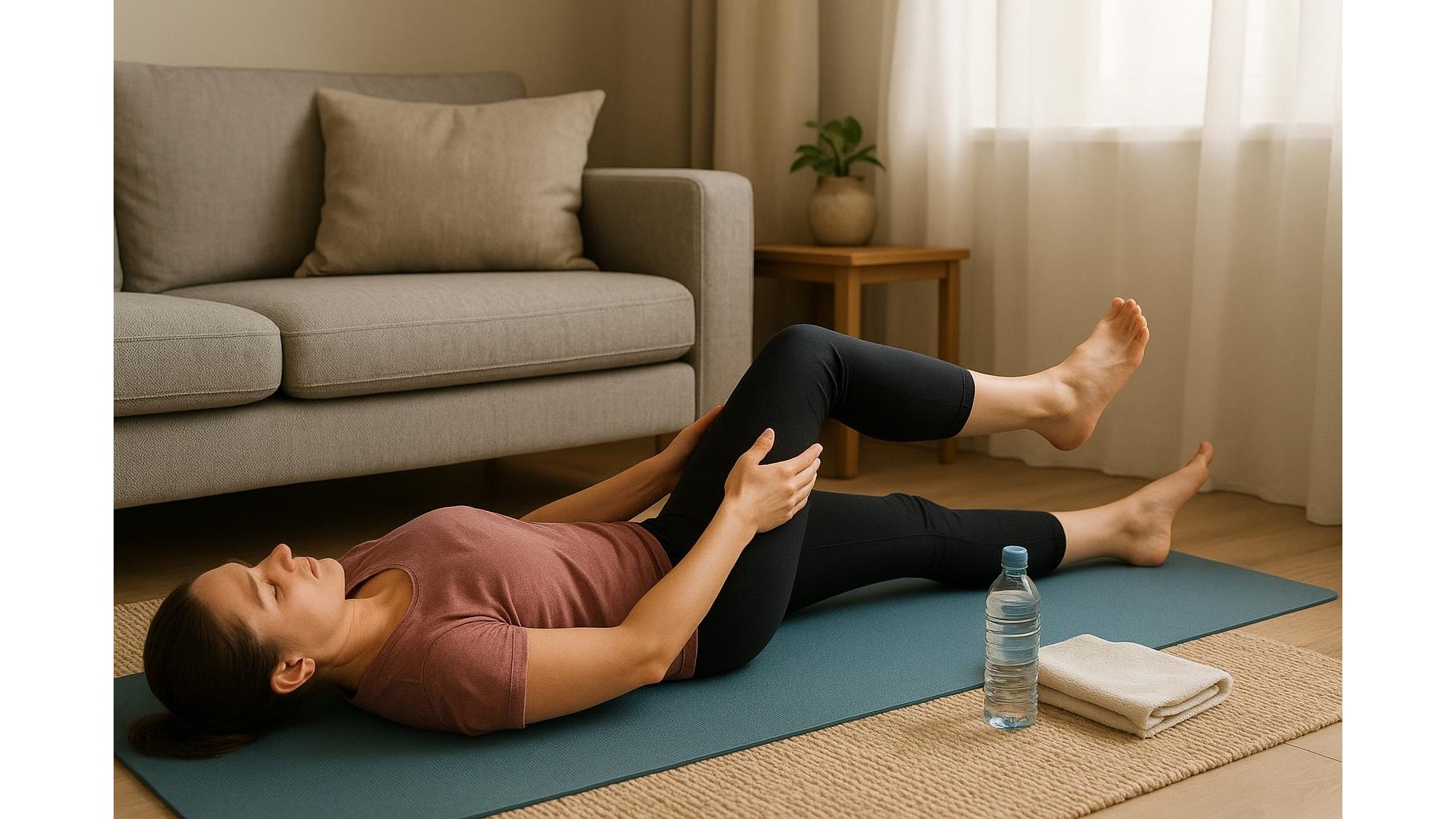
After a heavy day of squats, lunges or an intense indoor cycling session, your legs can feel heavy, stiff and sore. Recovery does not start in the physio’s office – it starts at home, with simple tools and smart routines that calm your nervous system and restore blood flow. In this guide we’ll look at practical ways to use light movement, elevation, self‑massage and easy mobility drills to help your legs and hips bounce back faster between lower‑body days.
Set up a simple recovery space at home
Good recovery begins with a comfortable, safe space where you can actually relax. Clear a small area of floor where you can lie down and move freely, ideally on a supportive exercise mat to protect your knees and spine. Keep a couple of cushions or pillows handy for leg elevation, plus a bottle of water to stay hydrated. Dim lights and quiet music help your body shift out of “training mode” and into “recovery mode”. Even if you only have 10–15 minutes after your leg session, treating that time as a mini recovery ritual makes you far more likely to stay consistent and notice less soreness over the week.
Use elevation and compression to reduce heavy‑leg feeling
One of the easiest ways to ease that “concrete legs” sensation is to combine leg elevation with gentle compression. Lie on your back with your lower legs resting on a sofa, chair or stacked pillows so your feet are slightly higher than your hips for 5–10 minutes. This position encourages venous return and reduces pooling in the lower legs after high‑volume lower‑body training or long rides on the bike. When you’re up and walking again, lightweight compression socks can support circulation and help you feel less sluggish if you have to sit at a desk or commute. Pairing elevation in the evening with compression during the day gives your legs a simple, low‑effort recovery boost.
Self‑massage for quads, hamstrings and calves
Self‑massage is a powerful home tool to relieve muscle tightness around the thighs and calves. Start with your hands: sit on the floor and knead the quads, hamstrings and calves using slow, steady pressure, moving always towards the heart. Spend 1–2 minutes per muscle group, focusing on the areas that feel most congested after your squat or lunge work. If you have a simple roller or massage ball, use it to gently work along the length of the muscle, not just on painful spots. The goal is not to “smash” your tissues, but to signal relaxation and boost blood flow so fresh nutrients reach tired fibres. Keep your breathing slow and controlled while you work – if you find yourself holding your breath, you are pressing too hard.
Gentle mobility drills to restore range of motion
After tough leg workouts it’s tempting to flop on the sofa, but a few minutes of light mobility can dramatically reduce next‑day stiffness. Focus on slow, controlled movements rather than long static stretches. For the hips, try deep bodyweight hip circles and a supported lunge with a gentle forward and backward rock. For the hamstrings and calves, perform standing or lying leg swings in a small, pain‑free range. Simple ankle circles help keep the lower leg supple, especially after cycling sessions. Move each joint for 30–60 seconds, paying attention to smoothness of motion rather than how far you can go. These drills act like “oil for your hinges”, helping your legs feel springier the following day.
Light active recovery instead of total rest
For most people, the best recovery from leg day is not absolute stillness but active recovery. On the day after heavy squats or a long ride, plan 15–20 minutes of very easy movement: relaxed walking, an easy spin on the bike, or a low‑intensity home session focusing on upper body and core while keeping the legs moving gently. This low‑stress activity pumps blood through your muscles, carrying away metabolic waste products that contribute to DOMS (delayed onset muscle soreness). Keep the effort at a conversational pace – if you feel your breathing working hard, you are going too fast. Combine this with regular water intake and a focus on protein‑rich meals to give your muscles the building blocks they need to repair.
Building a sustainable lower‑body recovery routine
The most effective at‑home recovery routine for your lower body is the one you can apply consistently after every demanding session. Think in simple blocks: a few minutes of elevation, a short self‑massage sequence for quads, hamstrings and calves, a circuit of gentle mobility drills for hips and ankles, and easy active recovery on the following day. None of these elements require complex equipment or a huge time investment, but together they can noticeably reduce soreness and improve how your legs feel between workouts. By treating recovery as part of your training plan rather than an optional extra, you’ll be able to push harder on your next lower‑body day while keeping your hips and knees happier in the long term.









