
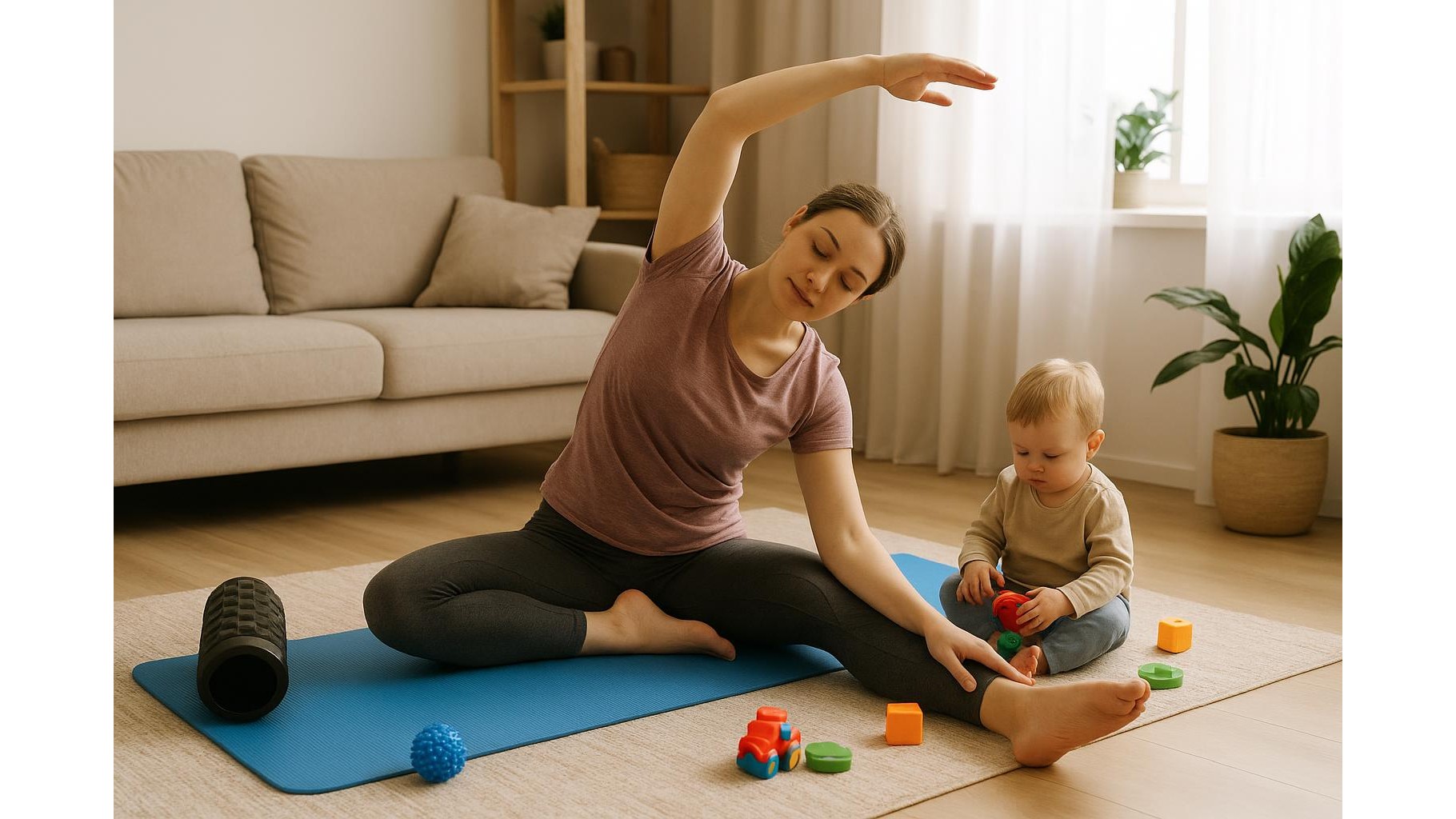
When you have small kids, recovery and mobility work usually slide to the bottom of the list. Long foam-rolling sessions and 20‑minute stretches are unrealistic between nappies, school runs and late‑night wake‑ups. The good news: you can still support your home training with quick, strategic micro‑routines that fit into the chaos of family life and use simple tools you can keep in your living room.
Why micro‑recovery beats “perfect” routines for parents
Parents of small children live in short windows of time: 3 minutes before a feed, 5 minutes while pasta cooks, 2 minutes during a cartoon. Instead of chasing the perfect 30‑minute recovery block, build a habit of small, frequent resets. Think of recovery as “movement snacks” spread across the day. A couple of minutes of breathing drills, gentle mobility or self‑massage done consistently can lower tension, improve your next workout and help you feel less broken at bedtime. This approach also reduces the guilt of missed sessions: if your child wakes up early, you can still grab 3–5 minutes of targeted work later, using simple tools you keep close to your home gym space.
5‑minute full‑body reset you can do next to the cot
Build a go‑to 5‑minute reset you can drop in anywhere, with no equipment. For example: 1 minute of deep, slow breathing lying on the floor with your feet on the sofa; 2 minutes of cat‑cow and thread‑the‑needle for your spine and upper back; 1 minute of half‑kneeling hip flexor stretch (hold the cot or wall for balance); 1 minute of gentle calf stretches or ankle circles. Keep the flow simple so you don’t need to think. Do it barefoot, in your regular clothes, while your child plays safely nearby. The aim isn’t sweat, but circulation, joint motion and nervous system downshift, so you feel less stiff when you next pick up a car seat or get down on the floor to play.
Using simple tools to make recovery easier
While you don’t need any gear, a couple of compact tools can make at‑home recovery quicker and more effective. A basic foam roller lets you target tight quads, glutes and upper back in 3–4 passes each side; choose a medium‑density model that won’t feel brutal when you’re already tired. A small massage ball is ideal for feet, hips and between the shoulder blades while you lean against a wall, which is safer than floor work if kids are running around. A simple yoga mat defines your space, adds comfort on hard floors and signals a mini “recovery zone” in the living room. Store everything in a basket so you can pull it out in seconds when the opportunity appears.
Involving your kids safely in your recovery time
Instead of fighting for total solitude, sometimes it’s easier to include your kids in your recovery. Turn mobility into a game: they copy your “cat stretch” or “tall giraffe” reaches. For floor‑based work, keep your movements controlled and avoid anything that could knock a child over if they climb on you. Use a soft mat so falls are low‑risk. You can even let older toddlers “help” by rolling a soft ball along your back while you lie on the floor, teaching them that self‑care and movement are normal adult habits. The goal isn’t perfect technique but creating a calm, playful environment where you both wind down and you still tick off your micro‑routine.
Building tiny habits around your real schedule
The most powerful thing you can do is link recovery habits to moments that already happen every day. While the kettle boils, you run through two ankle and hip drills. After you put the baby down, you spend three minutes on your upper back with a roller or on gentle chest opening stretches to undo all that holding and feeding. Before bed, you finish with 5 slow breaths lying on your mat, phones away. These anchor points mean you don’t need motivation or willpower; the routine becomes part of the script of your day. Over weeks, these micro‑sessions add up to better mobility, less soreness and more energy for both training and parenting.
Recovery for parents of small kids doesn’t need to be perfect, it just needs to be possible. By swapping big, infrequent sessions for realistic micro‑routines, using a couple of simple tools and welcoming your kids into the process, you can protect your joints, calm your nervous system and keep progressing in your home workouts—without waiting for the mythical free hour that never comes.









