Building a home gym is not just about racks, dumbbells and mats. The shoes you wear can make the difference between a solid, safe session and sore knees or wobbly squats. Choosing the right home gym footwear means matching your shoes to your main training style: heavy lifting, high‑impact cardio, or mixed hybrid workouts. Below you’ll find a clear guide to understand the difference between flat shoes, cross‑trainers and cushioned models so you can train harder and safer at home.
Why your home gym needs the right footwear
Training at home often means working on hard floors, limited space and improvised setups. Wearing the wrong shoes can increase joint stress, reduce stability and even limit how much you can lift. For example, highly cushioned running shoes compress under load, making heavy squats or deadlifts feel wobbly. On the other hand, super flat shoes with minimal support are not ideal for repeated jumping jacks or treadmill runs. The goal is to match the shoe structure (flat, stable, cushioned) to the type of workout you do most often, while keeping one versatile pair if you like to mix it up.
Flat shoes for strength training and lifting days
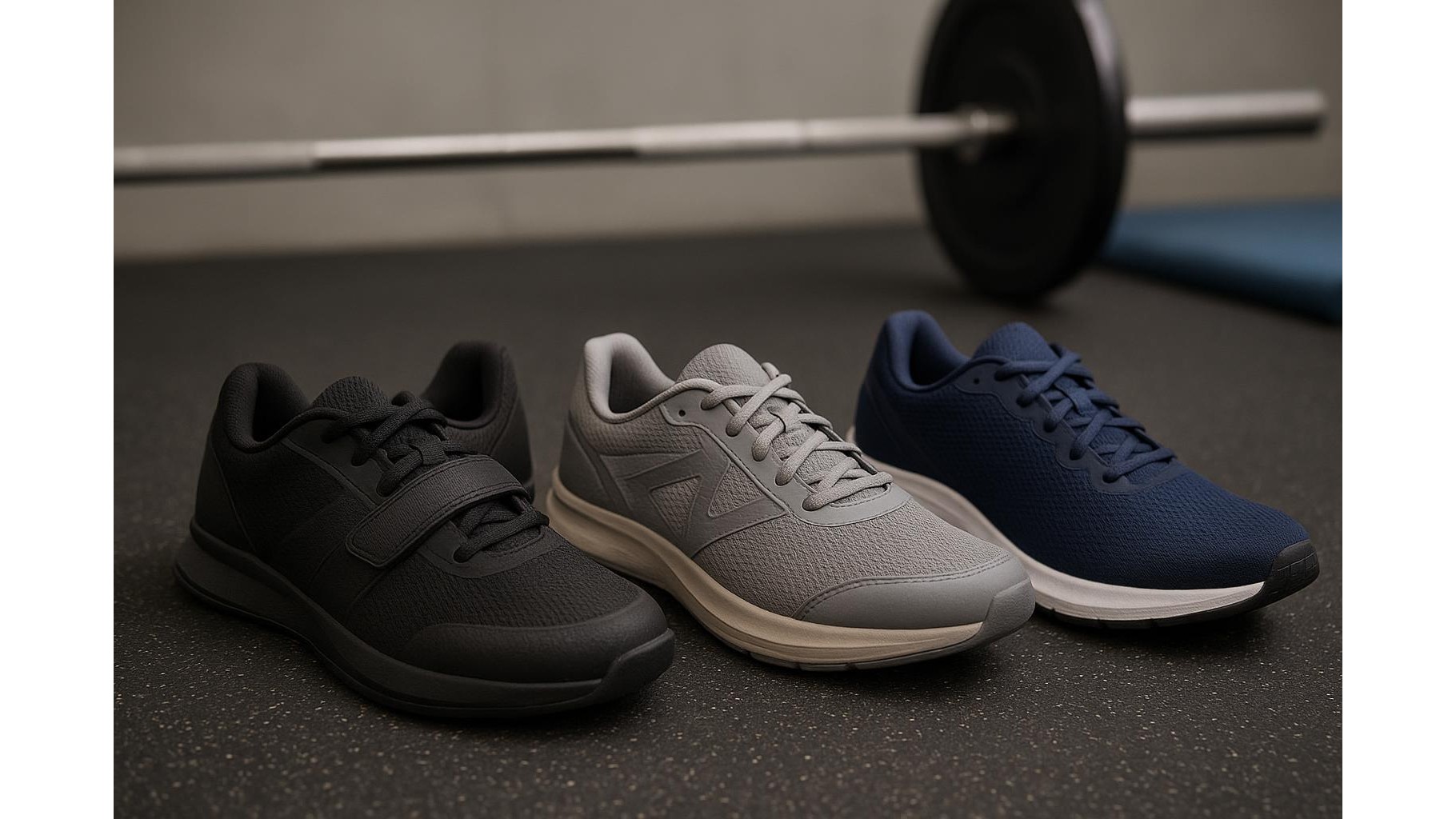
For squats, deadlifts, presses and kettlebell work, you want a stable, flat base that keeps your foot close to the floor. A good example is a minimalist, low‑stack trainer such as a flat Converse‑style sneaker or a dedicated lifting shoe with a firm sole. Flat shoes reduce wobble, improve force transfer into the ground and help you feel more connected to the floor. When comparing options on Amazon.co.uk, look for phrases like “minimal drop”, “stable base” and “firm midsole” in the description. Avoid thick, soft foam in the heel for barbell or dumbbell work. If you occasionally do light cardio, a flat trainer can still work, but it shines on strength‑focused sessions with heavy or moderate loads.
Cross‑training shoes for hybrid home workouts
If your typical session includes a mix of strength, circuits and bodyweight HIIT, a cross‑training shoe is usually the best compromise. These models offer a slightly firmer midsole than running shoes but more cushioning than a pure lifting shoe, plus side‑to‑side stability for lunges, lateral shuffles and core work. On Amazon.co.uk you’ll find cross‑trainers described with terms such as “for gym and classes”, “multi‑directional stability” or “cross‑fit style training”. They are ideal if you alternate dumbbell complexes, short bursts on a bike or stepper, and core training on a mat. The key specs to check are a moderate heel‑to‑toe drop, a rubber outsole for grip on home tiles or laminate, and enough forefoot flexibility so you can comfortably perform burpees, mountain climbers and split squats.
Cushioned shoes for cardio, running and jump‑heavy days
For sessions that are mostly cardio‑based—treadmill runs, skipping, high‑impact aerobics or dance workouts—you’ll benefit from a more cushioned shoe. These are typically running or cardio trainers with a softer midsole designed to absorb repeated impact. When browsing Amazon.co.uk, look for models marketed for “road running” or “high‑impact cardio”. Prioritise good shock absorption, especially if you train on a hard floor, and check that the upper holds your foot securely during quick changes of direction. Keep in mind that these shoes are not ideal for heavy lifting: the same cushioning that protects your joints under impact can compress and feel unstable under a loaded barbell. Use them on days when your plan is mostly steady‑state or interval cardio with only light resistance work.
How to build a simple home gym shoe rotation
You don’t need a huge collection; for most people a two‑pair rotation is enough. If you lift two or three times per week and add some HIIT, pair one flat or cross‑training shoe for strength days with one cushioned shoe for cardio. If your training is 80% strength, you might get by with just a flat trainer. If you’re a cardio‑first home athlete who only does occasional bodyweight squats and push‑ups, focus on a quality cushioned trainer. Always read the product details carefully on Amazon.co.uk: check the sole profile, cushioning level, target sport and user reviews mentioning lifting, HIIT or treadmill use. Matching your footwear to your main home workouts will boost performance, comfort and safety without overcomplicating your setup.
Choosing the right home gym footwear is about clarity, not complexity. Decide whether your priority is lifting, cardio or hybrid training, then pick flat shoes, cross‑trainers or cushioned models accordingly. With a small, well‑chosen rotation you’ll feel more stable under the bar, better protected during jumps and runs, and more confident tackling any workout on your home gym floor.