Setting up a compact rower at home is one of the most efficient ways to build full‑body strength and cardio in a small space. But once you start browsing, every brand promises “gym-quality” performance and “whisper-quiet” resistance. Instead of getting lost in buzzwords, it’s smarter to focus on the core features that really affect your daily training: resistance type, noise levels, ergonomics, footprint, and connectivity, all matched to your budget and room size.
Understanding resistance types and how they feel
The first big decision is resistance type, because it changes how every stroke feels. Magnetic rowers use a magnetic brake and are popular for home gyms because they are smooth, adjustable and very quiet, ideal for flats or late‑night sessions. Air rowers respond naturally to how hard you pull, giving a more “alive” feel that many athletes prefer, but the fan creates more noise. Water rowers use a water tank and paddles to mimic rowing on a river, with a swooshing sound that some find soothing but others may find intrusive in small, echoey rooms. Cheaper hydraulic piston rowers are ultra‑compact and affordable, but resistance can heat up and fade during long sessions. Decide whether you value realism, quietness or budget most before you buy.
Noise, space and storage in real homes
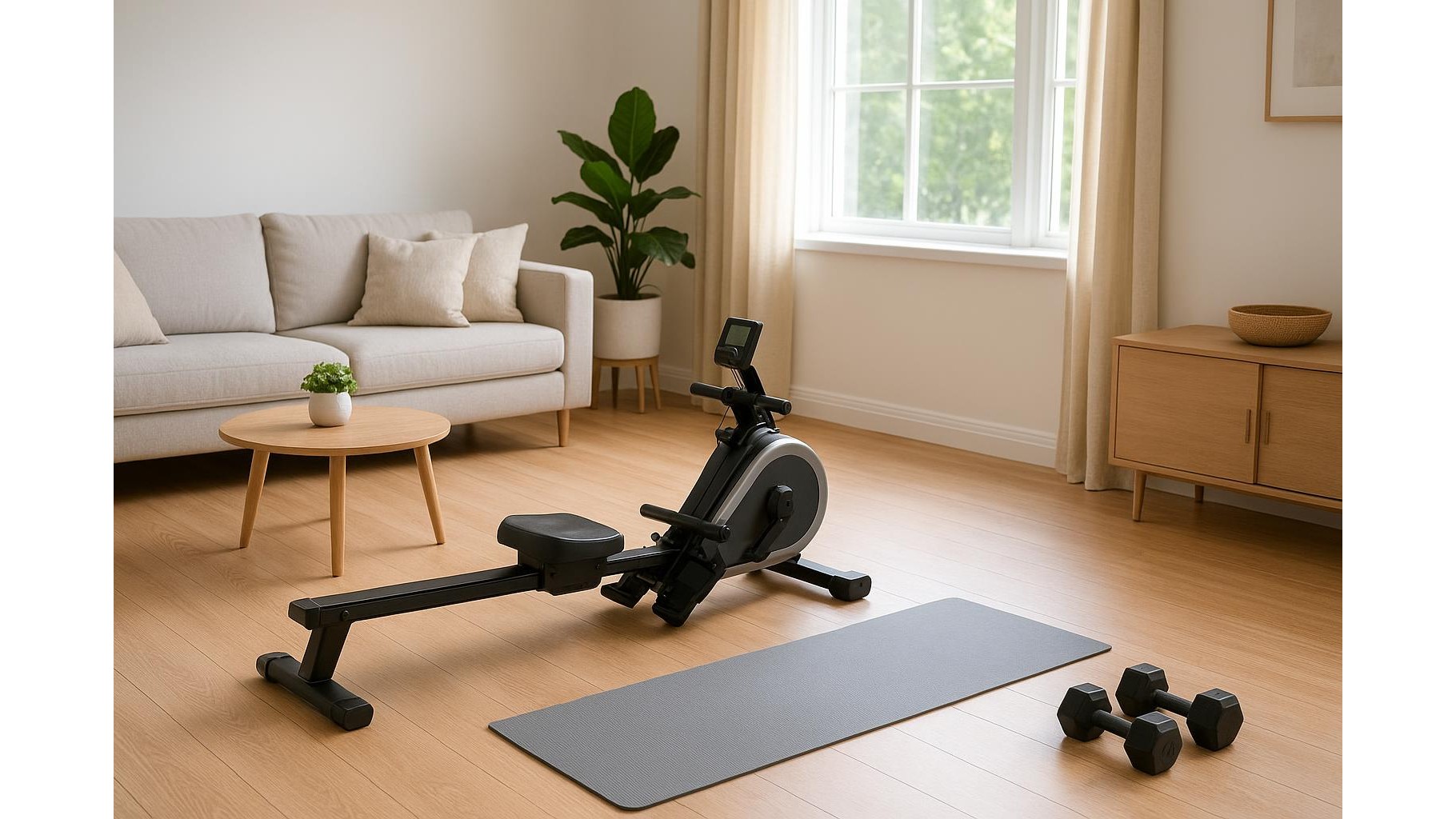
In real apartments and family homes, noise and footprint matter as much as performance. Magnetic rowers are usually the best compromise if you need a quiet rowing machine for shared spaces, because the only real sound is the seat rolling and your own breathing. Check the assembled length carefully: many compact models still need around 180–210 cm of floor space when in use. Look for folding frames or vertical storage that let you roll the rail upright against a wall or into a cupboard. Transport wheels are essential if you plan to slide the rower under a bed or into a corner after every session. Always measure your available area—with room for your arms and handle travel—rather than trusting “compact” in the product title.
Ergonomics, comfort and long‑term joint health
A rower can look great online and still feel awful once you sit down. Focus on ergonomics: the seat height should let you sit and stand without straining knees or hips, especially if you have mobility issues. A slightly higher seat is usually more forgiving. The handle should allow a neutral wrist position; narrow, straight handles often cause forearm or wrist discomfort over time. Check that footplates are adjustable and fit your shoe size securely, with sturdy straps that won’t loosen during sprints. A smooth sliding rail is crucial: if user reviews mention sticking or wobbling, your technique and enjoyment will suffer. For taller users, confirm the recommended max user height so you’re not cutting your stroke short or over‑extending your knees.
Consoles, connectivity and training structure
Beyond basic build quality, the next layer of value comes from the console and connectivity. At minimum, you want clear readouts of time, distance, stroke rate and estimated calories. For more structured training, look for rowers that support Bluetooth to pair with fitness apps or heart‑rate straps. Even simple app integration can unlock interval workouts, performance graphs and virtual river or studio sessions that keep motivation high in a home gym. Don’t overpay for flashy touchscreens if you plan to train using your phone or tablet anyway; a solid basic console plus a good app often beats an expensive built‑in screen that never gets software updates. Think about how you like to be coached and choose a tech level that matches your habits.
Budget, build quality and realistic expectations
Price ranges for home rowing machines can be huge, but spending a little more on build quality usually pays off. Ultra‑cheap compact rowers may look tempting but often compromise on frame rigidity, comfort and durability, which can limit your progress and enjoyment. On the other hand, you don’t need a commercial‑grade rower if you’re just starting out or rowing a few times per week. Decide your training volume: light use can justify a mid‑range magnetic rower, while heavy, performance‑oriented training might call for a more robust frame and premium components. Always read user reviews for comments on longevity, squeaks, loosening bolts and customer service—issues that glossy marketing pages rarely highlight but that matter after a year of home use.
Ultimately, choosing your first compact rower for home is about matching the right resistance type, noise level, ergonomics, tech features and build quality to your space, budget and training style. Ignore vague claims like “gym‑quality” and instead focus on how each machine will actually feel and sound in your living room, spare room or garage. By grounding your decision in these practical criteria, you’ll end up with a rower that you genuinely enjoy using and that supports consistent, effective workouts for years.