
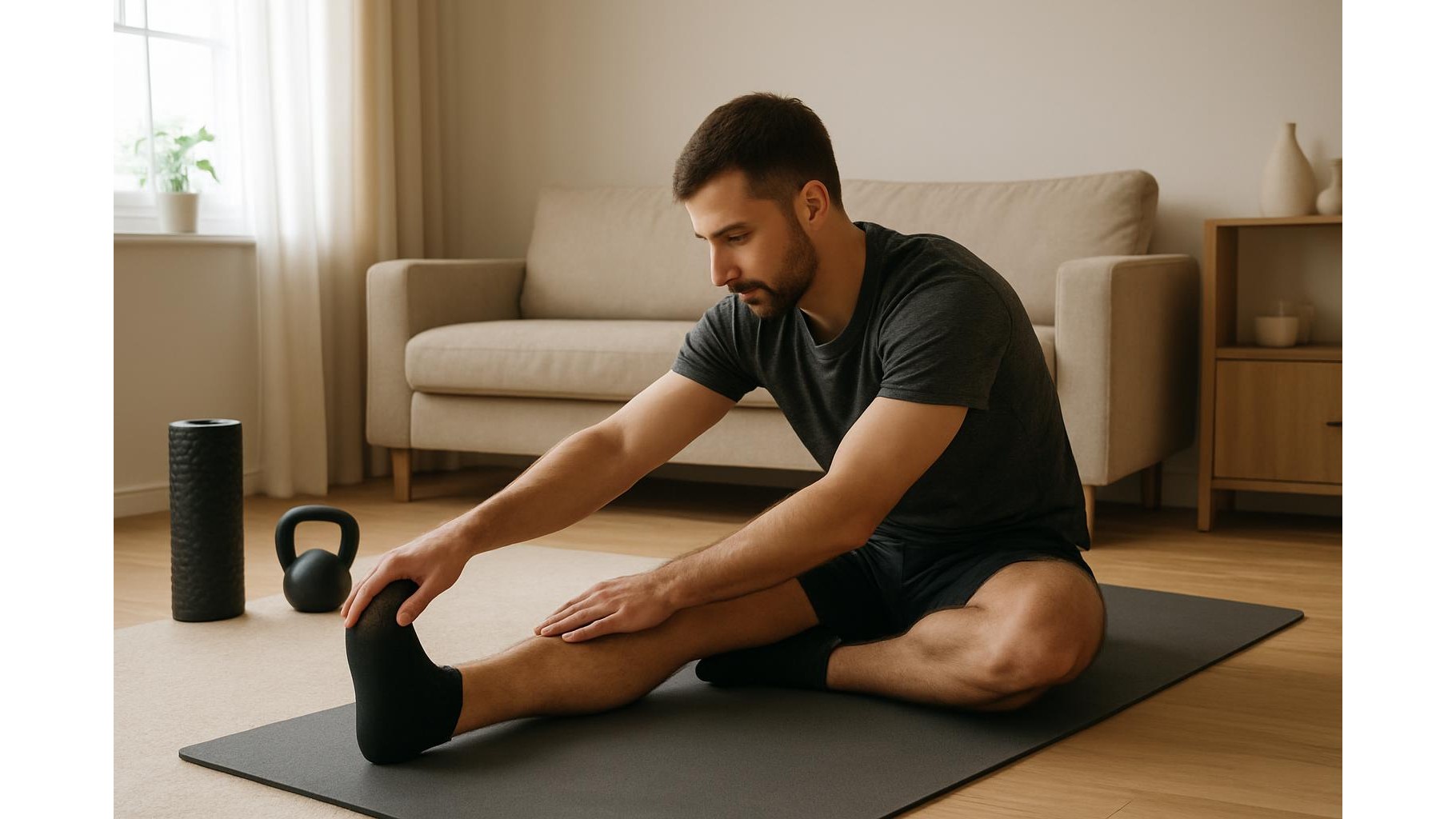
After a brutally hard squat or deadlift session, it’s tempting to collapse on the sofa and stay there. But the smartest way to recover from heavy leg day is not total rest; it’s structured at-home active recovery. Short, low-impact sessions can boost blood flow, reduce soreness, and prime you for your next workout, all without stressing your joints. Here’s how to design simple routines that fit into your living room and actually help you bounce back faster.
Why active recovery beats doing nothing
When you train legs hard, you create micro-damage in the muscles and build up metabolic by-products that contribute to that familiar DOMS (delayed onset muscle soreness). Light movement helps circulation, bringing in nutrients and clearing waste more efficiently than lying still. A good home active recovery routine keeps intensity low—about 3–4 out of 10 effort—so you’re not adding fatigue. Think 10–20 minutes of easy work the day after your heavy session, ideally in the evening when stiffness usually peaks. The goal isn’t burning calories; it’s feeling looser and more mobile when you’re done.
Low-impact cardio to get blood flowing
Start with 5–8 minutes of low-impact cardio to warm tissues and gently elevate heart rate. If you have a small step or sturdy platform, step-ups at a slow, controlled pace are ideal. Marching in place, light shadowboxing, or cycling on a stationary bike work just as well. You should be able to hold a conversation easily. Avoid jumping, running, or fast changes of direction—your joints and tendons are already under stress from heavy squats and lunges. This easy cardio phase acts like an internal massage, helping tight quads, hamstrings, and glutes begin to relax so subsequent mobility and stretching work more effectively.
Essential mobility and stretching for sore legs
Once you’re warm, move into dynamic mobility before any long holds. Try 8–10 controlled leg swings front-to-back while holding onto a wall, gentle hip circles, and bodyweight good mornings to mobilise the posterior chain. After 3–5 minutes of dynamic work, add 15–30 second stretches for the main muscle groups: a standing quad stretch, a seated hamstring stretch, and a figure-four stretch for the glutes. Prioritise a smooth breath and mild tension, not forcing range. This sequence helps restore normal length and movement to muscles that have been shortened by heavy loading, making it easier to hit deep positions in your next training session.
Simple at-home strength “flush” circuits
Active recovery can also include very light strength circuits to reinforce good patterns without fatigue. Pick 2–3 low-load exercises like glute bridges, bodyweight calf raises, and side-lying clamshells. Perform 2–3 easy rounds of 10–15 reps each, stopping well before any burn. These movements wake up stabilising muscles, encourage healthy blood flow around the knees and hips, and can even tidy up technique weaknesses exposed on leg day. Because intensity stays low, you’re signalling recovery and coordination, not muscle breakdown. Keep total circuit time under 10 minutes so the session remains refreshing rather than draining.
Breathing, relaxation, and the recovery mindset
Finish your routine with 3–5 minutes of relaxation work to shift your body into a more parasympathetic, recovery-focused state. Lie on your back with your legs elevated on a chair or sofa and practice slow nasal breathing: inhale for 4 seconds, exhale for 6. This longer exhale helps down-regulate the nervous system, reducing tension and perceived soreness. Mentally scan from hips to toes, releasing any clenching in your quads, calves, and feet. This simple habit not only accelerates leg recovery at home but also improves sleep quality, which is one of the biggest predictors of how fast you bounce back between heavy training days.
With a bit of structure, active recovery after leg day becomes a powerful tool rather than an afterthought. A short sequence of light cardio, mobility, gentle strength, and relaxation—done right in your living room—can leave your legs feeling looser, your joints happier, and your next workout stronger. Instead of dreading the stairs the day after squats, you’ll have a simple, repeatable plan to keep moving, reduce soreness, and consistently perform at your best.









