
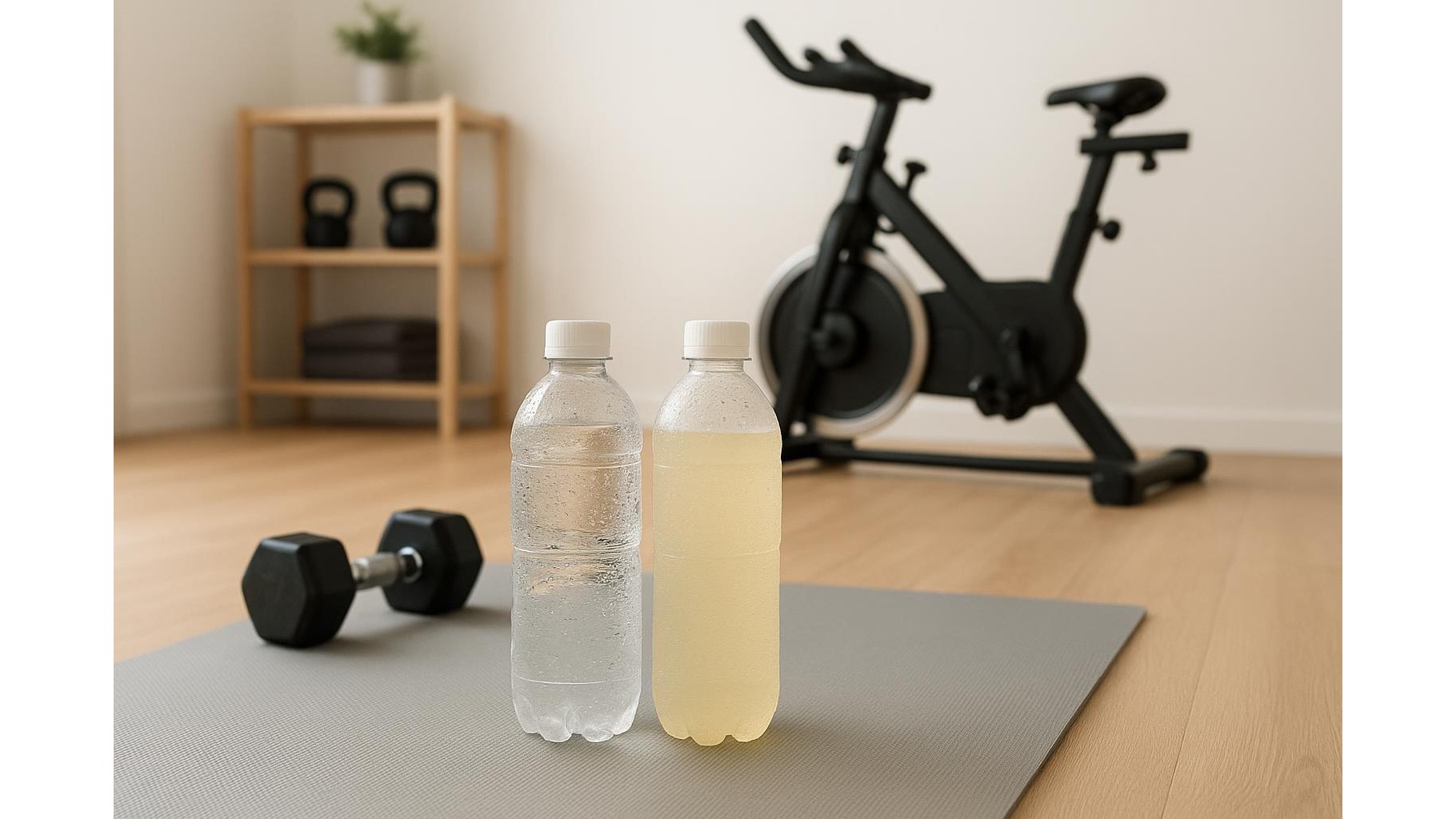
When you train at home, it’s easy to overcomplicate hydration. Shelves (and online stores) are full of colourful electrolyte drinks, powders and tablets promising better performance and faster recovery. But do you really need them for every workout, or is plain water enough most of the time? Understanding when to choose electrolyte-free drinks and when a proper electrolyte drink makes sense will help you train smarter, avoid unnecessary sugar and save money.
Water vs electrolytes: what your body actually needs
During exercise you lose fluid through sweat and breathe, and with that fluid you also lose electrolytes like sodium, potassium and magnesium. For short, low-intensity home sessions (think 20–40 minutes of light weights, mobility or easy cycling) your body’s main need is simple: replace the water you lose. Your normal meals easily cover small electrolyte losses. Electrolyte drinks become more relevant when sessions are longer than about 60–75 minutes, more intense (HIIT, heavy strength, indoor intervals), or done in a hot, humid room where sweat loss is high. In those cases, adding sodium in particular helps maintain performance, reduces cramp risk and speeds up rehydration.
Easy home workout days: when plain water is enough
On easy days, keep things simple. If you are doing low-intensity workouts under an hour, not sweating heavily and spacing sessions out, electrolyte-free hydration is usually ideal. Aim to sip water consistently through the day, then drink according to thirst during your session. A good rule of thumb is to start your workout well hydrated (your urine should be a pale straw colour) and drink small amounts, 2–3 mouthfuls every 10–15 minutes if you feel you need it. After training, water plus a balanced meal with some salt will naturally restore your fluid and electrolyte balance. Adding flavour without extra electrolytes (for example a squeeze of lemon or a sugar-free flavour drop) can encourage you to drink more if you tend to under-hydrate.
Hard sessions and heat: when electrolyte drinks earn their place
For tough sessions, electrolyte drinks become a performance tool rather than a luxury. If you are doing intense circuits, indoor cycling or running intervals for longer than an hour, especially in a warm home gym, you may lose 1–2 litres of sweat per hour. In this context, water alone can dilute your blood sodium and increase the risk of hyponatremia if you drink a lot. A well-formulated electrolyte drink that provides primarily sodium (around 300–700 mg per litre), some potassium and minimal or optional carbohydrates helps you retain fluid, maintain muscle function and keep power output high. Electrolyte tablets or powders that you dissolve in your own water bottle allow you to adjust the strength depending on how hard and how hot the session is.
Choosing the right drink for your home training goals
Match your drink to your session and your goals. For fat-loss-focused or shorter home workouts, a low-calorie electrolyte-free drink (just water or water with zero-calorie flavour) prevents unnecessary sugar and energy intake. For performance-focused interval work or long strength sessions, a drink with both electrolytes and a moderate amount of carbohydrate can help maintain blood glucose and delay fatigue. Always check labels: some products marketed as “sports drinks” are essentially soft drinks, with a lot of sugar and very little sodium. Look for clear information on sodium content per serving, keep added sugars in line with your total daily intake, and consider using powders or tablets so you can control concentration instead of relying on pre-mixed bottles.
Practical hydration strategies for home trainees
A simple plan goes a long way. In the 1–2 hours before training, drink 300–500 ml of water and include a lightly salted snack if you know you sweat heavily. During easy workouts, continue to sip water as desired; during intense or long sessions, consider combining water with an electrolyte solution and aim to limit bodyweight loss to around 2% or less by the end. After training, rehydrate with 1–1.5 times the fluid you lost (you can weigh yourself before and after occasionally to estimate this) and include some salt in your meal. Pay attention to signs of underhydration (dark urine, headache, unusual fatigue) and overdrinking (bloating, nausea) and adjust. Over time you will learn how your body responds so you can fine-tune both electrolyte drinks and plain water intake.
Hydration for home training does not have to be complicated. On most easy days, plain water combined with balanced meals is more than enough to support performance, comfort and recovery. On harder, longer or hotter days, a well-designed electrolyte drink can become a useful ally, helping you maintain power, concentration and fluid balance. By matching what you drink to how you train, you avoid unnecessary sugar, reduce supplement costs and stay focused on what really drives progress: consistent, intelligent training supported by sensible, flexible hydration habits.









